Citizenship dream came true for Waterloo soldier
Jul 02, 2026 | 2:56 pm ET
Description
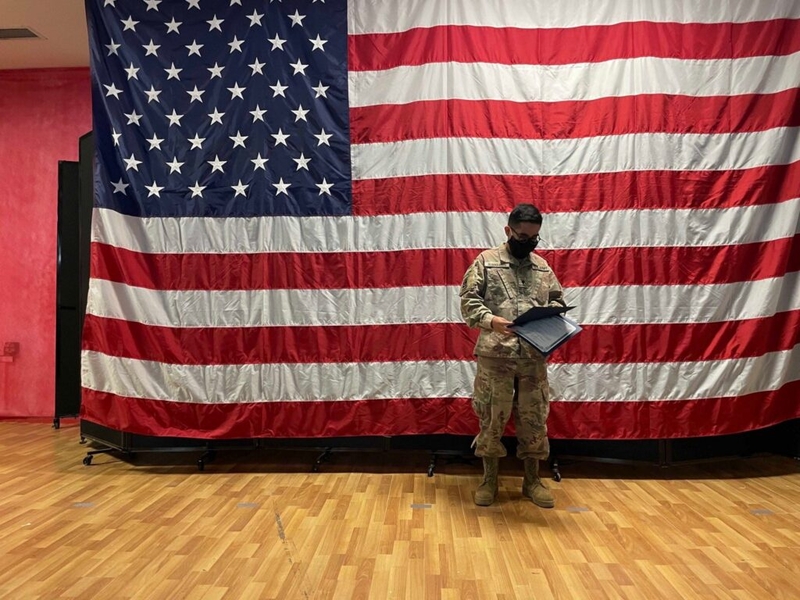
Hector Salamanca Arroyo became an American citizen in 2021 while on deployment in Africa with the Colorado National Guard. This photo of him holding his citizenship papers was shot by a comrade after the naturalization ceremony. (Photo courtesy of Hector Salamanca Arroyo)

He’s marking his fifth Fourth of July as a U.S. citizen — even though he’s lived in this country since he was a toddler, most of that time in Iowa.
Born in Mexico and raised in Des Moines, the 2011 West Des Moines Dowling Catholic High School graduate finally became a U.S. citizen in late 2021 — while he was on deployment with the Colorado National Guard.
He was serving in Djibouti, guarding drone installations from attack by Al-Shabab militants as part of Operation Spartan Shield.
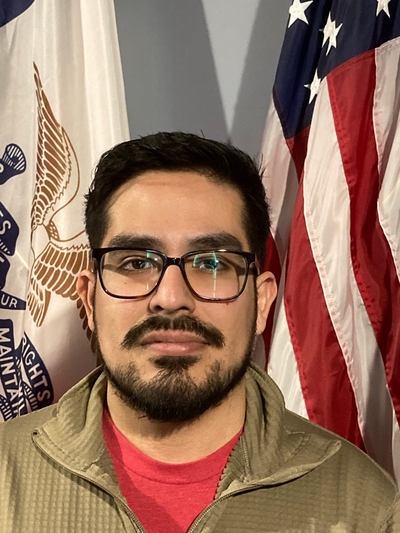
He’s continued service in civilian life. Last November, he was elected to a seat on the Waterloo City Council — the first Latino to serve on the Waterloo council.
He was one of a group of soldiers who started the citizenship process while on deployment. He took his oath of citizenship at a ceremony at Camp Lemonnier in Djibouti.
His buddies kidded him that if his legal-resident status expired before that, they might either have to leave him behind or smuggle him home in their rucksacks.
“It was all in good fun and in support, of camaraderie,” he said. “But in the back of my mind I was worrying that I had no status and I would be left in Djibouti. Or that I would be landing in Colorado and ICE would be waiting for me and I would be sent to Mexico,” where he’d only visited once since leaving as a young child.
But he completed his citizenship test and interviews in between time on duty and was approved for citizenship.
He was pulled off guard duty and driven to his citizenship ceremony in full gear. “I was able to swear-in in front of my friends, my leadership, the other folks from the platoon,” he said.
In a photo a buddy took at the ceremony, “I’m standing in front of the American flag looking at this citizenship I’ve longed for so much for more than 20 years, and there’s a smile on my face. To become a citizen signified so much and opened so many doors for me,” he said, from the ability to get a passport and travel to open up a retirement account.
“It’s unfathomable,” he said. “Military service did that. The Army National Guard did that. The 157th Battle Company, Second Platoon weapons squad leadership did that. My ex-wife did that. I’m forever grateful to the individuals who got me to this point.
“That’s what being an American means to me. The America that I’m in in 2026 is drastically different than the one I imagined when I was younger. But at the end of the day, for myself, that flag means so much to me — the red, white and blue,” he said. “And our national anthem, the Army song, the creeds. All of that signifies the sacrifice myself and others have gone through — and the sacrifice my parents went through to bring me to the States, and the weight of being an American citizen and what that means.
“To me, being an American citizen is patriotism, it’s community service, it’s civic engagement, it’s ensuring that you’re helping your neighbor,” he said. “My impression of Americanism is maybe naive, or it’s maybe rooted in archaic thought, but I am proud to be an American. I served. I wore the American flag on my shoulder for the military. And I went through a process to become an American citizen. It’s not something I take lightly. It’s something I’m proud of.”
In addition to serving on the City Council, he’s active in the American Legion and has served on the honor guard at veterans’ funerals.
Salamanca Arroyo was born in Puebla, Mexico; his family moved to Des Moines in 1996 when he was 2-1/2 years old. He attended Des Moines public schools before his father enrolled him at Dowling Catholic High School in West Des Moines.
In between his junior and senior years of high school, “I found out my immigration status had expired, and I hadn’t had legal status since I was in third or fourth grade,” he said. “And the reason for that was that my dad thought the DREAM Act, which was introduced during the (President George W.) Bush administration in the early 2000s, was going to pass and he wouldn’t have to tell his children about their immigration status.”
The Development, Relief, and Education for Alien Minors Act, known as the DREAM Act, would grant temporary resident status and a path to citizenship to minors who immigrated illegally to the U.S. But Congress has never adopted it into law.
After graduation, Salamanca Arroyo was interested in joining the military and was interested in the Marines — an option that was not open to him at that time. He became involved as a volunteer in immigrant rights. He enrolled at Des Moines Area Community College and obtained a work authorization document. He received a two-year degree and then enrolled at Drake University, where he graduated in 2015.
After a year working with The American Friends Service Committee, a Quaker nonprofit organization, he then left for Colorado and a fresh start with his girlfriend and eventual wife. When they wed, he obtained a green card and had legal resident status. He moved from his job with a local Boys and Girls Club to a work for the Denver County Sheriff’s Department, the largest sheriff’s department in the state.
He enlisted in the military when that opportunity opened up for green-card residents. He shipped out for basic training in August 2019 as a 25-year-old divorcee.

“Definitely the oldest guy within my squad and platoon at Fort Benning,” he said. He’d also moved from his job with the sheriff’s department to one in programming with the local Boys and Girls Club.
Originally, he had signed on to be a carpenter and was told his unit would likely be only responding to disasters in state. But he ended up in an infantry unit and was deployed overseas. He said deployment, and the separation from family and friends going on with their lives, makes one takes stock of one’s position in life.
After deployment, he returned to Iowa, having enrolled in a master’s program at the University of Northern Iowa in Cedar Falls. That’s when he moved to Waterloo. It was a bit of a transition from military service to coming back to a state he hadn’t lived in for about seven years.
He had difficulty performing drills while on Guard duty and discovered he had some substantial knee damage. He received a medical retirement in April 2025. It was hard to adjust to no longer being in the military, he said, but he tried to find some sense of direction from his service.
“Out of that came my desire to be get involved in the American Legion,” he said. “I’m not sorry I served. I have a lot of pride in my service. And I’m glad there’s a service organization like the American Legion here. Because I’m able to interact with veterans for different eras, different conflicts.
“And it’s been eye opening: The conversations I’ve been able to have; the camaraderie that transcends political ideologies and racial ethnicities as well,” he said, “It’s a place I know I can go and just be myself and feel supported.”
After working at the Boys and Girls Clubs of the Cedar Valley, he decided to join the family business and help his father, a nurse, run the enterprise as operations director for Integrated Nursing Solutions. It provides nursing services to correctional institutions in Story and Marshall counties in central Iowa, with a goal of expansion.
It helps him exercise some entrepreneurial experience, cement his family’s legacy and address a need for health services, including mental health services, in correctional facilities.
It also gave him the schedule flexibility to run for and serve on the City Council.
“I realized as a U.S. citizen, it was something I aspired to do,” he said, and realized he was as qualified as anyone else to serve. He took office a few months ago and hopes to be “impactful” in that service.
He was unopposed for council in the city election, but nevertheless ran as though he had an opponent, to push voter turnout.
“I ran on ideas that I felt resonated with folks and it wasn’t tied to political parties and specific ideologies,” he said. “My philosophy is, we’re elected to represent the people and close the gap between what the average citizen knows and what occurs at the council level — as well as being able to ask critical questions to everyone, regardless of if they are family or friend.”
In that respect, being a relative newcomer to town has its advantages, Salamanca Arroyo said.
“At the end of the day I have no ties to anyone in this city; I do have friends, but I don’t have a long history with folks. And so it does afford me the opportunity to be a bit more critical in my questions,” he said, “I do so in a manner that I hope is respectful. To me, the city (municipal government) is the last hallmark where one could and should have conversations with people of opposing views and be able to still interact with them normally. You and I may have disagreements; we may not see eye to eye. But at the end of the day I’m not a politician who goes on to D.C. I am your neighbor.”
If the city is to grow, he said, it has to be responsive to and representative of the people of various backgrounds who make up the city, and to newcomers.
“If we don’t make the city of Waterloo an attractive place for younger people, regardless of nationality and ethnicity, then this city is doomed,” he said.
“Diversity is more than just a buzzword,” Salamanca Arroyo said, and that includes the city’s new immigrant populations as well as its sizable Black American community.
“We have a diverse community of Karenni (Burmese/Myanmar) immigrants, Latino immigrants, Bosnians, French Congolese. Folks that, without these groups, the city would have continued to slide in its population,” he said. “And I don’t think we do enough as a city in conversations to highlight that.
“That’s where I found an opportunity as a city councilman, to step in and fill that void,” he said, ranging from helping them bridge language barriers in public meetings and filling out job applications, to finding soccer goal nets for public parks.
“It’s the little things. It shows we’re not some bureaucracy of faceless individuals,” Salamanca Arroyo said. “I am your neighbor. I hear your concerns. I believe that’s how governance should work. We need to listen to everyone. We need to take folks’ opinions. We may not agree with it,” but can be respectful.
“I believe in the military sense of decorum, of principles, of structures to enable us to move forward in an orderly fashion,” Salamanca Arroyo said.
“I think if more folks served or had an understanding of what it means to be in the military, our country would be a different place,” he said. “Folks would understand what it means to be away from home and to bond with people of different backgrounds and to be there for each other when it counts.”
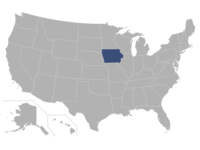
Des Moines, IA