Western US emergency experts say FEMA response still favors East Coast hurricanes over Western fires
Jul 02, 2026 | 5:00 pm ET
Description
Emergency management experts from Western states discussed efforts at FEMA reform and the agency's continued lack of wildfire focus.
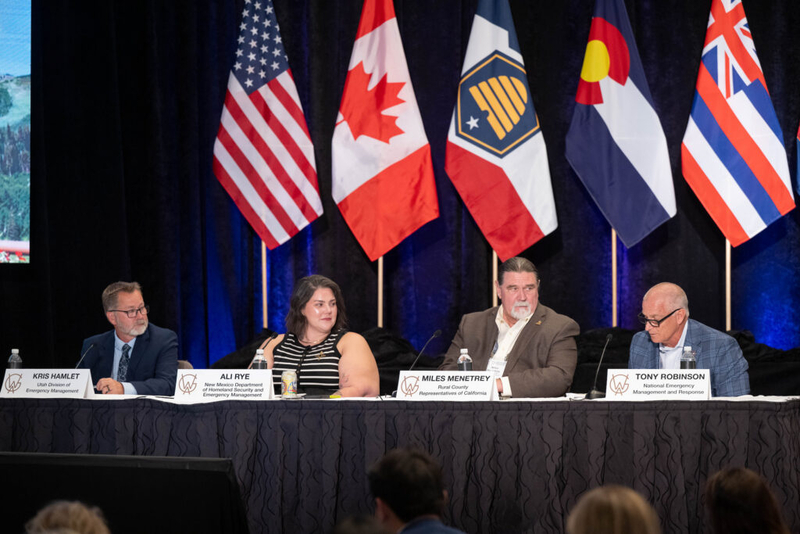
A group of emergency management experts from Western states convening in Utah this week said Wednesday that the Federal Emergency Management Agency continues to prioritize hurricanes and other Eastern perils over much more common wildfires in the West.
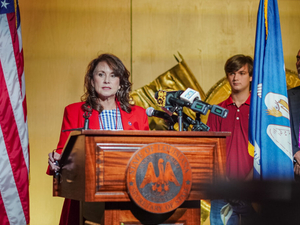
A bipartisan group of Western governors, including New Mexico Gov. Michelle Lujan Grisham, has gathered in Deer Valley, Utah for the annual Western Governors’ Association conference. Their Wednesday discussion — “The Road Ahead for FEMA” — comes on the heels of a report the FEMA Review Council published in May that suggests, among other recommendations, the federal government should define its role as “supporting” versus “leading” state, local and tribal governments after disasters.
The report also notes that FEMA’s Hazard Mitigation Grant Program, which helps state and local governments prevent and limit damage from natural disasters, concentrates on hurricanes, floods and tornadoes, leaving “gaps” when it comes to wildfires, drought and earthquakes.
Ali Rye, the state director for New Mexico’s Department of Homeland Security and Emergency Management, said she found the report “disappointing” because state and local governments are already taking on as much as they can bear.
She also recounted a story of trying to meet with FEMA officials earlier this week at a wildfire summit in Boise, Idaho.
“We were super excited” to speak to officials including President Donald Trump’s nominee for FEMA administrator, Cameron Hamilton, “only for them to get on the screen and tell us that they were too busy to fly to Boise, and instead they had to sit there and brief the president on hurricanes,” she said.
In response, Rye noted that hurricanes are far less common than the wildfires currently running rampant through many Western states.
“We receive a wildfire every single year. And for many of us, especially for us sitting in this room, we don’t just receive one. We have four, five, six,” Rye said.
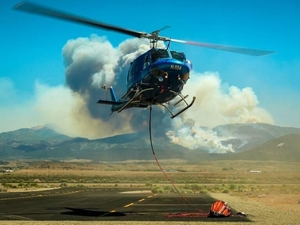
Lujan Grisham at that point chimed in to note that the state has more than a dozen large, active wildfires, “and then countless other smaller ones” across the state. The New Mexico governor earlier this week approved $500,000 for DHSEM to help support local efforts to combat the McCauley Springs Fire near Jemez Springs, as well as other wildfires throughout the state.
Rye and Lujan Grisham’s comments echoed those of other panelists who said Western states, particularly rural areas, continue to receive less support from FEMA headquarters. Those criticisms come amid ongoing efforts by Trump and the Department of Homeland Security to enact sweeping reforms of the agency.
“Everything that comes out of the federal government is East Coast-centric, or it’s population-dense programs and policies, and the Western states are just kind of an afterthought,” said Kris Hamlet, director of the Utah Division of Emergency Management. “Everything keeps going back to what’s happening in the hurricane states on the East Coast.”
Hamlet urged the governors to advocate as a coalition for more Western-state representation in FEMA decisionmaking.
“We have debris flows and post-fire flooding and other things, but yet we’re waiting for the federal government to decide what they’re going to do with the review of these mitigation dollars that should be coming our way after we’ve had these big fires,” he said, before directing his comments to Hawaii Gov. Josh Green, a Democrat who is the new chair of the Western Governors’ Association. “So for me, Governor, I think just a seat at the table to be represented would go a long way.”
Santa Fe, NM