NJ lawmakers approve extra mental health support for schools
Jul 02, 2026 | 6:30 am ET
Description
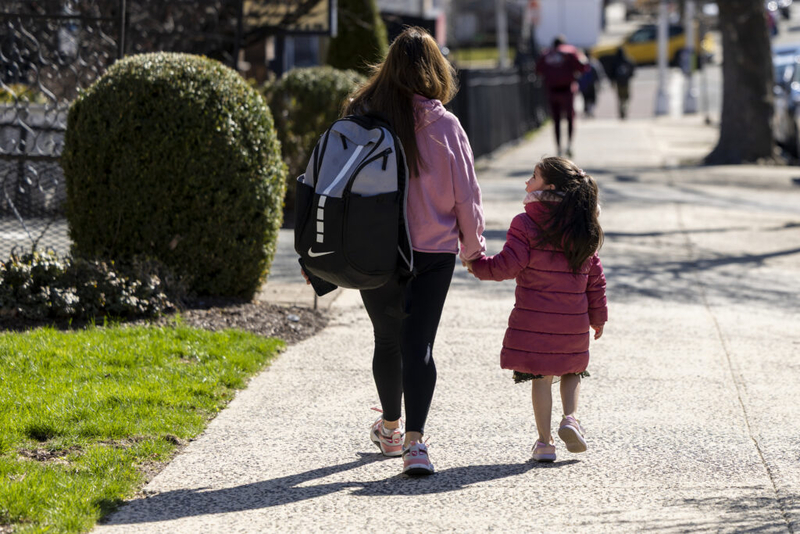
New Jersey schools would have new tools to help students struggling with mental health issues under legislation passed by state lawmakers Tuesday. Gov. Mikie Sherrill is expected to sign the measure. (Photo by Anne-Marie Caruso/New Jersey Monitor)
New Jersey lawmakers approved a plan to strengthen school-based mental health services, connect more districts with behavioral health providers in their communities and, eventually, link them all with a centralized team of psychiatrists.
Gov. Mikie Sherrill outlined one aspect of the program in her budget speech in March and is expected to sign the legislation, which passed both houses of the legislature Tuesday with near unanimous support. Her office declined to comment Wednesday.
The $60.7 billion budget bill she signed late Tuesday includes $8 million for a new program dubbed the School-Based Partnerships for Access and Resilience, or Spark, which will be launched as a pilot program before expanding to all of New Jersey’s 2,500 schools within the next two years.
The plan also has $40 million for NJ4S, the New Jersey Statewide Student Support Services program, a 4-year old initiative that has allowed nearly half the state’s schools to partner with regional mental health organizations that provide school-based counseling, medication and referrals, and help parents navigate the behavioral health system.
“The SPARK and NJ4S programs will provide critical resources to address our youth mental health crisis, giving parents, educators, and, most importantly, our children the tools they need to thrive,” Sen. Angela McKnight (D-Hudson) said in a statement following the budget vote.
Sherrill had called for eliminating NJ4S — which has vocal critics — in favor of Spark, but school officials and mental health organizations urged her to reconsider. The legislation permits both programs and seeks to knit them together and scale best practices statewide.
Morgan Thompson, CEO of Prevention Links, a Union County mental health organization that works in several districts through the NJ4S program, thanked state officials for their commitment to mental health and for adopting an approach that builds on the existing system.
“Strengthening partnerships between schools and experienced community-based providers will help create learning environments where students can thrive while ensuring they have access to high-quality behavioral health supports both inside and outside the classroom,” Thompson told the New Jersey Monitor in a text message.
“Looking ahead, sustained, long-term investment will be critical so these services are available predictably and reliably in every community, giving schools, families, and providers the stability needed to effectively meet the evolving needs of New Jersey’s young people,” she said.
Under the bill, the state Department of Children and Families will work with the Department of Education to create guidelines around Spark and select up to 10 school districts for an 18-month pilot program. The department will also need to select one mental health app that kids in grades K-12 and their parents can use to learn about existing services.
Districts in the Spark program will be linked with the DCF’s child psychiatry collaborative, a decade-old partnership that connects mental health professionals with pediatricians, often the first to see children in crisis. The collaborative — which received a separate $12.8 million in state funds, as it has in past years — will provide school-based consultations, referrals, medication management, support for parents, and training and guidance for educators under the pilot.
After 18 months, if no major problems are identified in a progress report to be prepared for the governor, the Spark program will expand to all districts statewide, according to the legislation, which allows existing providers to be integrated as it expands.
The bill also requires all districts in New Jersey to have either a designated employee to provide school-based mental health services, or an agreement with a healthcare provider in the community, or to be part of NJ4S. Even with the state funding, the statewide rollout could be slowed by behavioral health workforce shortages and the cost to schools, given that school psychologists make close to $100,000 annually, according to a fiscal analysis by non-partisan legislative staff.
A second bill calls on DCF to evaluate the child psychiatry collaborative operation, recommend steps to strengthen the behavioral health workforce and expand data collection around children’s mental health services. Hospitals in New Jersey reported treating more than 50,000 pediatric mental health patients annually, but specifics are scarce.
The Assembly approved that bill unanimously Tuesday, but it has yet to be posted for a Senate vote and with the Senate not returning until the fall its future is unclear.
In addition to codifying Sherrill’s school-mental health vision, the two bills address concerns flagged in a recent report from the New Jersey Health Care Quality Institute, which documented how, despite strengths like the psychiatry collaborative, the state’s system is failing kids and frustrating parents.
At least 1 in 5 children ages 3 through 17 have been diagnosed with a mental health condition, according to the federal Centers for Disease Control and Prevention. Some 40% of high school students said they felt hopeless or depressed at some point in the last year, CDC found, and half as many said they seriously considered suicide, while 9% reported attempting to kill themselves.
Trenton, NJ