Honolulu Rail Riders Face Persistent Station And Elevator Closures
Jul 02, 2026 | 6:01 am ET
Description
Photo courtesy of Honolulu Civil Beat
Honolulu officials celebrated Skyline’s third anniversary on Tuesday, touting more than 5 million riders who have journeyed between its 13 stations since its long-awaited opening.
One statistic they didn’t mention: Persistent station outages.
Skyline stations went out of service over 100 times during the six months between November 2025 and May 2026, according to data Civil Beat obtained through a public records request. During that same time period, stations for the more than $10 billion system — double its original budget — saw almost 180 escalator outages and more than 160 elevator outages.
Riders who otherwise appreciate the system have been disappointed when it’s not working.
Frequent Skyline rider Layson Harada, 21, showed up on Monday at the Middle Street station only to find it out of order. Harada was on his way to pick up a rental car from the airport and said he had to pack into a standing-room-only shuttle bus to make the journey.
“I don’t like catching the bus,” he said, noting he prefers riding Skyline so he can glide over Oʻahu’s notorious traffic.
Jon Nouchi, Director of Transit for the city’s Department of Transportation Services, was not available for an interview this week, spokesperson Travis Ota said.
“Temporary service disruptions affecting stations or elevators are a normal part of operating any rail transit system around the world,” Ota said in a written statement, “and Skyline has established procedures to respond safely and efficiently when they occur.”
Malfunctioning Doors, Downed Elevators
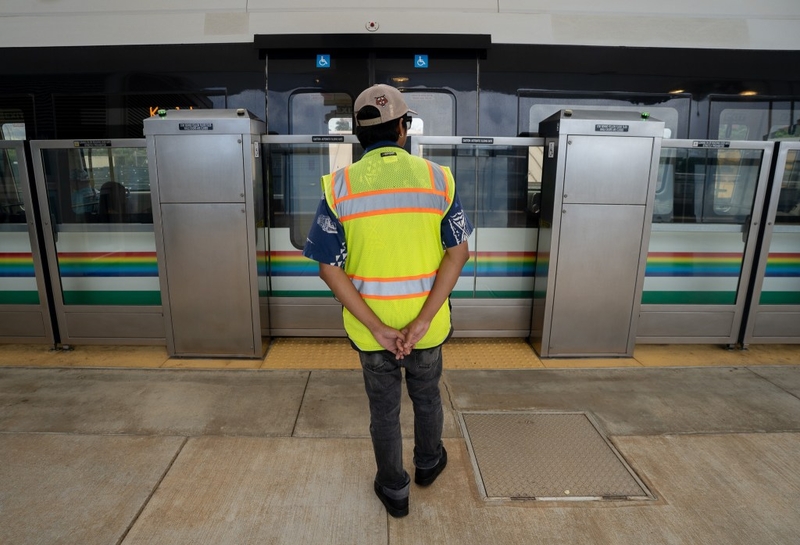
The majority of the station outages don’t last longer than an hour, according to data from the Honolulu Department of Transportation Services. A typical outage, for example, might last roughly 27 minutes due to malfunctioning platform doors that prevent riders from falling onto the track.
One such outage occurred just after 9 a.m. at Waipahu Transit Center on Nov. 8, 2025, the data shows. Other incidents include a 32-minute outage at the airport station the afternoon of Nov. 3, 2025, due to a train malfunction, as well as a communication failure that closed Middle Street and Lagoon Drive stations for 51 minutes starting just before 7 a.m. on a Friday in late April 2026.
During March’s Kona low storm, all stations were shuttered for almost 13 hours starting the afternoon of March 13. They were shuttered again for more than 10 hours starting the next day.
Robert Paaswell, who used to lead the Chicago Transit Authority, said in an interview that it’s hard to compare Honolulu’s rate of service failures with other cities, like New York, whose transit systems are much older and larger.
When he led Chicago’s transit system, he said, his approach was to look at where and for what reason outages were happening frequently and to get them fixed.
“If I was back in Chicago Transit and I saw that that was happening, I would tell my operations people to look at where they’re occurring, look at the frequency, find out what’s causing it, and fix it,” said Paaswell, who is the director emeritus at the City College of New York’s University Transportation Research Center. “I said it in much more colorful language in those days.”
Ota said passenger and staff safety is the system’s top priority, and that Skyline arrives within 10 seconds of its scheduled time in 99.5% of cases. Still, he said, system disruptions occur, and lessons learned from them help inform the Honolulu Authority for Rapid Transportation’s construction of the system as it inches towards urban Honolulu.
Stations in an upcoming segment, planned to stretch from Middle Street to Kakaʻako, will reduce maintenance needs by not including escalators, Ota said. He said escalators could be part of future phase designs.
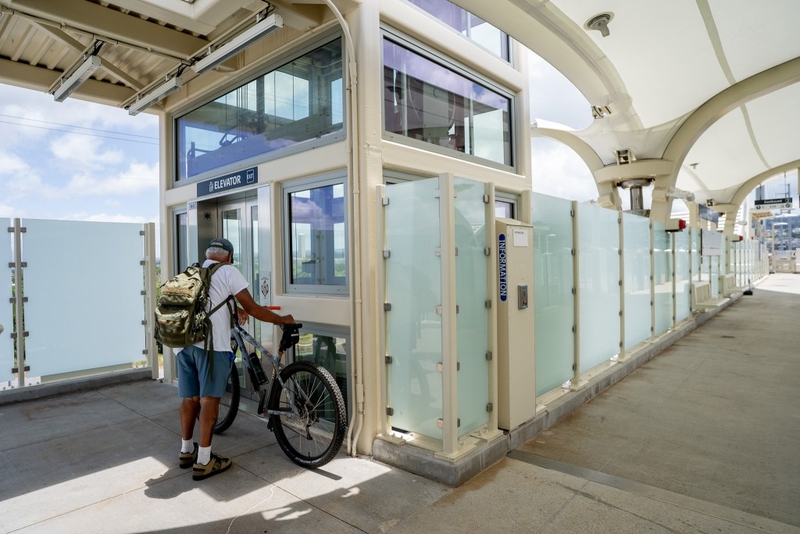
Escalators went out of service 178 times during the six months between Nov. 1 and April 30, including 47 times at the Pearl Highlands station and 30 times at the East Kapolei station.
Ota said Skyline’s elevators are vulnerable to the elements since they operate outside. He said their contractor Schindler repairs them as quickly as possible.
Mixed Feelings About Rail Challenges
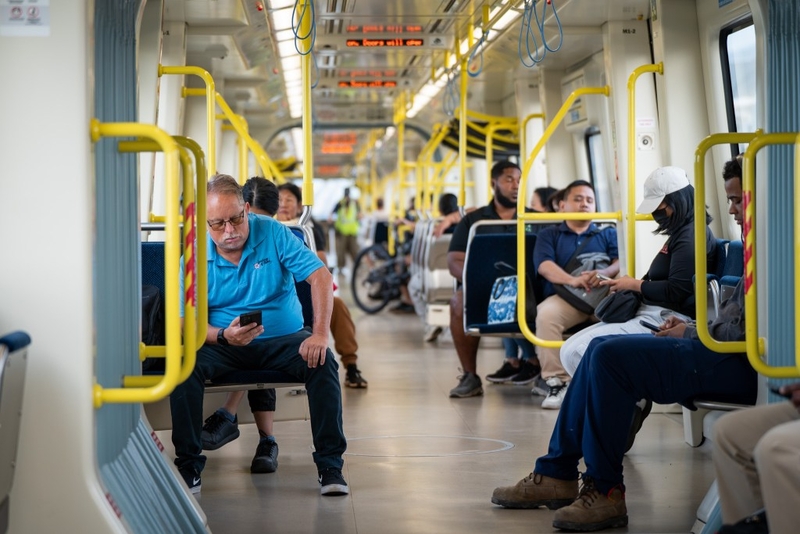
While some Oʻahu residents have derogatory words to say about the island’s vastly delayed and over-budget transit system, riders who actually use it reported good experiences in interviews with Civil Beat. They applaud how the system allows them to commute to work or visit their mothers a few neighborhoods away without having to worry about getting caught in traffic.
“I love it,” Waipahu resident Benito Nalawagan, 60, said. “I just – not laugh, but I look at them and kind of giggle, you know what I mean? Like, all the people in traffic.”
Still, he notices elevators down sometimes once per week, and he said he worries about what that means for passengers with mobility issues.
How are they going to get down or go up, he said.
Natalie Iwasa sits on the HART board and said the issue of station and elevator outages has not come up at board meetings. Speaking in her personal capacity, she said even short outages could inconvenience riders.
“They take the rail and they expect to have a schedule that’s reasonably consistent,” she said. “And if their outages are even 15 minutes, well, that can be significant for somebody who’s going to the airport.”
Iwasa acknowledged Skyline’s strained reputation and said outages don’t help.
“It’s just, from the public’s perspective,” she said, “one more thing that’s going wrong with rail.”

Honolulu, HI