Minimum wage adjusts for inflation in many states and localities July 1, but not in Nevada
Jun 30, 2026 | 7:55 am ET

Description
By one estimate, as many as 115,000 Nevadans earned less than $13 an hour — barely more than minimum wage — in 2025. (Photo by Justin Sullivan/Getty Images)
The minimum wage is going up in 17 states and localities July 1, but Nevada isn’t one of them.
With one or two exceptions, this summer’s minimum wage increases across the country are the result of statutes or ordinances by which the wage is adjusted each year for inflation, according to tracking by the Economic Policy Institute.
Nevada lawmakers enacted legislation in 2019 that began increasing the state minimum wage in increments, a process that culminated at $11 an hour in July 2024 for employees with employer-provided health care, and $12 an hour for employees without.
In 2022 Nevada voters approved a ballot measure that eliminated the two-tiered structure and applied the $12 minimum to all workers.
Neither the 2019 law enacted by the Nevada Legislature nor the successful ballot initiative presented to Nevada voters in 2022 indexed the minimum wage to inflation.
Annual adjustments to the minimum wage to account for the rising cost of living occur in dozens of states, cities, and counties nationwide, according to EPI.
Nevada is “Dillon’s rule” state, which means the authority of cities and counties is limited to duties authorized by the state. State lawmakers have not empowered Nevada local governments to increase minimum wages in their counties or cities.
If Nevada’s wage were annually adjusted in accordance with the U.S. Bureau of Labor Statistics Consumer Price Index calculator tool, the $12 wage would have risen to $12.32 in July 2025, and would have reached $12.78 this year.
Since prices and wages began rising as the economy emerged from the pandemic, a common refrain is that most minimum wage laws— and certainly the federal $7.25 wage — are irrelevant, because the labor market is already forcing employers to pay more than the minimum.
That could help explain why the minimum wage has not been a prominent political issue in Nevada in recent campaign cycles, including this year’s.
But as many as 115,000 Nevadans earned less than $13 an hour — barely more than minimum wage — in 2025, according to a wage tracker developed by EPI based on data collected by the Current Population Survey, a joint project of the Census Bureau and the Bureau of Labor Statistics.
“A higher minimum wage has a positive impact on more than just the workers who currently earn the minimum wage,” EPI’s analysis notes. Even workers who make more than the minimum wage “see their pay go up too as employers adjust their wage ladders to the new wage floor.”
While indexing the minimum wage to inflation is “commonsense policy,” it “is not the strongest way to protect the value of the minimum wage,” EPI added. “In a well-functioning economy, wages for most workers—especially higher wage workers—will grow faster than inflation. If the minimum wage only rises at the rate of price growth, then over time, this can increase inequality between low-wage workers and everyone else.”
Meanwhile, whatever the rate of inflation over the next 12 months, barring unexpected action by lawmakers and a governor when the Nevada Legislature convenes again after the first of the year, on July 1, 2027, the Nevada minimum wage will still be $12 an hour.
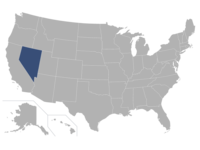
Las Vegas, NV