I’m a foster parent. Here’s what West Virginia’s foster children lose when schools close.
Jun 30, 2026 | 5:55 am ET
Description
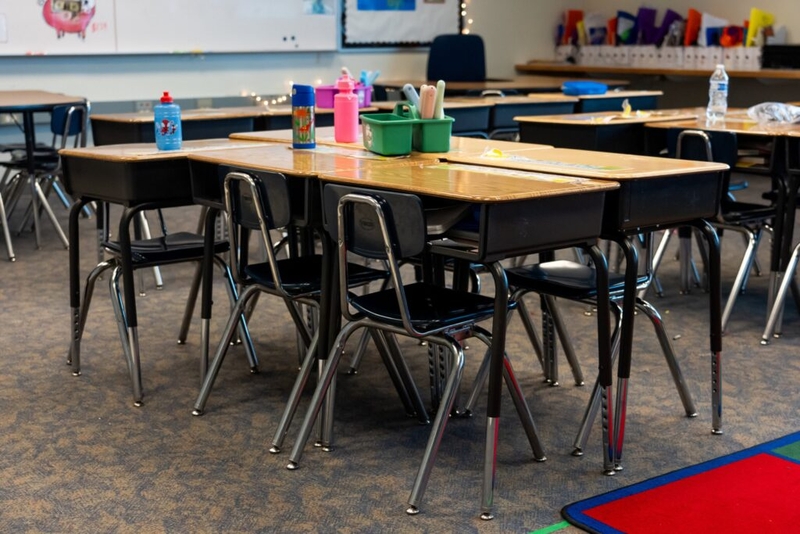
A classroom at Woodrow Wilson Elementary School in South Salt Lake City, Utah, on March 12, 2024. (Photo by Spenser Heaps/Utah News Dispatch)
My brother spent part of his teenage years in foster care. It wasn’t a simple situation, but he landed with a placement where someone genuinely cared about him. That person helped him refocus at a time when the path in front of him could have gone very differently. I’ve thought about him a lot lately, as I’ve watched West Virginia close the very institutions that can do for other foster children what that placement did for my brother: offer consistency and care.
I am a foster parent in Upshur County, and the elementary school my children and foster children have attended is slated to close. Rock Cave Elementary, a small school rooted in a tight-knit rural community, is set to be shuttered by the 2026–27 school year and its students absorbed into a school that is already near capacity. And while I’ve been fighting this closure and others at board meetings and hearings and even in Charleston, I’ve noticed that one group is almost entirely absent from the conversation: foster children.
West Virginia has one of the highest rates of children in foster care in the nation. These are kids who have already experienced disruption. They’ve been removed from homes, separated from siblings, navigated court systems and caseworkers and uncertainty that most of us will never know. When a foster child walks into a school, they are not just looking for a place to learn to read. They are looking for a feeling of stability. For someone who will notice them. For a place that feels safe.
Small rural elementary schools, whatever their budget limitations, offer something that is hard to replicate at larger schools: the teachers know your name before you arrive. When my foster children came to Rock Cave, some were behind academically. But their teachers didn’t treat them as if they were holding anyone up. They truly went above and beyond, eventually helping them catch up with their peers. When life pulled these children away from our care and then brought them back again, teachers who had known them from years before were still there, still remembered them, still happy to see them, still ready to meet them where they were. For a child whose life has been defined by instability, that kind of continuity is everything.
The prospect of moving to a larger, unfamiliar school is already weighing on them. In a life full of disruptions that they did not choose, this is simply one more coming down the pike.
When people talk about the finance of school closure, what they need to understand is that school closures are almost never a net positive — whatever money is saved is lost when families move out of counties where there is no longer a local school. Student achievement goes down. Communities suffer the loss of a draw for new residents.
The Legislature knows this. They’ve been told — by community members, by advocacy groups, and most recently by an independent research group they paid over $100,000 to — that updating the way West Virginia funds its public schools is a surefire way to mitigate some of the losses that communities across the state are suffering.
My ask to Gov. Patrick Morrissey and the Legislature is straightforward: pause these closures while you fix the underlying problem. Amend the funding formula. And when you are making decisions about schools, remember that the children most affected are often those with no voice.
The future of West Virginia is not in vacant buildings. It is in the children who will one day be nurses, teachers, firefighters and neighbors. We need to decide whether we are going to invest in them or keep closing the doors.
Charleston, WV