Pa. joins multi-state lawsuit against Trump administration over Medicaid work requirement rules
Jun 29, 2026 | 7:00 pm ET

Description
Voters say the cost of healthcare will be a major factor in how they vote in this year's midterm elections. (Getty Images)
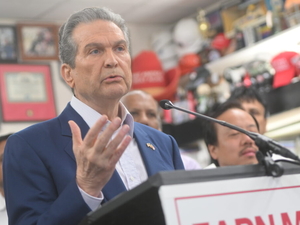
Gov. Josh Shapiro announced on Monday that the state will join a multi-state legal action against President Donald Trump “for trying to rip away Medicaid from Pennsylvanians who need it most.”
“Donald Trump, Dr. (Mehmet) Oz and RFK Jr. are hellbent on trying to push aside people who rely on Medicaid to get the care they need,” said Shapiro. “But here in Pennsylvania, we’re going to keep standing up to protect our most vulnerable Pennsylvanians.”
U.S. Health and Human Services Secretary Robert F. Kennedy Jr. and Oz, who leads the Centers for Medicare and Medicaid Services (CMS), have spearheaded efforts to rein in Medicaid spending under the direction of Trump.
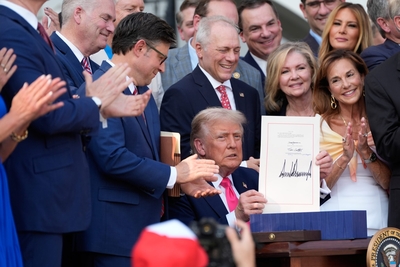
Under last year’s One Big Beautiful Bill Act, otherwise known as H.R. 1, certain Americans who rely on the program for healthcare coverage will be subject to community engagement requirements and must document their work or volunteer hours to keep their benefits.
There are limited exceptions for parents or those seeking treatment for substance use disorder, but the definition of medical frailty was a focus of Monday’s lawsuit.
Two dozen states and Washington, D.C. also signed onto the legal filing.
“CMS’s final rule will cause harm and chaos for Plaintiff States. The work that State Medicaid agencies need to do in order to implement H.R. 1’s provisions is complex, expensive, and takes substantial time and attention to perform correctly,” read the filing. “Therefore, Plaintiffs cannot wait to see whether CMS fixes the clear deficiencies in its decision-making process before seeking legal protection for State Medicaid programs and State residents who depend upon them.”
Earlier this month, CMS outlined guidance for states determining if an applicant is considered to be medically frail, which can include a diagnosis like cancer or HIV or disability like blindness. The new rule requires someone’s ability to work to be “significantly” impaired to qualify, a standard some found to be “restrictive.”
Citing the looming deadline to implement the new requirements by next year, the states collectively said they’d made plans with looser definitions following earlier guidance.
In addition to Pennsylvania, state attorneys general and governors from the following states joined the lawsuit, which was filed in a Massachusetts federal court: Massachusetts, California, New Jersey, Arizona, Colorado, Connecticut, Delaware, D.C., Hawai’i, Illinois, Kentucky, Maine, Maryland, Michigan, Minnesota, New Mexico, New York, Nevada, North Carolina, Oregon, Rhode Island, Vermont, Virginia, Washington and Wisconsin.
More details
Other portions of the guidance “will create unnecessary bureaucracy,” according to the filing, and could cause some people to lose coverage by going beyond what was written by Congress. When Arkansas launched a similar state-wide requirement, thousands lost coverage but work participation didn’t increase. The pilot lasted less than a year.
“It will further strain safety net providers, lead to more uncompensated emergency care, and raise other costs associated with newly uninsured, medically frail residents,” the plaintiffs said. “And it will cause rural hospitals to be even more likely to shutter.”
The $50 billion Rural Health Transformation Plan was a last-minute addition to H.R. 1 to counter the latter, though states are limited in how they can support healthcare providers. Twelve Pennsylvania hospitals were identified as being “at risk” of closure in a recent report from Public Citizen because of the new Medicaid restrictions.
Many enrollees aren’t even sure if the new rules apply to them, though everyone who gets coverage under Medicaid expansion will be required to meet them.
“An individual with a serious or complex medical condition may potentially be able to comply with the community engagement requirements one month and unable to do so the next due to the flare up of a condition or fluctuation in symptom expression, for example. Other individuals, like those undergoing cancer treatment and those with uncontrolled diabetes, may be unable to work consistently,” read the lawsuit.
“For these individuals, losing Medicaid coverage is likely to cause their health to worsen and decrease their ability to comply with work requirements even further,” it continued.
States are also accustomed to more flexibility under Medicaid, catering programs to the unique needs to their residents. With medical frailty, states like Pennsylvania indicated that they would take an applicant at their word in certain circumstances, otherwise known as “self attestation,” which the federal government opposes.
Following the new guidance, certain medical frailty claims must be confirmed by a healthcare provider within six months — though past CMS communication seemed to be more lenient, according to the lawsuit.
Plaintiffs seek a stay, or pause, on the requirements related to medical frailty.
Monday’s filing isn’t Shapiro’s first time suing the Trump administration over cuts to entitlement programs. When a federal budget impasse threatened funding for food benefits in the fall, the state was a party in a lawsuit to force their restoration. Over a year ago, when Trump blocked Medicaid dollars from going to reproductive healthcare provider Planned Parenthood, Shapiro also joined on.
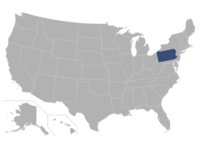
Harrisburg, PA