State commission returns to monitor insurance coverage under Trump administration
Jun 29, 2026 | 7:18 pm ET

Description
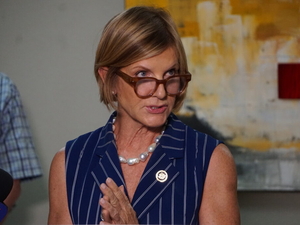
Maryland Insurance Commissioner Marie Grant during a meeting of the Maryland Health Insurance Coverage Protection Commission. (Photo by Danielle J. Brown/Maryland Matters)
Almost 10 years ago, Maryland lawmakers pulled together a watchdog group of state officials, representatives for insurance companies and healthcare advocates to monitor health insurance coverage under President Donald Trump’s first term.
The group disbanded during President Joe Biden’s term, but now as the second Trump administration pushes policies that could shake thousands of Marylanders off their insurance plans and increase healthcare costs, the Maryland Health Insurance Coverage Protection Commission is back.
“The reason that we are here is that, although we’ve made many changes over the last decade… we need more,” Del. Bonnie Cullison (D-Montgomery), co-chair of the commission, said Monday. “Because things are changing, we have less federal support,” she said.
The General Assembly initially created the commission in 2017, which operated through December 2021. Last year, lawmakers passed legislation to revive the 25-member group, and the latest iteration met for the first time on Monday.
“So now we will begin looking at these new programs, new possibilities and perhaps improving our current programs, being as innovative as we can,” Cullison said.
Cullison co-chairs the commission with Sen. Cory McCray (D-Baltimore City). Also on the commission is Maryland Health Secretary Meena Seshamani and Maryland Insurance Administration Marie Grant, along with representatives for health insurance companies, advocates for healthcare access, physicians and others.

“The composition of this commission is really important,” Seshamani said during the meeting. “I think it is important that we have all aspects of the healthcare ecosystem here together working through these problems … there are pushes and pulls that we are all going to have to be grappling with together.”
As of the Monday meeting, there are seven vacancies on the commission to be filled by appointments from Gov. Wes Moore and House Speaker Joseline Peña-Melnyk (D-Prince George’s and Anne Arundel).
The first meeting was largely organizational, with presentations from state insurance officials and administrators of the Maryland Health Benefit Exchange, updating the commission on the recent premium rate increase proposals and ongoing concerns of reduced enrollment in health insurance.
“I want to acknowledge: No one in Maryland thinks their health care is affordable,” said Insurance Commissioner Marie Grant, “but in comparison to the rest of the country, Maryland does have the lowest individual market.”
That’s partially because of some of the policies put out by the commission’s previous iteration.
Maryland health insurers want to raise premiums an average 13.7% for individual plans in 2027
One such measure is what’s called the reinsurance program, a special fund through which insurers are reimbursed for a portion of the costs of patients requiring the most expensive care.
The reinsurance program is funded through a 1% assessment on health insurance policies and is currently set to end in 2028. To extend the program, Maryland lawmakers would need to pass legislation in 2027 to ask for an extension from the federal government, which would then approve, or reject, the extension.
The reinsurance program helps keep costs down for consumers by offsetting the financial impact of expensive healthcare. In recent years, available funds from the assessment have been used to sustain the state’s young adult subsidy, which helps keep generally healthy Marylanders enrolled in insurance plans who may otherwise skip out on coverage to save money.
The young adult subsidy program was also developed out of the previous commission’s work. Extending the reinsurance program will likely be a reoccurring topic, among many others, as the commission continues to meet throughout the year.
The most recent concern is the 13.7% rate hike Maryland insurance companies are requesting. It’s the second year in a row insurers have asked to steeply raise monthly premium rates for those who buy insurance on the state’s insurance marketplace.

The proposed rate increase, if it’s approved by the Maryland Insurance Administration, will add to rising healthcare costs all around. Meanwhile, future Medicaid work requirements may lead to people losing coverage as well as families struggling to stay enrolled due to increased paperwork.
Despite those challenges, Vincent DeMarco, president of the Maryland Health Care for All Coalition who sits on the commission, said it was the policies from the previous commission that left Marylanders “much better off” than some in other states.
“There is a lot more we have to do,” DeMarco said.
Annapolis, MD