US Supreme Court will hear challenge to WA runaway youth law
Jun 29, 2026 | 6:53 pm ET
Description
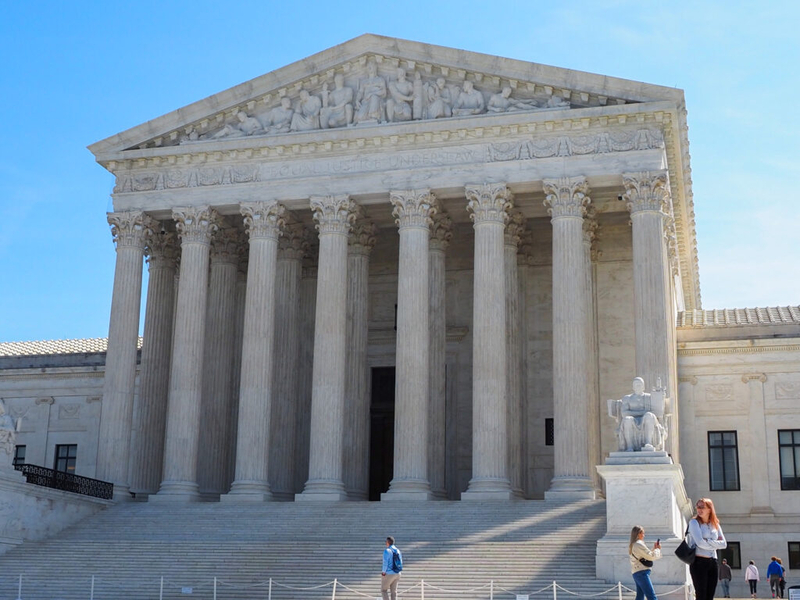
The U.S. Supreme Court building pictured April 9, 2026. (Photo by Ashley Murray/States Newsroom)
The U.S. Supreme Court announced Monday it will consider the legality of a Washington law to protect runaway transgender youth that opponents contend tramples on parental rights.
Justices will review a lower court’s dismissal of a challenge to the 2023 statute, which allows operators of emergency shelters to notify state authorities, rather than parents, when children seek refuge as they pursue gender-affirming care and support services.
As part of the case, the court will also examine related state guidelines for reuniting runaway youth with their families, and a longstanding Washington law which allows children as young as 13 to receive outpatient treatment without a parent’s or guardian’s consent.
With acceptance of the case for its term beginning in October, the court will enter the fierce, nationwide debate on the boundaries between state power and parental rights.
Parents who took up the legal fight three years ago with the help of Stephen Miller, now President Donald Trump’s deputy chief of staff, contend the state cannot withhold information, even briefly, on their child’s whereabouts. They argue the same goes for health care decisions a child may be considering, such as obtaining gender affirming care or mental health treatment. To do so violates what they describe as their parental constitutional rights.
“We’re looking forward to establishing to the Court’s satisfaction that parents have legal standing to challenge laws like Washington’s — laws designed to keep parents in the dark about their children’s gender identity, consideration of gender transitions, and other subjects on which parents have a legitimate interest,” said Gene Schaerr, lead attorney for parents and organizations suing the state.
Washington law requires parents to be notified within 72 hours of their child’s arrival at an emergency shelter unless there are “compelling reasons” not to do so. If there are signs of abuse or neglect, for example, shelter staff can inform the state Department of Children, Youth and Families, which would take the lead on reaching out to parents.
This court fight stems from Senate Bill 5599, which expanded the list of compelling reasons a young person feels they could be subject to abuse or neglect to cover situations where they are pursuing gender-affirming care or reproductive health services. Authored by Sen. Marko Liias, D-Edmonds, it passed along party lines and was signed by then Gov. Jay Inslee, also a Democrat.
Opponents of the law tried to repeal it with a referendum, but did not gather enough signatures.
Days after that effort failed, America First Legal, a conservative group founded by Miller, sued on behalf of several parents whose teenage children exhibited signs of gender dysphoria, but had not run away, and two nonprofits, International Partners for Ethical Care, Inc. and Advocates Protecting Children. Both those groups oppose gender-affirming care for children.
The lawsuit argued the statute “deprives certain parents — but not all parents — of their fundamental right under the U.S. Constitution to direct the care and upbringing of their children, as well as their rights to the free exercise of religion, due process, free speech, and equal protection.”
In May 2024, U.S. District Court Judge Robert Bryan dismissed the suit, siding with the state argument that those challenging the law lacked legal standing to sue because they could not prove they suffered actual or imminent harm from the statute. Last July, the 9th U.S. Circuit Court of Appeals in San Francisco upheld that ruling.
The state reiterated its position in a filing opposing the petition to the Supreme Court. It asserted the parents who sued based their claim of injury “on their worry that at some point in the future, their children might identify as transgender, then might run away, then might seek refuge with a licensed shelter, then might decline reconciliation services, then might accept a referral for behavioral health services, and then might ultimately receive gender-affirming care.”
The lower courts, the filing continued, found “this theoretical chain of events was too speculative to show that the challenged laws have injured or will likely soon injure.”
On Monday, Attorney General Nick Brown’s office pointed to those lower court rulings upholding the contested law.
“We will be prepared to successfully defend it at the Supreme Court,” said spokesman Mike Faulk.
There were 20 briefs filed in support of the court taking the case. They came from individuals, religious organizations, parent rights groups, and political coalitions.
Among them was an amicus brief filed by 14 states led by the Republican attorneys general of Idaho and Florida that urged the court to intervene “to secure parental rights nationwide.”
“The threat that Petitioners’ children will exercise their Washington-given right to run away and seek irreversible life-changing treatment looms over every interaction Petitioners have with their children,” reads the states’ brief. “The Ninth Circuit would not correct Washington’s trampling of parental rights, but this Court should.”
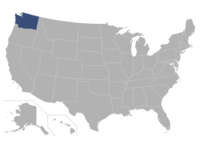
Olympia, WA