Judge: Plaintiffs lack standing in case challenging law making illegal immigration state crime
Jun 29, 2026 | 12:33 pm ET
Description
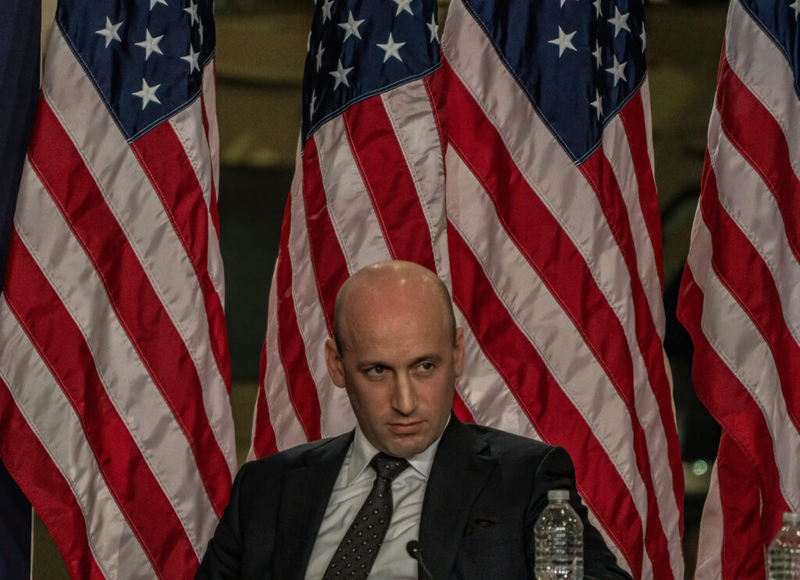
Tennessee House Speaker Cameron Sexton praised the "brilliant mind" of White House Deputy Chief of Staff Stephen Miller, who has collaborated with Sexton to craft a package of anti-immigration legislation. A federal judge dismissed a lawsuit challenging a new law that was part of the package. (Photo: John Partipilo/Tennessee Lookout)
An ACLU and National Immigration Law Center challenge to a new Tennessee law that makes it a crime for immigrants without legal status to enter or remain in the state was dismissed by a federal judge Friday.
U.S. District Court Judge Eli Richardson ruled that plaintiffs in the case lacked standing to challenge the state law, stating in his decision the lawsuit “is more attorney-driven rather than client-driven.”
Richardson, who was appointed by President Donald Trump in 2018, did not rule on the merits of the law, leaving the door open to future challenges.
Lawsuit seeks to halt Tennessee law making illegal immigration a state crime
Tennessee Republicans enacted the new law that made illegal immigration a state crime as part of its so-called “Immigration 2026” agenda. Republican lawmakers passed a slate of laws proposed by Crossville Republican House Speaker Cameron Sexton, after he met with Stephen Miller, Trump’s Deputy Chief of Staff and key advisor on the President’s immigration and mass deportation agenda.
Lawmakers also passed legislation that creates new immigration verification requirements for public benefits, requires sheriffs to enter cooperative agreements with U.S. Immigration and Customs Enforcement and imposes penalties on truck drivers who don’t speak fluent English.
The law being challenged will go into effect on July 1 and makes it a Class A misdemeanor under state criminal law for noncitizens to intentionally remain in Tennessee more than 90 days after being issued a final deportation order by a federal immigration judge. Class A misdemeanors carry a sentence of up to one year in jail and a maximum $2,500 fine.
The legislation also makes it a crime for immigrants without legal status to enter, or attempt to enter, the state. This provision will take effect only if the U.S. Supreme Court overturns a previous Arizona ruling holding that states cannot usurp federal immigration law. The provision may also take effect if Congress explicitly authorizes states to assume immigration enforcement duties.
The order
Nashville, TN