Officials’ ‘Grab And Go’ Taking Of Girl Leads To $950,000 Payout
Jun 29, 2026 | 6:01 am ET
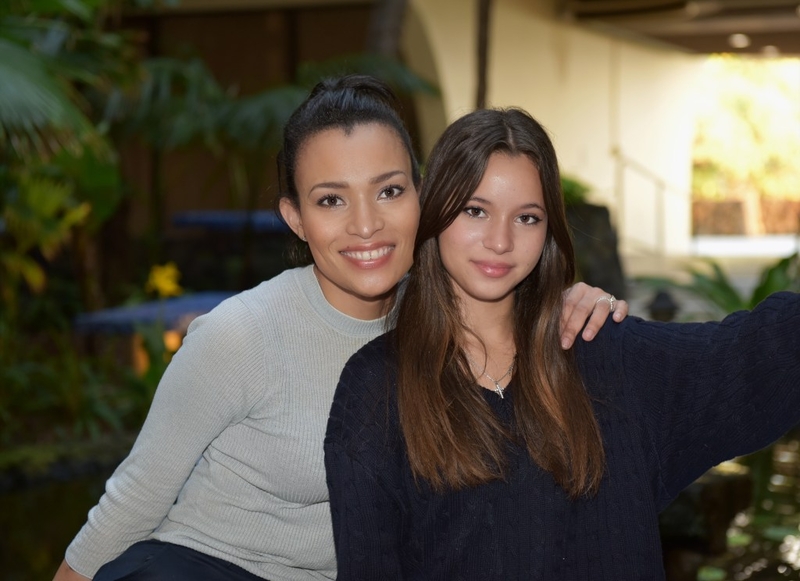
Description
Photo courtesy of Honolulu Civil Beat
The state of Hawaiʻi and Kauaʻi County have paid almost $1 million to settle a case in which government officials took a fifth grade girl from her Big Island classroom without telling her mother, then flew her to Kauaʻi to live with a biological father she barely knew.
The six-year case highlighted the state’s practice of removing children from their parents without a court order despite a constitutional requirement to get approval from a judge unless the child is in immediate danger.
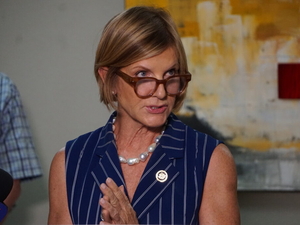
“This was a horrible experience for the child and the mother to have to go through, and there’s absolutely no excuse for the conduct,” said Eric Seitz, attorney for the mother, Hannah Wine.
Seitz said he hoped the sizable settlement “represents enough to have an impact on whether these kinds of events will be repeated or not …
“The practice of taking kids without court orders has to stop immediately, and I would hope that public opinion would eventually cause that to occur.”
Plaintiff Wine called the government’s seizure of her daughter from her classroom — what one judge called a “grab and go” operation — “a vengeful act.”
“It’s unconstitutional and it wrecks families,” she said.
A Civil Beat series, Hawaiʻi vs. Parental Rights, found that 85% of removals in the 2021 fiscal year were done without approval by a judge. That made Hawaiʻi an outlier among the nine states and two territories under the purview of the U.S. Court of Appeals for the 9th Circuit, which in several opinions has found that children can only be removed without a court order if they are in imminent danger.
A law passed in 2024 aimed to reduce the number of child removals done without a court order.
Asked how often that still happens, DHS Director Joseph Campos said in a prepared statement that the department “does not have the specific data that you are requesting in a format that is readily retrievable.”
A Confrontation At A Shopping Mall
The recently settled case began in 2019, when Wine and her daughter Bella flew from their home on the Big Island to Kauaʻi, where Wine grew up, to visit family and for Bella to do a modeling job at a shopping mall.
In 2012, Wine had gotten full custody of Bella, as well as a protective order barring the biological father, William “Butch” Keahiolalo, from making contact with them.
But at the mall, Keahiolalo approached both Wine and her daughter, she alleged, at one point telling Bella that he was “your dad” and handing her a note with his name and phone number.
The next day, an enraged Wine confronted Keahiolalo at the fire station where he worked, shoving him and berating him while Bella stood nearby. Eventually, she pleaded no contest to misdemeanor assault, a charge that was later dismissed after she complied with the court’s conditions.
After that incident, Keahiolalo met with Gina Kaulukukui, the domestic violence coordinator for the Kauaʻi Police Department, for help in preparing a temporary restraining order against Wine, according to Wine’s later lawsuit.
The petition also forbade Wine from having contact with her own daughter, despite the fact that she’d had full custody since 2012 and lived with Bella on the Big Island. The lawsuit alleged that Keahiolalo and Kaulukukui failed to disclose those facts to the judge who approved the TRO.
On the strength of that order, they made plans with CWS to remove Bella from her Big Island classroom.
When school officials told Bella that her father was there to pick her up, she assumed that meant her mother’s partner of nine years, who lived with them. Instead, it was Keahiolalo, who she had seen only one time — the incident at the mall — since her mother got custody in 2012.

A contingent of police and CWS workers told Bella she was leaving right away for Kauaʻi and took her to Keahiolalo’s rental car to be driven to the Kona airport. Soon after, police arrived at Wine’s home to serve her with the restraining order and to tell her that her daughter was on a plane to Kauaʻi.
It took three weeks, during which Bella lived with Keahiolalo and two different foster families, for Wine to get a judge to order her return.
Wine’s lawsuit wound its way through various federal and state courts for six years before being settled in March. Payment of the $950,000 settlement, approved by the Kauaʻi County Council and the Legislature, was split evenly between the two governments.
Kauaʻi is paying its share from its general fund because it had not reached the limit for liability insurance to kick in, a spokesman said. DHS said its share was approved through the normal legislative process and did not answer a question about how much of it would come from taxpayers versus insurance and, if the latter, whether the settlement would drive up insurance rates.
When Bella, now 17 and going into her senior year of high school, made it home in 2020, she told her mother’s partner that she wanted them to get married and for him to adopt her.
And that’s what happened.
“It really brought us together and solidified us as a family,” Hannah Wine said.
Still, the effects of the incident have lingered, she said.
“If I don’t know exactly where she is, that is beyond extreme for me,” she said of Bella. “That’s something that hasn’t gone away.”
As for the consequences for the government defendants, Wine said she saw the settlement as an admission of guilt, though not as clear as if there had been a verdict after a trial.
But, she added, “I’m confused about how a lot of these people have kept their jobs.”
Civil Beat's reporting on women's and girls' issues is funded in part by the Frost Family Foundation.
Honolulu, HI