Lawmakers overhaul how West Virginia provides clothes, beds to foster kids in need
Jun 24, 2026 | 9:33 am ET

Description
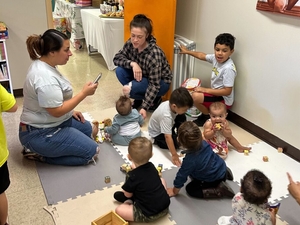
A new West Virginia law mandates that the state change how it provides clothes and other necessary items to kids entering foster care. (Stock photo by Thanasis/Getty Images)
West Virginia is changing how it provides clothing, beds, diapers and more to foster kids with immediate needs after lawmakers mandated an update to the program.
Lawmakers unanimously approved legislation, which went into effect this month, requiring the Department of Human Services to provide an electronic card to children entering foster care so caregivers can purchase clothes and approved necessary items at nearby stores.

“There’s just so much difficulty introducing kids to a new home. Anything you can do to simplify that first week for foster parents and for the kids is just gonna make life so much better,” said Brenda Kaschner, a foster parent in Doddridge County. “Those first few days are rough.”
Around one-third of West Virginia’s 5,880 children in foster care live with a family member – often grandparents raising their grandchildren.
Aimee Goddard, who runs Hands of Hope Foster Closet in Bridgeport, said she regularly provides items – like car seats, cribs and infant clothes – to grandparents in need.
“They may have three grandchildren dropped off at their house, and they have nothing,” said Goddard, who started the program in 2018 with a church as a way to support foster families in her area. “We just started noticing that people had needs … and they needed them early, especially kinship placements.”
West Virginia Watch reported that the clothing and necessity voucher program has previously limited foster parents and kinship caregivers to shopping only at Gabe’s, a discount chain store with 10 locations in the state that didn’t often have car seats, crib mattresses or bottles in stock. Families could be reimbursed for purchases at other stores, but that money wasn’t always provided promptly.
Kaschner said three foster children, ages 3, 10 and 12, arrived at her home at 1 a.m. without winter coats or shoes that fit. She took them to a nearby Gabe’s, which had limited options in the items and sizes she needed.
“I took three kids who had just been taken out of an awful situation and placed to my home. They didn’t know me … I’m taking them the very next day because they had nothing. It would have been nice to go and get a few things to get us through a few days, and then when we weren’t so exhausted, go again,” she said.
The vouchers have been $375 per child and could only be used at one time of purchase.
“I couldn’t find pajamas for either of the boys,” Kaschner said. “If you don’t spend it all, you just lose what you don’t spend.”
“That was just a really frustrating experience,” she added.
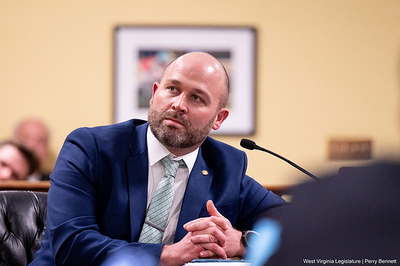
House of Delegates member Adam Burkhammer, a foster parent, felt the system needed to be changed to better support foster families.
“There’s only so many Gabe’s across the state – not everybody lives close to them,” said Burkhammer, R-Lewis.
House Bill 4354, sponsored by Burkhammer, now requires the state Department of Human Services to provide $375 as an initial allowance on a reloadable electronic card that can be used online or at any store that accepts electronic payments. The card must be issued within 48 hours of a child coming into care for children in need of clothes or other necessities.
“This just supports foster families on that one set of placement. It’s a crazy time for them, it’s a lot of unknowns, they just need to be able to go out and get the necessities (and) start caring for those kids,” he said.
The electronic card can be used multiple times.
“I think we’re always looking at ways to improve how we support our foster families. We do need to do a better job of retaining them, supporting them through all of the processes, through the length of the case,” Burkhammer said. “So, this is just one piece of that puzzle. There’s still a lot of work to do.”
Goddard, an adoptive parent, said the bill was “a huge win.”
“I think that if you want to encourage individuals to continue to foster children, you have to make it easier for them to get the things that these kids need, and I think this bill goes a long way to doing that,” she said.
Gov. Patrick Morrisey signed the measure into law after vetoing several other foster care bills meant to improve care for kids in West Virginia’s troubled child welfare system.
Kendra Boley Rogers, deputy commissioner for the state Bureau for Social Services, told lawmakers in May that the department is still working on logistics about how the new clothing allowance program would work.
Funds could be distributed through an app on a phone or a preloaded card, she said.
“We’re still working out those details to determine … what’s the easiest way, and how we’re actually going to implement,” she said. “I can’t really say (or) give an estimation on when we will have it available for families.”
The bill permits a child welfare worker or case aid to use a purchasing card issued to him or her or the state will reimburse a child placement provider for purchases made using their own funds.
“We’re having ongoing conversations with our providers to make sure that our staff, our child placing agencies, and of course our foster care providers understand as we roll this out what this looks like, so that we can have that support for them, so that this could be an easy transition for them,” Boley Rogers said.
The foster child’s clothing inventory must follow him or her throughout all placements, according to the legislation.
Charleston, WV