‘Better, not bitter:’ Why a redistricted lawmaker keeps fighting
After the U.S. Supreme Court’s Louisiana versus Callais decision gutted Section 2 of the Voting Rights Act, more than a dozen states moved to redraw their congressional district maps. Ten succeeded in quickly pushing through new lines.
Louisiana’s state legislature passed a new map that redrew the majority-Black district seat currently held by Democratic Representative Cleo Fields of Baton Rouge. His voters were at the center of the Callais decision.
Even though his district was redrawn in an effort to bolster Republican ranks in Congress, Fields remains optimistic.




In Episode 32, Fields discusses why the fight for voting rights isn’t over.
Over in South Carolina, the White House pressured the Republican-led state legislature to pass a new GOP-friendly map. If passed, it would have dismantled the district held by the lone Democratic representative of the state.
Jessica Holdman, senior reporter from the South Carolina Daily Gazette, will explain what ended up happening.
Finally, Evening Wrap newsletter author Danielle Gaines shares the top stories she’s watching.
Episode produced and edited by Mallory Cheng. Music for Stories From The States composed by David Singer.
Got questions? An episode idea? Email us at [email protected].
Subscribe to Stories From the States on Apple Podcasts, Spotify and Youtube.
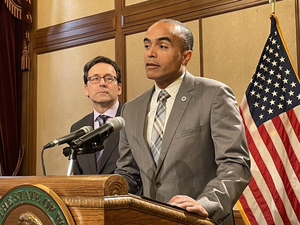
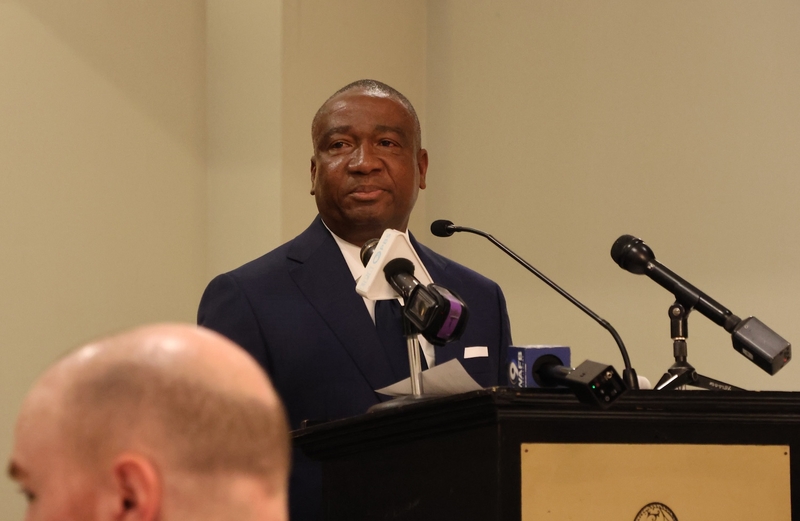
Photo: Louisiana U.S. Representative Cleo Fields, D-Baton Rouge, spoke at the Baton Rouge Press Club luncheon July 28, 2025. (Wes Muller/Louisiana Illuminator)
Stories From The States is a production of States Newsroom, the nation’s largest state-focused nonprofit news organization, with reporting from every capital. At this pivotal moment in American democracy, our veteran journalists from all 50 states are reporting the consequences of government decision making. By zooming into one story each week, Stories From the States contextualizes and gives a human voice to what is happening now.
Transcript was created using an automated software.
Chris Fitzsimon 0:02
This is Stories From The States. I'm Chris Fitzsimon. Here at States Newsroom, we know there's a lot going on around the country in every state capital. Thank you for being here. Today, we're talking about the redistricting fallout from the gutting of the Voting Rights Act after the US Supreme Court's Louisiana versus Callai...
Transcript was created using an automated software.
Chris Fitzsimon 0:02
This is Stories From The States. I'm Chris Fitzsimon. Here at States Newsroom, we know there's a lot going on around the country in every state capital. Thank you for being here. Today, we're talking about the redistricting fallout from the gutting of the Voting Rights Act after the US Supreme Court's Louisiana versus Callais decision, the White House pressured Republican-led South Carolina to pass a new district map. It would have dismantled the district held by the lone Democratic representative in the state. We'll check in with a reporter from the South Carolina Daily Gazette about what happened. Meanwhile, over in Louisiana, lawmakers quickly moved to redraw their maps, reworking lines to eliminate one of two majority Black districts. The redrawn district was at the center of the Callais debate, but the House representative, who serves the area, remains optimistic.
Rep. Cleo Fields 0:49
At the end of the day, I tell people, let this moment make you better, not bitter. You have to continue to vote, and you have to vote more so now than in the past.
Chris Fitzsimon 0:59
Coming up in a moment, we'll chat with Representative Cleo Fields from Baton Rouge.
Chris Fitzsimon 1:10
After the Louisiana versus Callais ruling gutted section two of the Voting Rights Act this year, southern states are now scrambling to draw new lines, including Louisiana. The Louisiana legislature approved a new congressional map that keeps only a single majority Black district among Louisiana's six US House seats. Before the map was passed, the state had two majority Black districts. By eliminating the second Black district the General Assembly created two years ago, Republicans would gain another probable win in their bid to maintain control of Congress in the midterm elections. The majority Black district retained is essentially the same one US Representative Troy Carter, a Democrat from New Orleans, won in 2022. The map removes the Black majority district US Representative Cleo Fields, a Democrat from Baton Rouge, holds. The district was also at the center of the Louisiana versus Callais debate. Joining us now is Representative Fields. Hello, Congressman.
Rep. Cleo Fields 2:03
Hey, how are you, Chris? It's good to be with you as well.
Chris Fitzsimon 2:06
Good, thank you so much. Well, I just want to get.. I know you've been asked this many times, but you have had a long career in politics and been part of the struggle for a long time. I wondered if you ever thought that we would be sitting here talking about the demise of the Voting Rights Act.
Rep. Cleo Fields 2:22
Well, not of the Voting Rights Act, but I always thought, from the day I was elected, that the district was, you know, was was being challenged. I mean, before, at the oath of office, plaintiffs had already filed a lawsuit, and let me just tell you, Chris, I've never served a single day in Congress without a federal lawsuit over my head, and that's just unfortunate the way it has been, but nonetheless, that's always been for the, you know, for my service in Congress. So, no, I did not think they were going to gut the Voting Rights Act, but I always knew that the sixth district was was being attacked.
Chris Fitzsimon 3:01
What does it mean for the voters and the people in your district, and the people of Louisiana, a significant population of people of color in a southern state? What is this? What is this? The ruling and redrawing these districts mean?
Rep. Cleo Fields 3:15
Well, I mean, people of Louisiana, you know, many people rather in Louisiana, very upset. I mean, we have represented the district to the best of our ability, and we've done pretty well, according to the people. I mean, we've held a record number of town hall meetings. We have brought, you know, constituent services to the state, to the sixth congressional district, and people upset about that, but at the end of the day, I tell people, let this moment make you better, not bitter. You have to continue to vote, and you have to vote more so now than in the past. You gotta vote, you know, like your life depended on it, because it really does. I mean, people just taking away people's right, and although we got the 15th and the 19th Amendment right to vote, but you know, as long as states like Louisiana, Mississippi, Alabama can regulate that right by design and deciding what districts are drawn, deciding, you know, how people register to vote. There's always a challenge on your right to vote, and I try to tell that to people all over the district and the state, that this, this one issue can send us back over 60 years. I mean, people bled, people died, people struggled to give, you know, give everybody the right to vote, and you know that was a time in our country Blacks were not even able to vote, and women weren't able to vote. So it's a very precious right, and people need to continue to fight for it.
Chris Fitzsimon 4:52
There are even now some conservative white voters who are suing over the 2024 version with two black districts, they oppose. Even one majority black seat, I mean, have we seen the end of this? You think this, this battle will continue?
Rep. Cleo Fields 5:05
Well, I mean, the battle will certainly continue. We have not seen the end of it, because it's not going to start, stop on Congress on congressional level. It's going to move down to state legislature. I mean, in my local town, the city of Baton Rouge, they're discussing it on the local level, as relates to city council districts, I mean, it's going to go down to school board districts, but the way people should fight back, they should fight back by being a part of the process, they should be registered to vote, they should get every single person they know registered, and they should actually go out and exercise their right to vote every election, and elect people who are sensitive, you know, I mean, this president, for example, sent a dog whistle from the day he took office, he signed an executive order to do away with diversity, equity, and inclusion, you know, that was a dog whistle to everybody in the country that it was okay to, to be exclusive, to exclude people, and the Supreme Court followed through. You know, at the end of the day, there are a lot of good people in this country, and good people are going to stand up and speak in volumes against this very, very draconian ruling of the court.
Chris Fitzsimon 6:24
How do you, how do you reconcile all of our lived life experiences with the what appears to be the claim now that somehow having a majority minority districts is somehow relies too much on race? Is that it's as if I just can't get it through my head, as if they think everything is has been solved.
Rep. Cleo Fields 6:45
Look at the end of the day, race was taken into account when they drew the districts. Let's be real, they drew the districts when they, when the, you know, in the closed door rooms, they had race on the computer, they wanted to make absolutely certain that there was just a certain percentage of Blacks in a particular district, so look, you can't take the politics out of politics. At the end of the day, the Supreme Court, you know, is living in some dream world to say that you can't take race into account of, you know, look, we complied. I was chairman of the committee that created the second majority Black district, and we comply with every ruling of the Supreme Court, every single ruling of the Supreme Court. You know, you have to take race into account. The issue back then was it can't be the predominant factor, and we made it very clear that race was not the predominant factor in the creation of this district. It was politics, I mean, it was just sheer politics, and, and now the Supreme Court has ruled, you know, forget about the effect of what the legislature do does, it's the intent, you know. So, how can you determine the legislative intent in a real sense, I mean, you take this map that they just drew, you know, of course, race was not, you know, a public issue in drawing this district, but these districts, but it certainly was a part of their reasoning, you know, when they were drawing the maps, as I said earlier, they had race on the computer, they just took it out when they decided to file the bill. Race will always be a factor in redistricting, and for anybody to think it's not, it's just, you know, being disingenuous.
Chris Fitzsimon 8:33
You seem to be still cautiously optimistic about the immediate future, and I guess a lot of folks, including me, are worried that our Congress, our general assemblies, our county commissions across the country are going to look a whole lot different in the South than they did before this ruling,
Rep. Cleo Fields 8:51
Perhaps, but I hope not, and, and look, we've been through post Reconstruction before, you know, there were members of Congress, members of the US Senate, you know, members of color had actually went to the polls and exercised their rights, and they elected a candidate of their choice. Listen, one thing that's not going away is the fact that Louisiana, the Black population is over a third, and I encourage people to vote and listen when we pass the Civil Rights Bill, you know, in the 60s it wasn't with Black votes, it was with a majority white legislature, you know, people came to grips with the fact that, you know, what's wrong with inclusion, you know what's wrong with giving people the opportunity to elect a candidate of their choice, and they passed the Voting Rights Bill, and then in 2013 the Supreme Court found it within this infinite wisdom to do away with Subsection Five, which was the pipeline at that time for southern people in the country to elect Black candidates, and then you know you. Know, just this year they did away with Subsection Two, so there is no Voting Rights Act any significance. So I think the next Congress, both Black members, white members, people from all walks of life need to come to grips with the fact that you know this nation is better when we include everybody, and they need to pass the John Lewis Voting Rights Act, immediately nonstop. They need to pass it and need to pass the House, and the President needs to sign it, or should be overwritten. I just think that our country is better when we include everybody. It is our military, you know. When we didn't accept Blacks and women, you know, and it wasn't until we started accepting African Americans and women and people of all walks of life and all colors that our military became the most fierce fighting machine in the world. You know, inclusion is good, not bad, and and America needs to recognize that.
Chris Fitzsimon 11:00
And before I let you go, I wondered about your own political plans. You have said that you weren't going to run against Representative Carter. Do you have any, anything you can tell us about what your future holds?
Rep. Cleo Fields 11:10
Yeah, I'm still evaluating, I'm looking at, you know, all of the districts, quite frankly, and seeing if, if, if, if it makes sense for me to run in any of them, other than Representative Carter. I made it very clear from the offset, I mean, you're not going to pit two African Americans against each other, and I'm going to make that decision for you today. I said I'm out, I'm not running if you put Baton Rouge and New Orleans in the same district, I mean, same thing they did in Texas, no, they put two African Americans in the same district. You know, obviously one thing for certain will happen, one will lose, and we're not going to have that in Louisiana. You know, I've worked too hard for creating majority minority districts, not, you know, for me, but for the people. People have a right to have their voice in Congress, and listen, I mean, back in the 18th century, when John Lewis Menard, who was the first Black person ever elected to Congress in the history of this country, you know, he came here, and you know, all white males stood up and said it was too early for a Negro to be seated in Congress, and they voted him out. They sen him back to New Orleans, you know. So these struggles must continue. I mean, but good people years and years later decided that was, you know, a bad thing, and they started accepting people of color in Congress. And let me finally say this. You know, you know, though, the Voting Rights Act has been eliminated. There are a lot of Black members in this Congress who represent districts that are not majority Black. They're not necessarily from southern states, but they're from states where people, they embrace diversity. They're members of the Congressional Black Caucus, who come from districts, that's only 3% you know Black but people in that district, they they elected them, and hopefully this whole nation will follow suit, and the southern part of our country will be just like every other part of our country, judge people by their character and not by the color their skin.
Chris Fitzsimon 13:24
Well, perfect place to end it. Thank you so much, Congressman Fields. We really appreciate your time.
Rep. Cleo Fields 13:29
Thank you. Thank you.
Chris Fitzsimon 13:35
To stay up to date on where your state stands on redistricting, you can always go to newsfromthe states.com. Over in South Carolina, they were pressured by the Trump administration to redraw their maps, but the GOP-led legislature had a different idea. Coming up in a moment, we'll chat with senior reporter Jessica Holdman from the South Carolina Daily Gazette on what's going on. We'll be right back.
Chris Fitzsimon 14:04
The big policies affect even the smallest communities. That's something we talk about all the time here at States Newsroom. We know firsthand how overwhelming it can all be to sift through all the news around the country, but what if I told you you can get it all in one place, right in your inbox, first thing in the morning, we've launched a new morning newsletter. It's called Daybreak. Every weekday, Daybreak will feature top stories from all 50 states and Washington, DC. Subscribe now for Daybreak at statesnewsroom.com/subscribe.
Chris Fitzsimon 14:35
After the Louisiana versus Callais decision. The White House pressured Republican-led South Carolina to pass a new redistricting map. The new map would have dismantled the lone Democratic district held by longtime Representative Jim Clyburn. However, South Carolina state lawmakers rejected that push in their special session. Jessica Holdman is a senior reporter at the South Carolina Daily Gazette, who's been covering all things redistricting in that state. The Daily Gazette is an outlet with State's Newsroom. Hi, Jessica.
Jessica Holdman 15:07
Hi, Chris.
Chris Fitzsimon 15:08
How are you?
Jessica Holdman 15:08
Not too bad, sort of overcast day here in South Carolina, but in the summer we'll take any break from the heat we can get.
Chris Fitzsimon 15:18
Well, that's right. Shade is always good. Well, let's jump in to start off with. Just for folks who haven't been following, I think a lot of people understand that sort of the national scope. There's been getting a lot of national attention, but for folks who aren't familiar with the politics of South Carolina, why do you think the push to change the districts didn't pass? It's a heavily Republican state.
Jessica Holdman 15:40
Right. So you had some concern, actually, within Republican leadership, within the Republican Party, particularly in the Senate. The biggest concern was that if they went ahead and did this, it could ultimately backfire. The goal was to get to a 7-0, but some of the ways that the districts were redrawn, it made them more competitive.
Chris Fitzsimon 16:04
You mentioned the Republicans internally were split. Is it was it a political decision, or were all - was it all based on politics, or were there some people who were maybe institutionalists and don't believe that districts should be redrawn so quickly?
Jessica Holdman 16:17
I don't know that there was really an opposition to a mid decade redistricting, it was largely political. There were some concerns about the numbers not being accurate, because we would be relying on a census that's over half a decade old at this point, but I would say the biggest concerns, the biggest pushback, and really what ultimately ended it is we got into early voting, and we had massive turnout on the first day of early voting, smashed all previous records, more than 56,000 people on that first day, and for Republicans in the Senate, that was just a line they were not willing to cross.
Chris Fitzsimon 17:06
That people had already voted, and they didn't want to not to throw out those votes?
Jessica Holdman 17:10
People had already cast their ballot. Yeah.
Chris Fitzsimon 17:13
For I think a lot of people have heard the name Jim Clyburn. How much of an issue did it become? It seemed like it was already a national issue, but the fact that he was the one that would have been targeted. Do you think that sort of played a role in the national attention that was given to it?
Jessica Holdman 17:27
I mean, that very well could have been. Obviously, he has been high up in the party, he's been in office for gosh 34 years now, first elected in 1992 has been instrumental here in the South really brought kind of first in the South primaries here to South Carolina played a big role in support for Joe Biden in the state, so he's a big name on the national stage, and perhaps that played into some of the national attention that it was getting, I mean, he's also our only Democrat in Congress. Period.
Chris Fitzsimon 18:05
Is it a foregone conclusion there that they will draw those districts, redraw those districts in the next session after this election?
Jessica Holdman 18:14
I think that really remains to be seen. I don't think it's out of the question, because a lot of it really was that they ran out of time to do it this year. The Democrats, if you talk to them, they would definitely tell you that they are expecting something to come up before the next census is held.
Chris Fitzsimon 18:34
And what was it? What was the Democrats? Obviously, they're in the minority in both the House and the Senate there, but what was their argument against doing this? Was it that people had voted? Was it that he's the only, you know, black member of Congress in South Carolina? What was their argument?
Jessica Holdman 18:49
I mean, I think all of the above. He, we also have a senator who is, who is Black.
Chris Fitzsimon 18:56
Scott, right.
Jessica Holdman 18:56
But I think both of those things factored into it because you had the arguments of diluting the black vote in the state by spreading it out over multiple, multiple districts. It was also rushing the process, trying to get it done with two weeks before early voting started. We had already mailed out ballots to overseas voters, and those were already coming back in, so it was really sort of an election integrity argument that was being made there.
Chris Fitzsimon 19:31
It's interesting that Louisiana obviously went the other direction, they hadn't had early voting, but they had had absentee voting, and their governor, in effect, did throw those votes out, and they redrew the districts. Did anybody bring that up, or was that a factor there?
Jessica Holdman 19:44
Well, I think the argument that would be made there is that Louisiana had to, they had a court ruling that had said that their districts had been racially gerrymandered. South Carolina, on the other hand, had its latest map challenged in court, and defended it in court, and in over the course of two court cases, it was found that it was a political gerrymander, not a racial gerrymander. So we already had a ruling from the US Supreme Court that we were not racially gerrymandered.
Chris Fitzsimon 20:20
What are you looking for on this issue? Is it waiting till next year? Do you think there'll be a lot of discussion about this in the election, or what's the mood in Colombia now about this, about this decision and the districts in general?
Jessica Holdman 20:32
Well, you definitely had among those Republicans who were raising the concerns about, oh, this could backfire. Part of the conversation always already was, what will this do in November? Just by having this conversation, is that going to anger voters, and are they going to be more likely to turn out in force? And what does that mean for maybe some more competitive down ballot races, what does that mean for those state house races who you know, before they might have stood a pretty good chance of staying in office, but if voters are angry enough, does that turn the tide?
Chris Fitzsimon 21:13
Was there any concern that drawing the redrawing these districts would jeopardize any other members of Congress, or was the map so tightly going to be so tightly drawn that they weren't worried.
Jessica Holdman 21:24
No, there was some definite concern about affecting other members of Congress. I think Congressman Joe Wilson's district was one of those that became more competitive. There were also, I guess, districts sort of up around the Charlotte area that split some of those Charlotte suburbs, and questions of was the concentration high enough that you could essentially block out the Democratic vote.
Chris Fitzsimon 21:56
And what about the role of President Trump in all this? He certainly was vocal about all these things in every state, including South Carolina.
Jessica Holdman 22:04
Right. Yeah, I mean, he made calls to members at the General Assembly. His opinion was definitely made known. You saw it in kind of bleed into the governor's race a little bit, in that you had gubernatorial candidates coming up and testifying, and saying we had one candidate say do this now by any means necessary, and so there was definitely a push from push from Washington, DC. On the other hand, South Carolina has sort of long pride itself in not being Washington, and so you saw a little bit of that pushback as well.
Chris Fitzsimon 22:48
I guess maybe it is because South Carolina might be different, but you know it does make me think of Indiana, where they rejected his attempts initially, and then those lawmakers were defeated in the primary. Is anybody in South Carolina worried that he's angry that they didn't do it, or is that just them believing he'll understand South Carolina?
Jessica Holdman 23:07
I think part of it is the Senate is not up for reelection at the moment, so the Senate had a little bit of room to push back because they were not immediately facing election re-election or primary challengers, they could, they have a little bit of buffer room.
Chris Fitzsimon 23:29
Well, it's fascinating, as always. We really appreciate your coverage with the Daily Gazette. Thank you for being with us.
Jessica Holdman 23:34
Absolutely.
Chris Fitzsimon 23:38
Coming up in a moment, we'll chat with Evening Wrap newsletter author Danielle Gaines about the top stories she's looking out for, and one last thing. We'll be right back.
Moses Esheit 23:49
At a time when so many communities are losing their local news outlets, States Newsroom is filling a gap. We are now the nation's largest state-focused nonprofit news organization, with reporters based in every state capital and Washington, DC, but we can't do it without your support. Your contributions allow us to produce award-winning journalism and deliver it to you for free, no pop-ups, no pay walls. This is a crucial time to support local journalism, and every bit helps. To give, go to statesnewsroom.com/donate.
Chris Fitzsimon 24:29
Joining us now is Danielle Gaines, the author of the Evening Wrap newsletter that you can subscribe to at newsfromthestates.com. Danielle, thanks for being with us.
Danielle Gaines 24:38
Of course, hi Chris.
Chris Fitzsimon 24:39
How are you? What, tell us what's been happening. Tell us what. What did you notice this week in the news?
Danielle Gaines 24:45
Not much has been happening, but you know we're learning more by the minute, almost. I would say about a health care program in Tennessee and its involvement with immigration enforcement. So, the Tennessee Department of Health has informed parents of critically ill immigrant children that it will report their immigration status to state authorities after June 30th. We first learned that they would be checking on immigration status for these children, and now in a letter to families, they say that if they receive any money, they'll be reported directly to the state police, who are of course working directly with ICE, this letter went to families in the Children's Special Services Program. This is a state program run by local health departments. It's a last resort public health program for low-income kids with disabilities who are on ventilators, who are at the end of their lives, who have terminal illness, and statewide, 4600 children participated in 2024. It's about a $2.9 million program. The state has not said how many people they think will be affected. Nashville leaders say they think about 100 families, at least in the immediate Nashville area, will be kicked off this program with little to no notice, you know, less than a month, and some healthcare leaders are speaking out, and they're saying it's not hyperbolic to say that children will die if they choose not to stay in the program.
Chris Fitzsimon 26:13
Yeah, it's heartbreaking. Yeah, gosh, that is such a heartbreaking story. What about something that's coming up?
Danielle Gaines 26:19
I figured I'd do a little data center round up. It's something that we're seeing all the time everywhere, so it's such a big and widespread issue. So much going on in the states to look ahead first. Ohio is one of those states where they created a special legislative committee to look at data center issues, and they've had a lot of hearings, a lot of really interesting testimony, really interesting information. And now they've got a Senate bill released this week. It's very wide-ranging. The sponsors say that it seeks to rein in construction incentives, non-disclosure agreements, put more testing and rules in place for water and electricity usage. It is being criticized as not going far enough. It's also being criticized for the speed at which they're trying to get it through the legislative chambers. So, I'll be watching that to see if it gets further changed. Everyone has so many different views on data centers, there's so many different ways you could go about legislating them. And then, in New Mexico, we had a great story, just kind of looking at who was behind a proposal for a big 10,000 acre project, and the community has been rallying against that. The board of county commissioners just voted to do a one year moratorium. The two biggest communities in Kentucky are considering rules on moratorium or rules based on kind of the size of proposed data centers, which is kind of interesting in the mega center in Utah, the celebrity investor Kevin O'Leary, he's promised to scale that one back, but there's still court proceedings that are going to happen over that one, and you know data centers are now kind of at the center of so many political campaigns all across the country, they're like invigorating the races for utility commissioners, which I don't think people were paying much attention to, really.
Chris Fitzsimon 28:13
It's amazing how widespread this is. I mean, it's literally, I feel like almost in almost every state there's some data center issue.
Danielle Gaines 28:20
There's something going on in every state, and then we had a headline that I haven't even had a chance to read yet, but it is inside the boot camp that has been set up in Indianapolis to teach data center construction workers, so I look forward to reading that.
Chris Fitzsimon 28:35
Wow, absolutely, it's amazing. All right, well, one last thing, this is what I look forward to.
Danielle Gaines 28:40
I had you know a little bit of a wonky one this week, but the National Park Service solicited comments from all across the country following an executive order from President Donald Trump to call out historical markers and signs in national parks and public places that quote inappropriately disparage Americans past or present. This, of course, has been accused of whitewashing history, removing information, removing context from the places that we visit. Source New Mexico had a story that of the 738 comments that were received about sites in New Mexico, not a single one identified anything about signage, and instead they all expressed support for the national parks, or for national parks workers. Some of them were also cheeky, so you know the form had a space for like what could use improvement, and somebody wrote at the Volcano National Monument in northern New Mexico, like, quote, no lava, so that's a dormant site that has not erupted for 37,000 years. There were also complaints about lacks of lack of sightings of Bigfoot and the Sierra Club, which is actually the group that got all of these comments. They released more than 35,000 comments nationwide. Side, and said this is a trend in every state, that it was mostly an expression of support for national parks.
Chris Fitzsimon 30:06
Yeah, it's amazing how much the public supports the parks. Anything to damage the parks always gets such a reaction.
Danielle Gaines 30:13
Yeah.
Chris Fitzsimon 30:14
Yeah, it's great. Well, Danielle, as always, great information. Thank you for being with us.
Danielle Gaines 30:19
Thank you.
Chris Fitzsimon 30:23
Thanks for listening to Stories From The States. I'm Chris Fitzsimon. Mallory Cheng produced and edited the podcast. David Singer produced our theme music. If you like what you've heard today, please share it with somebody you think might enjoy it, and leave a rating and review. It means a lot to know what you think about the podcast, and it helps other people find us. To stay up to date on the latest episodes. Subscribe now to Stories From The States, a podcast from States Newsroom, available wherever you listen to podcasts. We'll talk to you soon.