Coastal lawmakers signal it may be time to modify North Carolina’s decades-old ban on seawalls
Jun 10, 2026 | 3:09 pm ET
Description
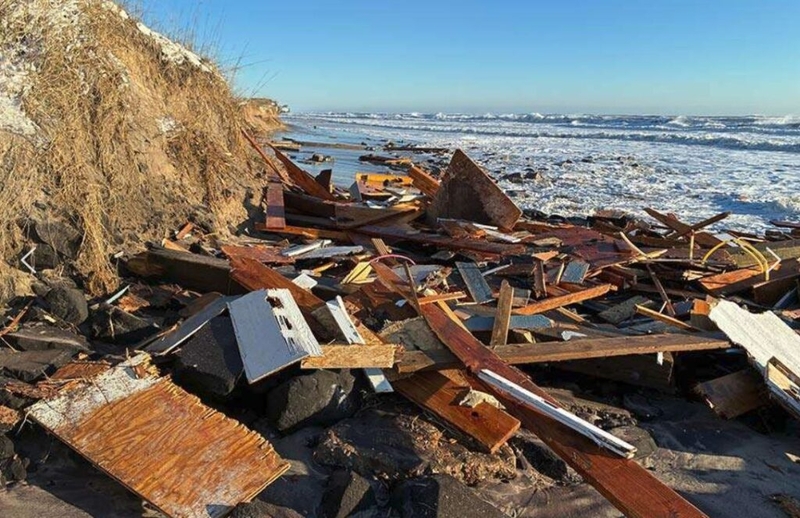
Debris washes ashore at Buxton, N.C. on Feb. 2, 2026, after four more homes collapse into the ocean. (Photo: National Park Service)
Back in the late 1970s, the North Carolina Coastal Resources Commission enacted a seawall ban to protect the state’s sandy beaches and barrier islands.
But the coast has changed dramatically since then. Over the past six years, increased erosion has caused 32 privately owned structures to collapse along the Cape Hatteras National Seashore.
Senator Bob Brinson (R-Craven) says 20 homes have collapsed in Buxton alone since September 2025, and coastal constituents are growing tired of being told nothing can be done to protect their property.
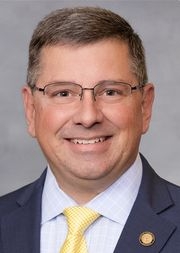
On Wednesday, Brinson introduced two bills to address their concerns.
Senate Bill 1009 would eliminate the ban on hardened structures and require the North Carolina Collaboratory to update the state beach and inlet management plan. Senate Bill 1008 would establish a pilot program to authorize construction of shoreline stabilization pilot projects where oceanfront homes face imminent danger of being lost to the ocean.
“This is not just a private property issue,” Brinson told members of the Senate Agriculture, Energy and Environment committee. “When a house falls into the ocean, debris spreads across miles of public beach. Septic systems and utilities are damaged. Public safety is threatened, and a local tax base disappears.”
Homes are also threatened in Rodanthe, North Topsoil and Figure Eight Island.
Brinson said the NCDOT has spent $17 million on routine maintenance of Highway 12 in Dare County since 2010, plus $51 million more on storm repairs. On Ocracoke, the state has spent nearly $19 million since 2018 on a two-mile stretch where the ocean consistently washes over the highway.
Projects under S1008 will be strictly limited, closely monitored, and will involve no state funds, Brinson said.
“What we’re asking is whether modern, site-specific options exist that would protect homes, roads, utilities, and public beaches without causing unacceptable harm,” he said.
Sen. Julie Mayfield (D-Buncombe) said it’s clear the state needs a comprehensive solution, but hardened structures that prevent erosion in one area tend to increase erosion in other areas.
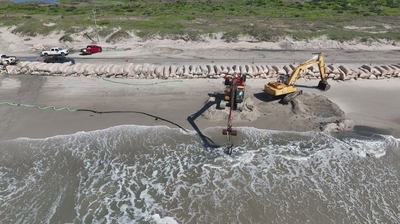
“Unless we do a hard seawall along the entire coast, somebody’s getting helped and somebody’s getting hurt,” said Mayfield. “By every seawall, by every jetty, by every terminal groin, by every bulkhead, by everything that gets put in, there is an adjacent impact that is negative.”
But Brinson said there are instances where hardened structures have done exactly what they were intended to do without negative consequences. The terminal groin at the Marc Basnight Bridge has caused little harm, according to the Division of Coastal Management.
Mayfield said it would be prudent to put the legislation on hold until after the N.C. Coastal Resources Commission meets June 18. The CRC’s science panel is scheduled to present its findings on oceanfront hardened structures.
Sen. Lisa Grafstein (D-Wake) agreed the forthcoming report could inform future legislation. Grafstein also said there needs to be a broader discussion of climate change and beach erosion.
“I think historically there’s been some limitation on consideration of climate change, and that’s probably part of why we are where we are today,” said Grafstein.
A third bill, Senate Bill 1001, offered in committee by Sen. Michael Lazzara (R-Onslow), includes an $800,000 appropriation to the Coastal Storm Damage Mitigation Fund to be used for certain terminal groin permitting, construction or repair costs.
Rob Lammé, representing the North Carolina Coastal Federation, said the General Assembly agreed in the 2011-2012 session to prohibit state funds from being used to build hardened structures on the coast.
“By creating a pathway to state funds in this bill, S1001 breaks that [agreement]” said Lammé. “That has provided really important taxpayer protections, both for coastal taxpayers and for inland taxpayers.”
Lammé said the federation was hopeful Lazzara would reconsider opening the door to using state funds.
The Coastal Federation also rejected the two bills put forth by Brinson.
NC leaders push Congress to help take down at-risk Outer Banks homes — before they collapse
“Hardened structures do not solve the problem of barrier islands moving. That’s part of their natural geology,” said Lammé. “The terminal groins interrupt that natural process. They move the problem to other parts of the shore, and they create more demand for beach nourishment.”
No vote was taken Wednesday. Brinson said the presentation was intended to be a starting point in a longer conversation. He said the bills should not be viewed as an abandonment of beach nourishment or dune restoration in favor of widespread construction.
“We’re not asking permission to make the Outer Banks look like New Jersey. We’re not interested in that,” reassured Brinson. “But what we’re looking for is limited hardened structure projects that can protect our public beaches, protect our public property and protect our environment.”
Raleigh, NC