Lawsuit filed in Arkansas over secret agreement for military drone manufacturer
Jun 10, 2026 | 6:05 pm ET
Description
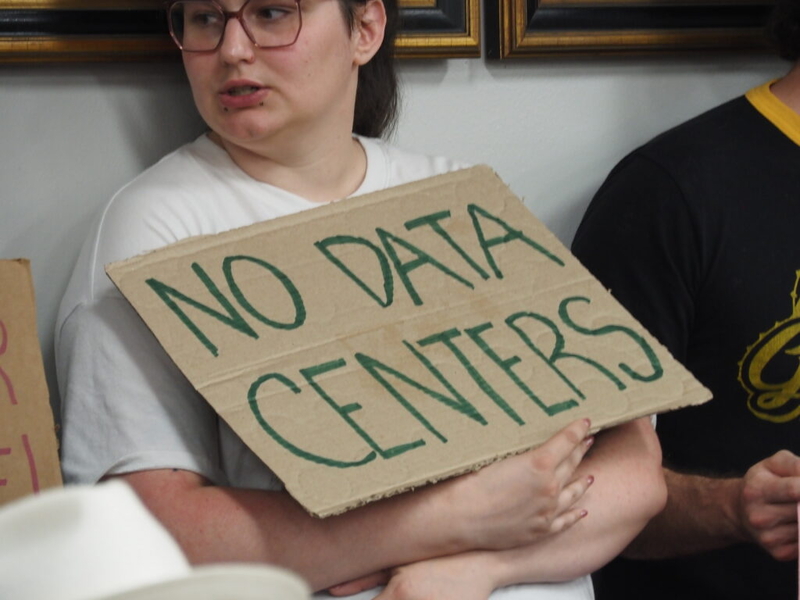
An audience member attending a Pulaski County Quorum Court agenda-setting meeting holds a sign opposing data centers on June 9, 2026. (Photo by Ainsley Platt/Arkansas Advocate)
A retired University of Arkansas professor is suing Fayetteville over its nondisclosure agreement for a military-grade drone manufacturer, as the secrecy surrounding data centers and other economic deals in the state faces increased scrutiny.
Northwest Arkansas residents for months have fought against a Swarm Aero facility in Fayetteville, with opponents citing its manufacturing of military-grade drones, issues surrounding city approval and nondisclosure agreements signed by city officials.
UA professor emeritus of anthropology and Middle East Studies Ted Swedenburg’s lawsuit, filed Tuesday in Washington County Circuit Court, argues Fayetteville had not complied with an Arkansas Freedom of Information Act request he filed in February.
Gracie Zeigler, a spokesperson for the city, said in a statement that Fayetteville takes its public records responsibilities seriously, and that it works to respond to records requests “in accordance with state law.”
While officials disclosed emails from 2023 discussing plans to sign a nondisclosure agreement, the agreement itself was not handed over, Swedenburg’s complaint says. The complaint asks the judge to force Fayetteville to produce a copy of the nondisclosure agreement and find the city violated state public records laws.
The lawsuit comes as such agreements have been cited repeatedly in recent months as a reason state and local officials cannot provide answers about major business development decisions, including an unnamed, prospective advanced manufacturing facility in West Memphis that lawmakers set aside $300 million in incentives to attract.
Arkansas Explained: Understanding the data center boom and debate
Local officials and economic developers in central Arkansas face growing anger from residents over secrecy surrounding several planned data center projects, many of which involved the agreements.
Concerns about environmental impacts, utility costs and a lack of transparency have sparked pushback against data center projects across the country, including in Arkansas, where five such projects are in various stages of development.
Frustrated residents in central Arkansas have argued the lack of transparency hampered the public’s opportunity to reject sweeping tax incentives or land agreements for the projects that were approved last year.
Critics of the deals have packed board and quorum court meetings in recent weeks.
The Little Rock Board of Directors approved additional requirements on data centers proposed by Mayor Frank Scott last week.
Scott said the new restrictions would apply to a planned Google data center at the Port of Little Rock, one of two developments announced within Pulaski County. The other project, from Connecticut-based AVAIO Digital, is planned for unincorporated south Pulaski County along the 145th Street corridor.
But on Tuesday night, the Pulaski County Quorum Court’s agenda committee delayed considering a temporary moratorium on data center projects until next month. Multiple justices of the peace said they wanted to hear from third-party experts before taking up the moratorium.
Data center moratorium in Arkansas’ most populous county didn’t pass, review finds
“I want to talk to somebody that, for lack of better words, maybe [does] not have a vested interest on one side or the other, but just give us facts,” Justice of the Peace Steven Person, a Democrat, said. “It should not be hard to request facts.”
Democratic Justice Tina Ward expressed frustrations with the repeated rejections and delays by the quorum court to address a situation she said left her constituents feeling as though she wasn’t representing their interests.
“It concerns me that we just keep on pushing it and pushing it, and all this is happening in my district, where I live, and I’m not trying to be pushed out of where I live,” Ward said, receiving shouts of support and applause from the crowd.
Alicia Watson, a Pulaski County resident, warned quorum court members of fallout over the issue.
“Every seat in this room will be on the ballot, and we are tracking exactly who stands up for communities and who capitulates to the chamber’s corporate agenda,” Watson said.
The data center debate has also emerged in communities where no known projects are on the horizon. In Fayetteville, officials are considering adding more requirements on future data centers that want to locate inside city limits. The proposed changes would require data centers to obtain a conditional use permit and meet certain reporting requirements.
- 5:28 pmThis story was updated with a statement from the city of Fayetteville.
Little Rock