Lawmakers urge Pa. Senate to split up public, private high school school playoffs
Jun 10, 2026 | 4:00 am ET

Description
Rep. Scott Conklin (D-Centre)’s bill would authorize the Pennsylvania Interscholastic Athletic Association to split up playoffs for public and private high schools. (Photo by Emily Scolnick/Pennsylvania Capital-Star)
House lawmakers are calling on the state Senate to pass legislation that would allow Pennsylvania’s high school athletics governing body to split up playoff competition for public and private schools.
House Bill 41, first introduced by Rep. Scott Conklin (D-Centre), would give the Pennsylvania Interscholastic Athletic Association (PIAA) the legal authority to make changes to its playoff structure.
The measure passed the House by a 178-23 bipartisan vote in late April and now sits in the Senate Education Committee.
The proposed text amends the Public School Code of 1949 to allow the PIAA to separate playoff games for boundary and non-boundary schools.
The bill “does not require the PIAA to make any changes,” Sen. Marty Flynn (D-Lackawanna), who introduced the Senate’s version of the bill, said. “It simply gives the organization the authority to make changes.”
The legislation gained momentum this year after the boys basketball team at Old Forge High School in Lackawanna County made a historic run to the PIAA championships before losing to Sewickley Academy, a private school outside of Pittsburgh, prompting its superintendent to call for reform.
“The issue was not about working harder, the issue was not about coaching, and the issue was not about dedication,” Chris Rasmus, a recent graduate of Old Forge High School and member of that basketball team, said. “The issue is competitive balance.”

Paul Brennan, the superintendent of Riverside School District, said it is important to consider if “our kids [lost] to a better team from another community, or did they lose to a system that allowed one side to build differently?”
The question of fair competition in Pennsylvania high school sports is not new: Conklin said that before the COVID-19 pandemic, non-boundary schools in the PIAA were considering starting their own league because “it became crystal clear that the idea of high school sports is about teaching that we all stay on the same level.”
Several speakers emphasized that the bill is not an attack on private, religious, or charter schools, but it aims to ensure a level playing field for student-athletes across the state.
“We are here because fairness matters and opportunity matters, and public schools, and athletes matter,” Old Forge School District Superintendent Chris Gatto said.
Non-boundary schools currently comprise 24% of PIAA’s membership but are winning 57% of state titles compared to boundary schools, Gatto said. Since 2011, non-boundary schools have won 68% of state basketball titles.
“The current system adjusts for wins and losses, it does not adjust to access to talent,” he said. “No formula ever will, unless we are willing to honestly acknowledge the difference between these two models.”
Flynn, who represents Old Forge, added that the bill aims to prioritize fair and equitable competition.
“We don’t always see votes that lopsided,” Rep. Jim Haddock (D-Luzerne), who also represents Old Forge, said. “Democrats and Republicans joined together in support of House Bill 41 because it wasn’t about politics, it was about students.”
Casey Scanlan, a Lehigh Valley parent and prominent community organizer in favor of the bill, said the state associations of school administrators and school boards are also backing the measure, along with a coalition of over 400 superintendents statewide.
Haddock said that “PIAA is working” for the bill to pass and “understand[s] the situation.” And should it pass the Senate, Scanlan said changes could go into effect by late 2027 or early 2028 after a series of public hearings.
“We believe they’re going to hear from the public what we’ve been saying,” Scanlan said.
Scanlan also directly addressed Senate Majority Leader Joe Pittman (R-Indiana) and Senate President Pro Tempore Kim Ward (R-Westmoreland), urging them to move the legislation through the Education Committee and consider it on the floor.
“The time is now,” he said. “The House just handed you the most bipartisan piece of legislation you will see. Our coalition does not want to be told to wait.”
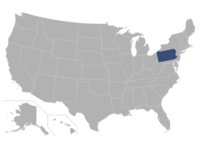
Harrisburg, PA