State continues broadband expansion program, sustainability in rural areas unclear
Jun 05, 2026 | 6:00 am ET
Description
Photo courtesy of Spotlight Delaware
Why Should Delaware Care?
In an increasingly technology dominated world, access to high speed internet is a priority for many Delawareans. While the state continues to roll out initiatives to expand broadband internet access in remote areas, some rural Delawareans are forced to turn to libraries and other short-term solutions for connectivity.
Despite government pushes in recent years for high speed internet to reach more residents, some rural Delawareans feel left behind by the broadband expansions and question the state’s approach to improving connectivity.
After initially being sidelined by the Trump administration, the state announced this spring that the Broadband Equity, Access, and Deployment (BEAD) program would invest roughly $100 million toward creating 4,700 new internet connections across Delaware.
The program will use a combination of federal funds and private company dollars to provide connectivity to some of the forgotten – or “last mile” – homes in Delaware, eventually aiming to reach complete high speed internet coverage in the state by 2030.
But some experts and residents are skeptical.
Researchers who study broadband internet access say the BEAD program’s approach – prioritizing the quicker deployment of copper cables over more long-lasting fiber optic ones – is ineffective for long term sustainability.
At the same time, some residents and lawmakers have given up hope that high speed internet will reach rural corners of the state. Instead, they have turned to Starlink – a satellite internet service created by Elon Musk’s SpaceX – or WiFi hot spots to get connectivity.
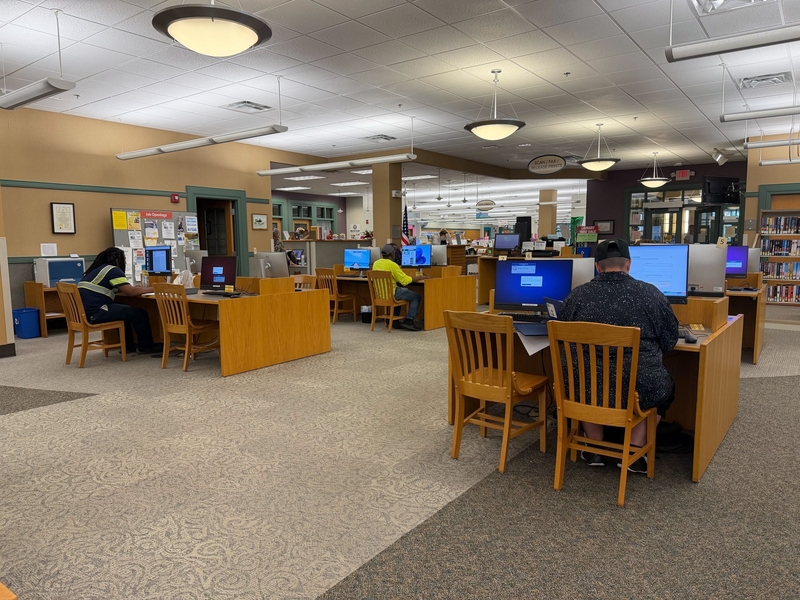
And even when rural residents have gotten the option of broadband internet access in recent years, some say they cannot afford the cost of a WiFi bill. This has forced already stretched-thin independent libraries to meet community members’ needs for computers and internet hot spots, library directors said.
“I don’t think it’s gonna happen,” said Chris Sylvester, who has been asking state leaders when his western Kent County property will be connected by cabling for years. “As far as I’m concerned, we’re forgotten in rural Delaware for high speed internet.”
Laying out the timeline
Rural high-speed internet access has quadrupled nationally over the past decade, and 86% of rural households now have some form of broadband subscription, said Matt Dunne, founder of the Center on Rural Innovation, an organization that studies technology access in rural America.
In Delaware, by virtue of a small compact geography, the state already boasts roughly 98% connectivity.
But experts also say these numbers don’t tell the whole story. Some areas may be considered to have broadband access, but the cabling could already be outdated or rusting, and connection could be unaffordable to residents in an area.
“Not all broadband is created equal,” Christopher Ali, a Penn State University professor who studies telecommunications said.
Delaware initially began laying the groundwork for rural connectivity in 2015, when then-Governor Jack Markell awarded a $1 million grant for the company Fibertech Networks to begin laying miles of fiber optic cables – widely considered the broadband option with the most longevity – in Sussex County.
In recent years, the state has mostly relied on the influx of federal funds to expand connectivity since the onset of the pandemic, said Connor Perry, executive director of the Delaware Broadband Office.
These federal funding sources together allowed the state to set up “middle mile infrastructure” over the past decade closer to town centers and along roads like Routes 1 and 113, Perry said.
Now the state can focus on the “last mile” of harder to reach buildings, he added.
The initial plan for the BEAD program included only fiber optic technology. The Trump administration, however, changed the program to a combination of traditional copper cabling and fiber.
The program is planned to connect 425 new homes and businesses in New Castle County, 1,513 in Kent County and 2,790 in Sussex County by 2029, Perry said.
IQ Fiber, a Florida-based company funded largely by private equity, also announced this spring a $150 million project to lay more fiber connections down the length of the state, largely following the Route 1 corridor.
Perry said the state also received BEAD funding to create a census-block level map of high-speed internet rates across the state, in collaboration with the Federal Communications Commission (FCC).
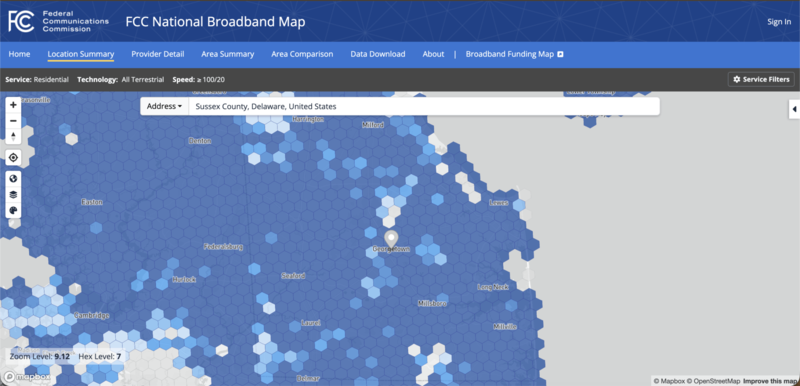
A look at the most current version of the map, updated last December, indicates that virtually all of New Castle County has complete internet connectivity. The connection rate tends to decrease moving south, particularly toward Delaware’s western and southern borders with Maryland.
Areas where internet access is less than 25%, according to the map, include western Kent County near Felton and Harrington, the southwestern corner of the state between Laurel and Delmar and the Georgetown-Millsboro region of central Sussex County.
Rural residents respond
In rural pockets of the state, some residents say they were connected to broadband through one of the recent expansion pushes. Others, however, have resigned to never getting wiring, instead turning to newer cable-less options like Starlink.
Rachel Culver used to live in a house just a couple minutes outside west of Georgetown town limits, on what she described as “the rural side of town.”
Culver, who is also the director of the Georgetown Public Library, said she relied on the library’s resources, like the building’s WiFi and checking out one of the highly sought after hot spots, in order to complete computer tasks.
“It kind of really felt like we were camping,” she said.
The area by her house was just starting the process of getting cable infrastructure when she moved out in 2022, Culver said.
Chris Sylvester lives and operates a flower farm in the Sandtown area of western Kent County, near the Maryland border. He has not had such luck with progress toward connectivity.
When Sylvester and his wife first launched their business in 2022, the lack of high speed internet on their property forced him to drive to a coffee shop or public library to upload a single photo onto their website.
The problem? The nearest public place with internet connection was a thirty minute drive away.
“When you’re a business and trying to be as efficient as possible, it becomes challenging and frustrating,” he said.
As his family was trying to scale their business and his daughter was beginning elementary school, Sylvester began contacting state lawmakers, asking when broadband internet might reach his area.
Four years later, Sylvester said he still has not gotten an answer as to whether his area is part of planned future broadband expansions.
“I think I’ll be 60 or 70 years old, and I’ll still be that little spot out in western Kent County that doesn’t have internet,” he said. “I just don’t see how it’s going to work.”
Sylvester said his family was able to set up a Starlink satellite last year, which has given them at least a short-term connectivity solution.
Third spaces fill in
Community leaders working at libraries and coffee shops say they try to be the space residents need to get reliable connectivity.
The challenge, though, is that Delawareans in sparsely populated areas where internet cables do not reach also tend to be further away from these community spaces, compounding the accessibility challenges.
Culver, the Georgetown Library director, said all the libraries were given hot spots and chromebook computers from a 2022 state grant program.
Then, when she and her staff saw “such a need” for the hot spots, they applied for a grant to get more. Since then, however, the grant has run out, and the library’s tight financial position means residents are back to having to wait multiple weeks to check out a hot spot.
Directors at other rural libraries similarly said they have a constant daily stream of visitors using their WiFi and computers. Sometimes people sit in the parking lot after hours to connect to the building’s internet, they said.
Owners of coffee shops and coworking spaces say they also strive to serve as broadband resources.
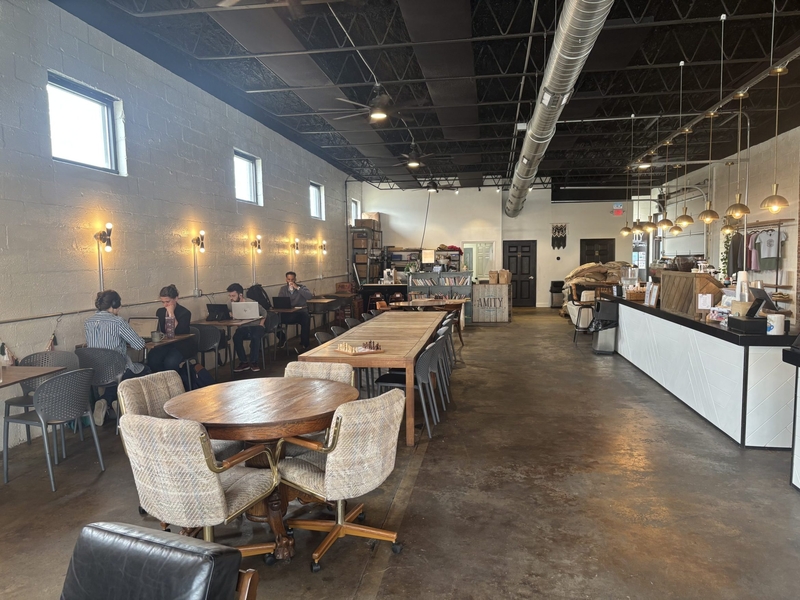
Amity Coffee Roasters, a coffee shop in Greenwood, is bustling on many days with mothers doing homeschool work with their children, pastors without internet at their churches planning upcoming sermons and Delaware Technical Community College or Salisbury University students completing assignments.
Melody Slaubaugh, Amity’s co-owner, said she and her husband made a conscious choice to “pay a lot for very powerful internet.”
She added that some of the design choices they made with the café, such as providing an outlet connector next to each table, were specifically to make it conducive to internet users.
The Mill in Seaford, a co-working space slated to open this year, is another place where developer Rob Herrera said he aims to focus on the community’s need for connectivity.
Herrera said in the process of creating the coworking space, he has heard from many Seaford-area residents who do not have high speed internet options, or their only option is “old copper and cabling lines,” so having a coworking space with fiber connectivity is appealing.
A long term solution?
Some state lawmakers say they have been frustrated by the speed at which broadband internet access has expanded to their rural districts. Some view the emergence of Starlink satellites as a more cost-effective and accessible option.
Rep. Rich Collins (R-Millsboro) said the number of calls he has been getting from constituents about lack of internet access has steeply declined since the advent of Starlink a few years ago.
“If you really want broadband, it’s a way to have that,” Collins said.
Experts, though, say the efficacy of broadband options is a spectrum. While Starlink and the BEAD program’s cabling infrastructure are effective in the short-term, experts say they will not be a permanent solution, like a fiber optic network would be.
“Fiber to the home is the most future proof,” Dunne, the Center for Rural Innovation director said. “As broadband speeds can be increased and the demand for them to be increased goes up, they’re able to scale with it.”
The problem, Dunne said, is that each installation of fiber is more expensive than traditional cabling. It is difficult to incentivize companies to invest in a fiber network in more rural areas, where they will reach fewer potential customers.
Maggie Reynolds is a Report for America corps member and Spotlight Delaware reporter who covers rural communities in Delaware. Your donation to match our Report for America grant helps keep her writing stories like this one; please consider making a tax-deductible gift of any amount today by visiting https://spotlightdelaware.org/support/.
Dover