The Supreme Court’s Allen v. Milligan decision is a political farce
Jun 04, 2026 | 5:59 am ET
Description
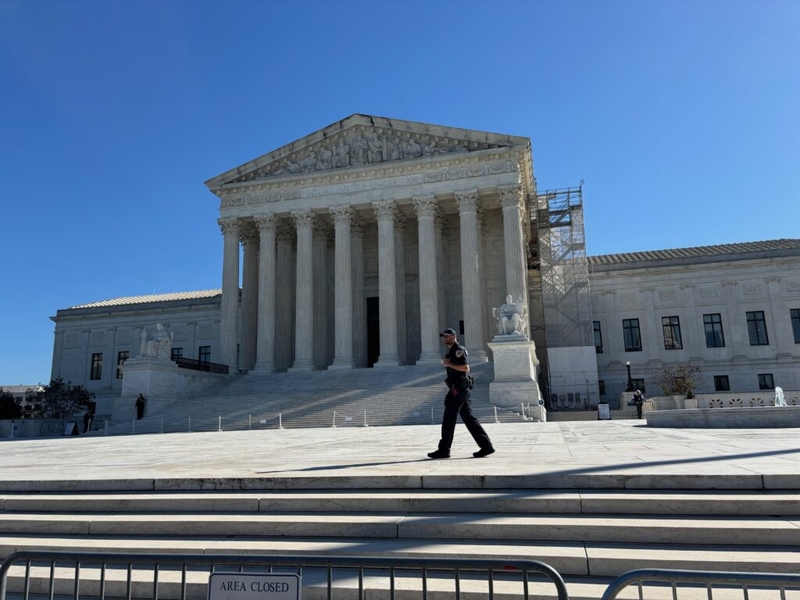
The U.S. Supreme Court on Oct. 29, 2024. The nation's high court on Tuesday allowed Alabama to use a 2023 congressional map a lower court had deemed racially discriminatory. (Jane Norman/States Newsroom)
Last month, U.S. Supreme Court Chief Justice John Roberts bemoaned the public’s perception of the court.
“I think, at a very basic level, people think we’re making policy decisions; we’re saying we think this is how things should be, as opposed to what the law provides,” he said at a conference in Hershey, Penn., for judges and lawyers. “I think they view us as purely political actors, which I don’t think is an accurate understanding of what we do.”
Well, sir: If the court walks like a duck and quacks like a duck, you’ll have to forgive me if I assume that it is, in fact, a duck.
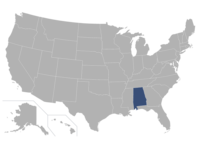
What other conclusion could I possibly draw in light of the court’s new 11th-hour decision in Allen v. Milligan, Alabama’s long-running saga over U.S. congressional maps?
In a scant four-page unsigned order issued Tuesday via the court’s shadow docket, the court’s conservative justices upended years of carefully conducted work by a district court – and its own precedent in this very case – and changed the map that Alabama must use in this year’s election.
As in: the election for which we were supposed to have already had a primary, but which was delayed because of the state’s machinations in this case. The primary that’s now scheduled for less than 10 weeks from Wednesday.
Instead of using the map already in place, which we used successfully in the 2024 election and which aligns with current voter rolls, Alabama Director of Elections Jeff Elrod and a small team of county registrars now face the potentially impossible task of reassigning voters in Alabama’s 1st, 2nd, 6th, and 7th districts before the state’s special Aug. 11 primary.
It’s unclear how in the world they’re going to do that. Voter rolls are now locked for the June 16 runoff election. What’s more, officials can’t simply start their work after the runoff concludes. On June 17, absentee voting begins for the Aug. 11 primary.
We are out of time.
Elrod has testified that reassignment is a manual process that typically takes months. So even if lawmakers somehow move heaven and earth to change the election timeline (again), chaos is surely headed our way.
It will be “a mad scramble across 40 of Alabama’s 67 counties, using a map that has never been administered, on a timeline unprecedented in the state’s redistricting history,” according to a brief to the Supreme Court from current and former election administration officials.
Someone send the registrars a care package. It looks like they’re going to need all the TLC they can get.
But the Supreme Court’s perfunctory ruling is wrongheaded for more than just logistical reasons.
It’s a loosely reasoned nail in the coffin for both the Voting Right Act and the Equal Protection Clause of the 14th Amendment – a green light, in other words, for legislators to go all in on packing and cracking minority voters.
The opinion defies reason. A mere three years ago – almost to the day – the Supreme Court itself issued a 5-4 decision that said Alabama’s congressional map improperly diluted Black voters. The map they considered at that time was an earlier version drawn in 2021, after the last census.
Fast forward to today, after a soap opera’s worth of legal wrangling and a voluminous trial record, and the map they just blessed the state to use is nearly identical to the one they previously said violates the Voting Rights Act. It solves none of the substantive concerns they raised in their earlier decision.
The main difference between then and now is the court’s opinion, a little over a month ago, in Louisiana v. Callais, the case that threw the U.S. into frenzied new heights of redistricting turmoil even as primaries were supposed to be underway.
Callais is similar to Allen, but there are hefty differences between the two. Notably, the map under consideration in the Louisiana case was deemed a racial gerrymander because it scooped up pockets of different populations across the state to create an oddly shaped opportunity district for Black voters.
In Alabama, the map that the court just threw out – the one that’s been in place since the 2024 election – was designed by a special master to be both compact and “race-blind,” meaning it was created to satisfy legislative districting requirements and only checked after the fact to ensure it complied with the Voting Rights Act.
But the state argued, ad nauseam, that the Special Master map needed to be tossed because it split the Gulf Coast “community of interest” into two districts.
While it would make sense in a perfect world to keep the coast together, congressional districts have to divide the population evenly. The district court judges took issue with the State’s insistence on prescribing “a majority-white congressional district in an exalted, unsplittable community of interest that was prioritized over every other districting principle, including compliance with federal law.”
In other words: This is racist chicanery; cut it out.
The state appealed to the Supreme Court last year, but the court waited until now, at an impossible hour, to finally put its finger on the scale.
Even as recently as Callais, Justice Samuel Alito, writing for the majority, got a bit testy and said, point blank: “…contrary to the dissent’s assertion, we have not overruled Allen.”
Except now, apparently, they have. And it only took a month to get there.
Justice Roberts expects us to believe that the Supreme Court is not acting as a political body. Meanwhile, the Roberts court behaves for all the world as though it’s an extension of the Republican Party, even when the justices have to contort their logic into pretzels – or simply ignore evidence and precedent – to arrive at decisions that weigh in the GOP’s favor.
So Alabama gets to game the system, and the United States slips further away from its democratic ideals. It’s impossible to take this court seriously.
Montgomery