A special session is needed in Maryland to support democracy
Jun 04, 2026 | 6:38 am ET
Description
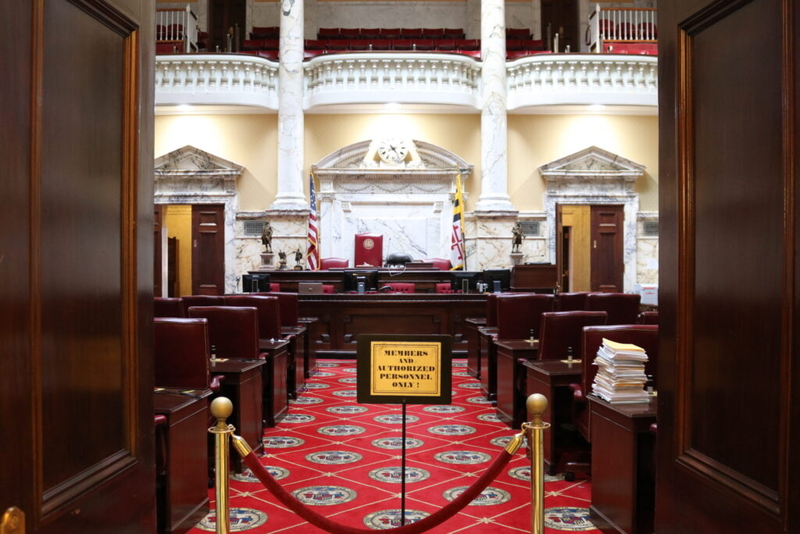
The Maryland Senate chamber. Photo by Danielle E. Gaines.
In the recent legislative session, despite warnings about the U.S. Supreme Court’s plans to gut Voting Rights Act safeguards in states with a history of suppressing voting power for Black citizens, the Maryland Senate would not consider House proposals for reforms to make congressional redistricting possible.
The urgency of the issues is now undeniable in the wake of the high court’s Callais decision, as the GOP has rushed across Southern states to erase nearly all black majority districts.
Thankfully, the Senate leadership now seems open to taking up redistricting issues in a special session. However, that is not the only electoral reform that was left on the table during the 2026 Maryland legislative session: Each chamber passed its own version of a bill to put in a limited special elections reform for vacancies in the Assembly, but time ran out for the Senate to ratify the House bill, which was the last chance to get the measure to the ballot in November.
If a special session is called, legislators’ focus will rightly be on redistricting. Maryland must respond to ongoing efforts in GOP-controlled states to lock in a permanent, gerrymandered majority in the U.S. House. Some Southern states are already drawing deeper gerrymanders. Other states, including Georgia, are preparing to make changes for the 2028 cycle.
In response, governors in New York and New Jersey are pointing to redistricting for 2028, to boost Democrats’ prospects then. In Virginia, where the special election redistricting referendum was overturned by the Virginia Supreme Court, legislators must lick their wounds and start again next year, to secure changes in time for the 2028 cycle.
Your opinion matters
Maryland Matters welcomes guest commentary submissions at [email protected].
We suggest a 750-word limit and reserve the right to edit or reject submissions. We do not accept columns that are endorsements of candidates, and no longer accept submissions from public officials or political candidates.
Opinion pieces must be signed by at least one individual using their real name. We do not accept columns signed by an organization. Commentary writers must include a short bio and a photo for their bylines.
Views of writers are their own.
That is the timeline Maryland legislators must have in mind for their special session, looking at two proposals House leadership advanced in the earlier session. One is a sensible reform to move litigation over redistricting to the Maryland Supreme Court, eliminating any judge-shopping and allowing for speedy resolution of any challenges to electoral maps. Since the U.S. Supreme Court has virtually ended any federal oversight, this is a reform every state should adopt. The other change would give legislators more legal latitude in drawing new congressional districts, to overcome any future lawsuits.
Maryland legislators can still vote in a special session to put those two questions to the voters in November. If the voters sign off on these constitutional changes, legislators could then confidently draw a new map for the 2028 and 2030 elections.
Critics will attack these ideas and the special session itself as an assault on democratic values. Legislators can undercut those criticisms by also moving the special elections bill onto the November ballot.
Special elections are often criticized as being rather undemocratic themselves, given that many are conducted in short campaigns that give even greater advantages to better-known and better-funded candidates. They are usually held on some random, poorly publicized date, resulting in an unrepresentative, low turnout.
The Maryland proposal would answer all of these concerns. By holding primaries for the special election races on the date of the presidential primary, the turnout is likely to be even higher than the regular gubernatorial primaries every four years. The timing will also ensure a campaign lasting at least four months. For many of the races across Maryland that day, candidates may have been campaigning for a full year.
The special elections reform is a compromise, perhaps a half-measure, but one that enjoys wide support. The last two years, the Senate has passed its Special Elections bill unanimously. The House bill received bipartisan support as well. Most legislators want this reform, as do most Marylanders.
If the legislature waits to take the issue up next year, it will be too late to impact vacancies in the four-year term starting next January, with no special elections until 2032. Anyone appointed in the next four years would probably join in an incumbent slate, likely scaring off any serious challengers. Those elections look more like the retention elections we have for reconfirming appointed judges. We should desire a more vigorous, contested electoral system for our legislators.
A special session this summer is critical for Maryland to move forward on redistricting reforms and join the fight to preserve our democracy nationally. We hope a future Democratic Congress will advance nationwide reforms to prevent future partisan gerrymandering.
At the local level, we can take steps to a more perfect democracy now, by also using the special session to advance the special elections reform. A “single subject” session on elections to put both questions to voters on our ballots in November.
Annapolis, MD