Advocates push for transit funding for rural, disabled communities as Pa. budget talks build
Jun 03, 2026 | 3:13 pm ET
Description
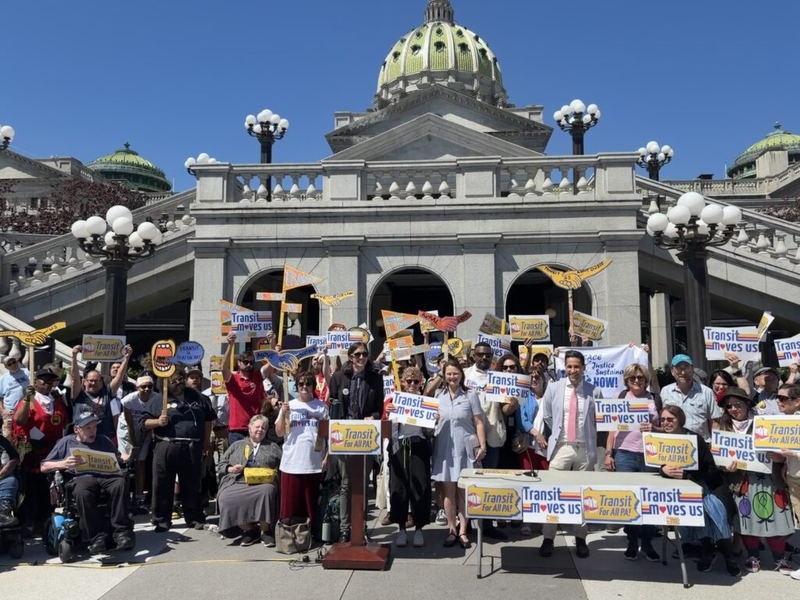
Transit for All PA! hosts a rally for transit funding in Harrisburg on June 3, 2026. (Photo by Emily Scolnick/Pennsylvania Capital-Star)
Emily Scolnick is a 2026 Dow Jones News Fund intern at the Pennsylvania Capital-Star.
Transit advocates from across Pennsylvania rallied in support of funding for small transit systems, paratransit, and shared ride services outside the Capitol on Wednesday as state budget talks intensify ahead of this month’s deadline.
Transit for All PA! — comprised of organizers and transit riders, workers, and supporters from across the state — hosted the event as part of a broader day of action in Harrisburg. Speakers emphasized that the current funding model, which has been in place for 40 years, can no longer sustainably support transit options for rural and disabled communities across the state.
Supporters are working to keep transit funding a priority in the 2026-27 budget after lawmakers — despite much debate — never reached agreement last year on a long-term solution to these systems’ financial struggles.
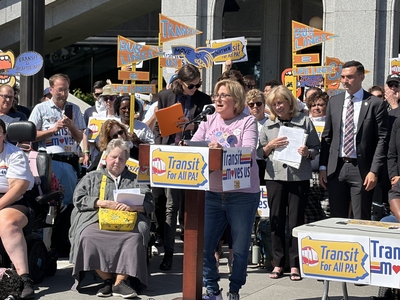
“Paratransit is not a luxury, it’s a lifeline,” said Sherry Mergner, a Westmoreland County caretaker whose son uses paratransit to get to work. “Transportation is not just about getting from one place to another. It’s about dignity, opportunity, self-determination, and the ability to fully participate in community life.”
The Americans with Disabilities Act mandates access to shared-ride and paratransit services. Pennsylvania currently offers several services designed to help seniors and those with disabilities navigate their local public transit systems. However, advocates say that without increased funding in this year’s state budget, those systems are at risk of disappearing.
The shared-ride and paratransit systems are accumulating an $80 million annual structural deficit. That, combined with larger systems like the Southeastern Pennsylvania Transportation Authority (SEPTA), Pittsburgh Regional Transit (PRT), and the Centre Area Transportation Authority (CATA) navigating emerging “fiscal cliffs” and funding struggles, has made access to these services increasingly difficult, especially for riders in rural areas.
“Success, whether it be academic or economic, should never be dictated by your zip code,” Bob Garrett, the former executive director of the Greater Susquehanna Valley Chamber of Commerce, said. “Rural Pennsylvanians should not be left behind just because of where they live.”
Sen. Judy Schwank (D-Berks), emphasized that “the rest of the state matters too.”
“While the big transit authorities, like SEPTA and PRT, have gotten a lot of attention — and they deserve it, because they serve an awful lot of people — do not forget about us. Don’t forget about us and the rest of the state that need it as much as anybody else does,” she said.
Transit funding in the budget
Last year, lawmakers heavily debated funding increases for mass transit after several systems, including SEPTA and PRT, announced they would eliminate routes and raise fares without further financial support. However, the final 2025-26 budget did not include any new, recurring funding for mass transit.
Instead, Gov. Josh Shapiro provided SEPTA with $220 million from the Public Transit Trust Fund to use for repairs and infrastructure and safety improvements. This money helped reduce SEPTA’s planned service cuts. But it did not eliminate the struggles the transit system — and many others across the state — are facing.
CATA, which is centered in State College but serves just under five million riders, struggles to fund shared ride services as fuel and equipment prices continue to rise — even as it cuts costs and increases fares in other parts of the system, according to Rep. Paul Takac (D-Centre).
“Shared ride costs more to operate than what we receive in reimbursement,” said CATA Director of Business Development and Community Engagement Lori Miller. “When we invest in shared ride services, we invest in health, we invest in economic opportunity, and we invest in community connection.”
Takac added that bus companies focused on connecting rural communities to major cities and other local boroughs, such as Fullington Trailways, also face financial challenges.
“Just a decade ago, there were six different companies providing those services, including a whole network of bus lines. Today, there are only two left,” he said. “Without a much needed increase in state funding, it is not simply a matter of maintaining public transit services in rural communities, it’s about whether those services will continue to exist at all.”
Harrisburg, PA