Veto override vote fails on Providence City Council’s rent stabilization ordinance
May 15, 2026 | 7:27 pm ET

Description
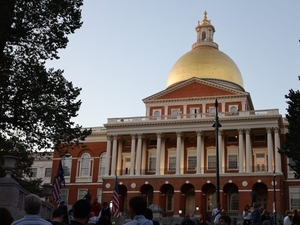
The interior of Providence City Hall. (Photo by Alexander Castro/Rhode Island Current)
The Providence City Council’s signature policy effort this year — an effort to install a 4% ceiling on annual rent increases for select apartments in the city — failed to overpower a mayoral veto during a special vote Friday night.
City Councilors who supported the ordinance, including Council President Rachel Miller, needed 10 votes — a supermajority for the 15-member body — to override Providence Mayor Brett Smiley’s veto of the ordinance. Smiley issued his rebuke on the morning of April 17, less than a day after the Council voted 9-6 to approve the ordinance.
Five of the Councilors who voted against the ordinance did not attend the meeting, and the one opponent in attendance, Councilor Jo-Ann Ryan, was unlikely to flip. All nine supporters voted to cancel out Smiley’s veto.
“It is a long way from being over tonight,” Miller said in her opening remarks.
“Know that tonight, if we stay as nine together, if we do not overcome this hurdle, there will be people in the city who are celebrating,” Miller said. “They will think that this is defeated. They will think that this is the end.”
The Council had 30 days from Smiley’s veto to move to an override, meaning it had a deadline of Sunday, May 17, to act. The special meeting for the override vote was announced on Saturday, May 9.
“We are being asked to vote on a policy of enormous consequence with our eyes closed,” Ryan said during her remarks. “That is not governance, it is guesswork at residents’ expense.”
“These complex issues are compounding on people, and you know, AI talking points sound good on Facebook, on a letter, but try saying that to someone that is getting evicted,” Councilor Miguel Sanchez said during his turn to speak, following Ryan.
The other five councilors who voted against the ordinance last time and were absent from Friday’s meeting were Councilors Pedro Espinal, John Goncalves, James Taylor, Ana Vargas and Oscar Vargas.
Goncalves had initially proposed no hardline stance on the measure upon its introduction earlier this year. Advocates had hoped he might change his mind, but in a phone interview Friday afternoon, Goncalves said that “everyone kind of knows where I stand.”
“I would technically receive rent control under this ordinance, which is an interesting thing,” Goncalves said. “My job is not to be self-interested in this regard.”
As Miller declared, the rent stabilization saga is likely not over, however, even if one specific instance of the policy has been vanquished for the moment. All 15 City Council seats are up for grabs this fall. Members serve four-year terms and are limited to three consecutive terms.
“I guarantee, I know firsthand that they are already planning to funnel their wealth into opponents for the nine of us and others to replace us,” Miller said in her opening statements. She tagged on a “fair warning” onto her words that “rent stabilization has lit a fire in the imaginations of the residents of this city.”
Earlier Friday, Goncalves offered a different take, comparing the measure’s passage to “looking at a flashy object.”
“It’s like we have to lean in and do the hard work, and I’m not saying that my colleagues haven’t done that; I respect what they are trying to do,” Goncalves said. “But also, I’m not sure if this is about the policy or the politics during an election year.”
The failed override tees up more tension in the city’s Democratic primary this September, which is expected to see Smiley square off with progressive state Rep. David Morales, who has castigated Smiley’s preclusion of the measure.
“Voters are going to have an option in September to elect a mayor that does not oppose rent stabilization,” Sanchez said during Friday’s meeting.
Quarterly campaign finance reports for the period ending March 31 show that the Smiley campaign still had a fuller wallet as of that date, with a $1,354,722 ending balance. Morales’ campaign — which also announced on Friday an endorsement from Democratic Vermont U.S. Sen. Bernie Sanders — had $118,870 in its account at the end of the first quarter.
Compared to quarterly reports from the end of 2025, however, Morales’ account also saw more growth, increasing its cash balance by about 33%, compared with about 7% growth for Smiley.

Providence, RI