Good Samaritan Coalition says saving a life should take priority over punishment
Sep 30, 2026 | 4:30 am ET
Description
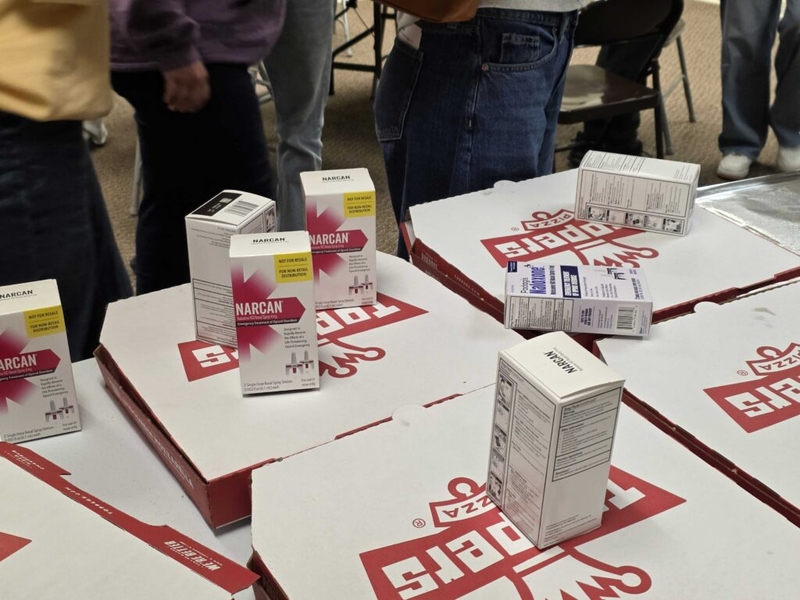
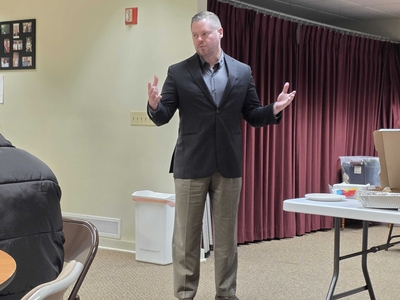
Narcan was handed out by Andrew Garr during a meeting of the Good Samaritan Coalition in Eau Claire. Garr encourage all the participants to carry Narcan to save a life. (Frank Zufall/Wisconsin Examiner)
In 2009, Jennifer Olson was on parole, out of prison and under community supervision for a felony conviction, when she stopped at a friend’s house on the way to the mall. When Olson arrived, the friend was overdosing, and the friend’s brother was panicking, unsure what to do.
After attempting CPR and placing her friend in a cold shower to revive her, Olson called 911 to save her friend’s life.
The friend was placed in a medically induced coma for 37 days and lived, but during those 37 days, Olson was held in the Waukesha County Jail, incarcerated because, as a condition of her parole, she wasn’t supposed to be around criminal activity or drugs, and it didn’t matter that she had no drugs in her system, having been clean for two months after she went to rehab.
While in jail, Olson said, she lost custody of her children, and she lost her apartment and her job.
“Would I have gone to jail for calling 911 for someone having a heart attack? No.” she said.
The Wisconsin Good Samaritan Coalition is advocating to change Wisconsin’s law to prioritize saving a life without fear of consequences for those seeking help.
Opioid overdose deaths in Wisconsin have dropped from a peak of 1459, or about four per day, in 2022, to 815 in 2024, according to state health department statistics. “Many of those deaths could be prevented if people did not fear calling 911 to save a life,” the coalition says in a statement advocating for strengthening the state’s Good Samaritan law to offer protection from prosecution for people who survive an overdose and the people who help save their lives by calling for help on the scene.
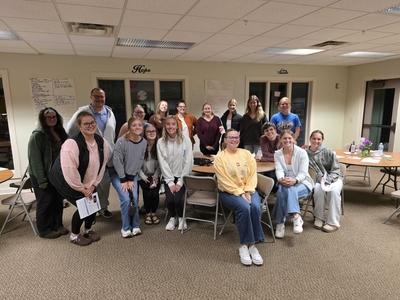
On Monday night, Sept. 28, the coalition met in Eau Claire at Hope United Methodist Church. A large contingent of University of Wisconsin-Eau Claire nursing students attended.
The Good Samaritan Coalition was the main organizer of the event, with support from ProSay, an advocacy organization for formerly incarcerated people on community supervision, and WISDOM, a faith-based organization with 12 affiliates addressing systemic injustice, and WISDOM affiliates Free and Jonah, with Jonah hosting the event.
“Currently, Wisconsin law deters people from calling 911 in an overdose emergency and Good Samaritan Coalition feels everyone should feel safe to call 911,” said Lynn Buske, a representative of the coalition. Wisconsin has a Good Samaritan law, “but it offers very few protections, leaving people nervous,” she added.
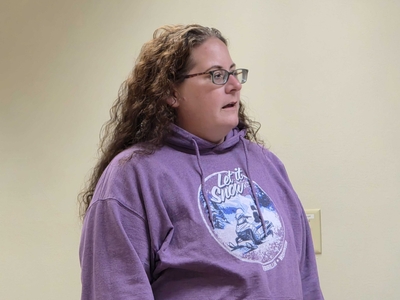
Juli Bliefnick of ProSay said the issue was “deeply personal” to her because she had her supervision revoked and was sent to jail, losing her job and housing after she called 911 to save a life.
“People should not be forced to choose between their freedom and someone else’s life,” she said.
Bliefnick recounted the history of Wisconsin’s Good Samaritan law.
The current law, passed in 2013, grants immunity from prosecution for possession of a controlled substance to a person who summons or provides emergency medical assistance to another person suffering from an overdose. A 2017 update of the law, which is no longer in effect, also granted immunity from having parole, probation, or extended supervision revoked. The protections for people on parole, probation or supervision expired under a sunset clause in 2020.
The No. 1 reason people cite for not calling 911 in overdose cases is fear of arrest.
“I’ve experienced the grief of losing someone that I care about due to an overdose, an overdose death that could have been prevented if help had arrived in time,” said Mark Rice, the Transformational Justice Campaign Coordinator for WISDOM.
Rice said WISDOM’s goals of reducing the prison population and changing the culture and laws that result in “permanent punishment of people who have conviction records” align with the Coalition’s efforts.
“So many people fear calling 911 because of fear of arrest,” he said. “… the Good Samaritan Coalition is aiming to strip that fear away and to replace fear with health-centered care, and so definitely this is something that WISDOM strongly supports.”
Sarah Ferber, a regional organizer for Free, said she had several friends die of an overdose, and she had also been in situations where she had to call 911 to save a life, but she had not faced any repercussions for seeking help; however, she knew others who had called 911 and did face consequences.
Kelly Green said that when her partner overdosed, she applied six vials of Narcan to save his life, but she never called 911 out of fear of what might happen after first responders arrived.
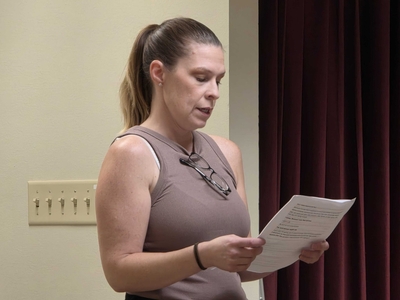
“Calling 911 meant bringing police and emergency services to my house, and once they were there, I couldn’t control what happened next,” she said. “What would they see? What would they ask? What would Child Protective Services see or if they would get involved? What would happen to my kids? Could I lose them? Those thoughts were going through my head while someone I loved was overdosing in front of me, and I know how that sounds after the fact. Of course you call 911. Someone might die, but that’s not what fear looks like when you’re actually living it.”
Andrew Garr, executive director of Wisconsin Milkweed Alliance (a non-profit using the lived experience of members with mental health and substance abuse to “uplift and empower”) recounted his experiences of administering naloxone (Narcan is the brand name) to revive someone he knew who was overdosing and explained how to administer it. Following that, there were discussions about advocating for an update of Wisconsin’s Good Samaritan law.
Buske encouraged participants to sign a petition, talk to others about the subject and press legislators to change the law.
Bliefnick noted that other states, even some that are more conservative than Wisconsin, including Iowa, have broader, more protective Good Samaritan laws.
She also recounted recent attempts to change the law that stalled in the state Assembly, where Speaker Robin Vos didn’t allow it to come up for a vote.
More information on the Wisconsin Good Samaritan Coalition and its effort to change the law is available on the group’s website.
Madison, WI