21% of poverty in Maryland driven by high housing costs, report says
Sep 29, 2026 | 11:12 pm ET
Description
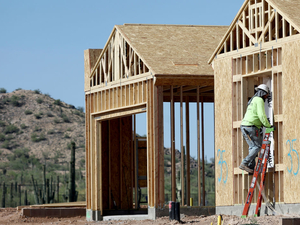
A new report says Maryland is among the states where high housing costs contribute most heavily to the state's poverty rate. (Photo Getty stock images)
Maryland is one of 10 states where high housing costs contribute the most to the state’s poverty level, according to a new report by the Pew Charitable Trusts.
The report, released Tuesday, said approximately 21% of Maryland poverty is attributable to above-average housing costs, stretching the budgets of the state’s low-income families and offsetting positive impacts of anti-poverty measures such as federal food assistance.
The Pew report says that Maryland and other states face a severe housing shortage that drives up housing costs. It urges states to prioritize building new units, arguing that a 20% decline in rental costs could significantly reduce poverty rates.
“Not only does adding housing reduce rents, it reduces poverty as well because people have more wiggle room in their household budgets, and their limited incomes aren’t as strained,” said Alex Horowitz, project director on housing policy for Pew.
While Maryland officials have pushed some measures to speed up new housing, Horowitz said more could be done to chip away at the state’s nearly 100,000 housing unit shortage.
“Maryland’s taken a couple small steps to make it easier to build housing,” Horowitz said. “Clearly taken some steps in the right direction, but not to the degree that would be needed to dig out of a housing shortage.”
The report — “The Housing Shortage Is a Major Driver of Poverty” — is based on research by Zachary Parolin, a professor at the University of Oxford in England, who looked at 2023 housing costs and identified states where the greatest share of poverty was due to high rent.
Horowitz explained that the figures were calculated by looking at states with current affordability challenges and estimating how poverty may improve if rents were closer to the national average rental costs.
“Maryland’s median rent right now is over $1,800. In the U.S., the median rent is a little under $1,400. So if Maryland added enough housing so that its median rent was in line with the national average … how much of its poverty is caused by that gap?” Horowitz said. “The answer, 21% of Maryland’s poverty is attributable to that.”
Other states with the highest share of housing-driven poverty include Hawaii, California, New Jersey, Massachusetts, Colorado, Connecticut, New York and New Hampshire, as well as the District of Columbia.
Hawaii topped the list, with the highest percentage of poverty driven by housing costs, at 34%. High housing costs are responsible for up to 42% of Hawaii’s child poverty, the report said.
Meanwhile, Maryland had the seventh-highest percentage of housing=driven poverty, at 21%. The report shows that 17% of Maryland’s child poverty is driven by housing costs, lower than most of the other states.
But the report says that efforts to boost housing supply can reduce poverty, pointing to cities that built so much new housing that inflation-adjusted rents have fallen by 20% in cities like Austin, Texas, and Minneapolis.
If Maryland were similarly able to reduce inflation-adjusted rent by 20%, the state’s poverty rate could fall by 24% overall and for children, according to the analysis.
“Housing costs are the biggest line item in most families’ budgets and so each dollar that goes to higher rents isn’t available to cover food, transportation, clothing, healthcare needs and day-to-day spending,” Horowitz said. “That’s why the poverty threshold is so sensitive to housing costs. High housing costs crowd out essential spending.”
What type of housing to build is a question for research analysts and lawmakers. Horowitz says that while subsidized housing is still necessary, even building new housing for higher income households can create an “escalator effect” that helps the affordability challenge at large.
“When there’s a lot of housing getting built, the escalator moves up, and people trade into better options,” Horowitz said. “High-income residents tend to move into new homes, and that frees up the homes that they were living in before. Those tend to be occupied by people whose incomes are a little lower, and so on.”
Financing, permit challenges stand in the way of building new housing, officials say
But a significant housing shortage leads to the opposite effect, where lower-income households are frozen out of housing options and face increased risks of homelessness.
“When there’s not a lot of housing getting built, the escalator moves down, and people trade down to find something they can afford,” Horowitz said. “It’s important to build subsidized housing too and the lowest-income residents still need housing choice vouchers.”
The report suggests that lawmakers reform permitting and zoning laws to allow faster approval of new builds.
Removing red tape in permit approvals has been a legislative priority for Gov. Wes Moore during his term, though his efforts often run up against county officials who may be skeptical of policies that weaken local authority.
As lawmakers prepare for the 2027 legislative session, Horowitz suggests that they continue to push bills that encourage new housing options, such as legislation that makes it easier to convert office spaces into residential units, increase production of smaller “starter homes” homes on smaller lots, or remove the limit on how many non-relatives can live in a residential unit.
“When not enough housing gets built, low-income residents get frozen out, and there’s not much to choose from,” he said. “Anti-poverty programs are crucial, but rising rents are consuming a lot of the dollars that we’re spending on those programs, and that’s money that households need in their pockets to cover day-to-day bills.”
Annapolis, MD