Honoring ANCSA’s vision means protecting Alaska Native Corporations as pillars of self-determination
May 13, 2026 | 5:14 pm ET
Description
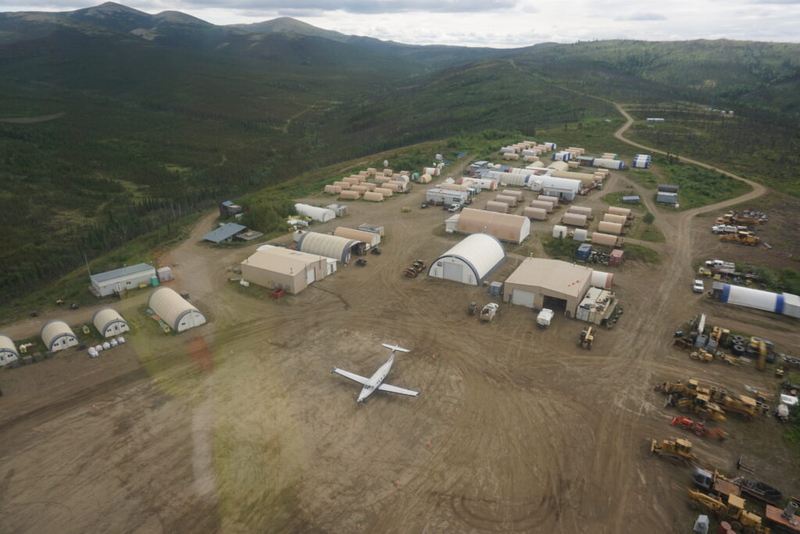
Donlin mine camp, June 23, 2025. (photo by Yereth Rosen/Alaska Beacon)
More than a half-century ago, Alaska Native leaders stood at a crossroads as they sought to reconcile two powerful forces – embracing Indigenous self-determination in a rapidly modernizing world and protecting our traditional way of life.
Our early leaders had to bridge our perpetual connection to the lands and waters that sustained our people for centuries with the realities of a cash economy, recognizing that responsible resource and business development was the only way to safeguard our self-determination for future generations.
This dual need led to the Alaska Native Claims Settlement Act of 1971, which vested ownership of the ancestral lands we retained through the settlement in 12 regional and over 200 village corporations, known as ANCs. However, ANCSA was never simply about settling land claims — it was a promise that we as Alaska Native people could protect our way of life while also building new institutions, some of which would include responsible resource development, to propel us into the world of modern capitalism.
More than 50 years later, ANCs have embraced self-determination through economic development for the benefit of their shareholders, Alaska and the entire nation. Today, honoring ANCSA’s vision means both recognizing the potential of our lands — specifically through projects like Donlin Gold — as well as embracing ANCs’ capabilities as experienced federal contractors.
Yet, despite decades of ANCs operating successfully at the top of their fields — while balancing being pillars of Alaska’s economy and stewards of our ancestral homelands — both of these avenues are now facing intense scrutiny.
For Alaska Native communities, the successful development of Donlin Gold into one of the world’s largest open-pit gold mines represents a historic milestone, injecting hundreds of millions of dollars into village corporations across the state to fund dividends, scholarships and essential services.
The Yukon-Kuskokwim region, specifically, will benefit from thousands of long-term, high-paying jobs and the infrastructure necessary to finally lower the staggering cost of energy and freight for local families.
Ultimately, this project has the potential to trigger significant revenue sharing, serving as a modern testament to an economic model that has channeled over $2 billion to Alaska Native communities since its inception.
Rightfully so, many have pointed out that potential is not enough, and proper stewardship of the land is equally important as the glitter of gold.
To earn trust, developers must prove that the economic security that Donlin Gold provides will not come at the expense of our environment. The salmon must still run, the water must remain pure and future generations must inherit land that remains worth stewarding.
Achieving this balance requires exhaustive environmental review and continuous integration of Indigenous knowledge. The record shows that the project’s landowners — the Alaska Native people themselves — are meeting that bar. Decades of studies and oversight show they have not taken this responsibility lightly. If Donlin Gold moves forward, it will do so under the watchful eye of those who carry generations of knowledge about these waters.
On the federal level, we must also defend the tools that allow ANCs to compete in the federal marketplace. We need to remain vigilant against efforts to dismantle the U.S. Small Business Administration’s 8(a) Business Development program, a cornerstone of Alaska Native economic self-determination that is currently facing misguided attacks by policymakers in Washington.
In 1992, Congress amended ANCSA to include ANCs in the 8(a) Small Business Act to advance Alaska Native self-determination. Far from being a mere “preference,” 8(a) is an essential efficiency tool that serves as an economic development tool for Alaska Native communities, while at the same time enabling the federal government to rapidly deploy mission-critical expertise at reduced cost to U.S. taxpayers.
To dismantle or disrupt this program is to intentionally create vulnerabilities in national security, public health, and the economic stability of families from Alaska to the Lower 48. It also threatens the more than 51,000 jobs that ANCs and ANC contractors create in all 50 states, including 23,740 jobs in Alaska, according to our research with the McKinley Group.
The success of this model proves that communal growth and corporate responsibility can go hand-in-hand — just as we have proven with stewardship and responsible resource development. By maintaining these protections, we ensure that the promise of ANCSA’s settlement remains a living reality for the next generation of Alaska Native leaders.
Emil Notti, one of the architects of the settlement, once observed that one of ANCSA’s key goals was “to get Native people involved in the economic system so that as Alaska grew, they wouldn’t be left out.”
That vision speaks to the foresight of those leaders, sustaining our traditions while opening doors to opportunity. Now, we must not allow anyone — whether in Alaska or Washington, D.C. — to close those doors by threatening our access to self-determination.
Juneau