After 20,000 deaths, why are we still attacking doctors?
Jun 05, 2026 | 2:26 pm ET
Description
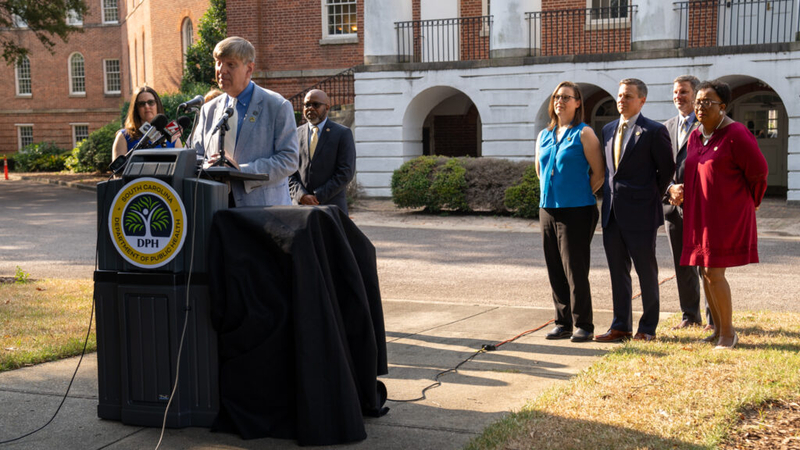
Dr. Edward Simmer, interim agency director for the Department of Public Health, speaks at a press conference on the launch of the new department on Monday, June 24, 2024 (Provided by the Department of Health and Environmental Control)
South Carolina lost more than 20,000 people to COVID-19.
A tragedy of that scale should have strengthened respect for public health expertise.
Instead, in some quarters, it inspired political backlash against the very officials charged with saving lives.
Dr. Brannon Traxler and Dr. Edward Simmer have been treated as convenient targets.
Both are physicians. Both are highly trained. Both stepped into leadership roles at the state’s public health agency during a once-in-a-century public health emergency.
And both faced blistering political attacks, including calls for removal, that had far more to do with the critics’ ideology than with the doctors’ performance.
Let’s be clear about what that means.
It means public health leadership is being judged less on evidence and expertise than on perceived political alignment.
It means that in the middle of a deadly pandemic, some were more interested in scoring political points than evaluating outcomes honestly and supporting best practices to save lives.
Criticism of pandemic policy is legitimate. No serious person denies that.
Schools were disrupted. Hospitals were overwhelmed. Guidance changed as science evolved. People paid real costs — especially families with children.
But what followed went further than criticism. It became scapegoating.
Simmer, who senators confirmed in February 2021, was later criticized merely for following federal health guidance.
Since becoming interim director last month, Traxler has been targeted for a few past political actions in her private life.
That is where the problem begins.
Ask a simple question: Would anyone demand to know a surgeon’s party affiliation before a major operation? No. Because it would be irrational.
What a patient wants in a doctor is competence and rigorous training: the traditional values of American meritocracy. Not ideology.
Public health is no different — even if some politicians pretend otherwise. Viruses don’t care about party affiliation.
President Ronald Reagan once joked before surgery that he hoped his doctors were Republicans. It was funny precisely because everyone understood the point. Politics does not belong in the operating room.
What matters is expertise.
South Carolina’s COVID record makes the cost of forgetting that obvious.
The state endured repeated surges. Hospitals strained. Health care workers burned out.
The Omicron wave hit hard even after vaccines were widely available. And vaccination rates lagged behind national leaders.
Life-saving vaccines
The state’s lower-than-average COVID vaccination rate likely contributed to South Carolina having the nation’s 10th-highest COVID death rate in 2021, the pandemic’s deadliest year.
Those statistics were not abstract. They showed up in hospital admissions. They showed up in preventable deaths. They showed up in exhausted ICUs trying to absorb yet another wave.
One criticism leveled against Traxler and Simmer is that they strongly promoted vaccination. Some anti-vaxxers falsely claimed that the COVID vaccines were ineffective and even harmful.
Vaccines, of course, were not perfect. But the core finding of modern medicine remains intact: higher vaccination rates were associated with fewer severe outcomes and fewer deaths.
The point bears repeating: Consistently across the nation, states with higher vaccination rates experienced fewer COVID hospitalizations and deaths. States with lower vaccination rates, like South Carolina, saw higher rates of COVID mortality.
That is not interpretation. It is empirical evidence.
Let’s be clear: Elected officials and candidates who promote vaccine skepticism in South Carolina are playing with public trust in ways that can prove dangerous — even deadly.
Vaccination is among the most successful public-health interventions in human history.
Smallpox is gone. Polio is nearly gone. Measles was driven to the edge of elimination.
Now measles is returning in the United States, including outbreaks in South Carolina and other communities where vaccination rates have fallen.
That is not a mystery. That is math.
And it is preventable.
Public health officials are not saints. They are not infallible. But honest criticism is not the same as delegitimization.
The next crisis will come. Another virus. Another outbreak. Another unknown. When it does, South Carolina will again need qualified professionals willing to step forward.
The question is whether we will have made that job politically toxic.
State officials, for their part, must turn back the tide of disinformation and restore trust in science, vaccination, and public health institutions.
With disinformation rampant, elected officials must be the adults in the room.
We only hurt ourselves when we turn public health into a political weapon.
South Carolina can debate masks, mandates and pandemic policy for years. But no state can afford to punish expertise and expect better outcomes the next time crisis arrives.
More than 20,000 South Carolinians died of COVID. If that did not teach us the value of evidence-based public health, the next lesson may come at an even higher cost.
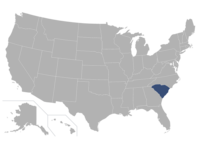
Columbia