Let the voters overrule the 141
May 13, 2026 | 6:00 am ET
Description
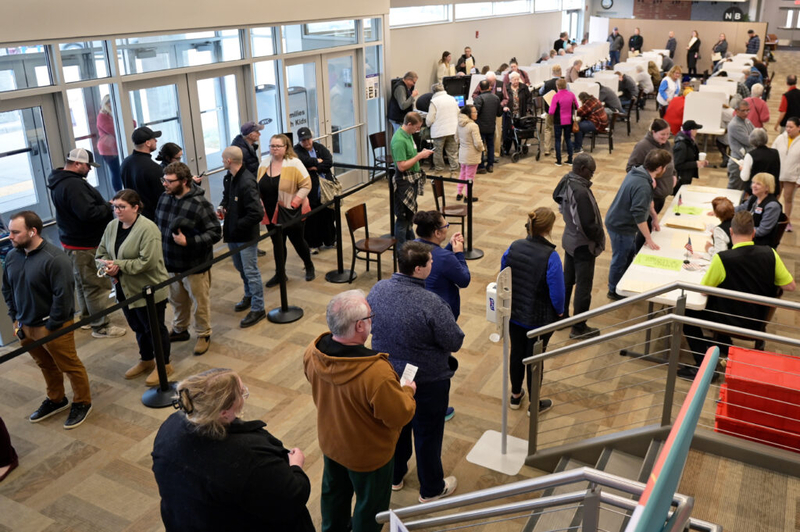
Voters wait to cast their ballots on Nov. 5, 2024, at Northview Church in south Fargo. This year, North Dakota voters will weigh in on three ballot measures proposed by the Legislature. (Photo by Dan Koeck/For the North Dakota Monitor)
My concern is with policy, not people. I hold no ill will toward any of the 141 legislators who serve or have served North Dakota.
In 2022, 150,363 North Dakotans — 63% of those voting on the measure — approved term limits on the governor and the Legislature. The message was clear: long-entrenched incumbents should step aside after a set number of terms.
That decision left the 141 a simple, honorable path.
They could obey the constitution. When a term expires, they can respect the limit and go home. If legislators believe voters made a mistake, there is a familiar model available: the approach taken by term-limit supporters, who used the citizen-initiative process, gathered the required signatures, put a proposal on the ballot, and made their case openly to the public.
Instead, lawmakers in 2025 passed Senate Concurrent Resolution 4008, asking voters not simply for a do-over, but for a softened do-over — one that rewrites the term-limits language and eliminates the constitutional clause barring the Legislature from changing those limits in the future. That move is now being challenged before the North Dakota Supreme Court.
Even if Senate Concurrent Resolution 4008 is struck down, the Legislature still possesses the same route to the ballot that every other North Dakotan must use. The basic mechanics are identical: petitions, signatures and a statewide vote. Citizens followed that route. Legislators are fully capable of doing the same.
Because the real issue here is not one resolution. It is a 90-year pattern.
No identified proposal in the historical record places additional procedural burdens uniquely restricting the Legislature’s own constitutional referral process. Legislative referrals still require only a simple majority vote in both chambers to reach the ballot. They do not require signatures. They do not face the same pre-petition scrutiny imposed on citizen measures. They do not need to survive a second statewide vote before taking effect. The burdens proposed over the years have landed on citizens, not on the 141.
Now consider what the Legislature has put before voters in 2026.
Senate Concurrent Resolution 4007 would impose a single-subject rule for constitutional amendments, creating another avenue for officials and courts to knock measures off the ballot. House Concurrent Resolution 3003 would raise the threshold for constitutional amendments from a simple majority to 60%, allowing a determined minority to block what most voters want. Senate Concurrent Resolution 4008 would rewrite term limits and remove the constitutional barrier that currently prevents legislators from altering those limits again later.
All three measures affect the citizens’ channel. And this is not new. Since 1932, legislators have repeatedly proposed “reforms” to the initiative process — raising thresholds, adding procedural hurdles, or narrowing what citizens can do. In 1978, voters approved higher signature thresholds for constitutional initiatives while leaving the legislative referral path untouched. In 2014, voters rejected a legislative attempt to bar initiated constitutional amendments from appropriating funds. In 2020 and 2024, voters rejected additional legislative efforts to burden citizen initiatives with more process and more restrictions.
Consider the contrast. In 2022, citizens used the initiative process to impose term limits, including a restriction on the Legislature’s ability to undo them. That triggered lawsuits, amicus briefs, and solemn warnings about constitutional principle. But when legislators moved in 2013 to limit what citizens could do through initiative, there was no corresponding panic about one generation binding another; voters were simply asked to decide, and they said no.
The principle seems to emerge only when power flows upward, not downward.
You will also hear that term limits were imposed by “outsiders.” Yet the signature requirement is the same whether support comes from a billionaire, a union, or a retiree with a clipboard. Restricting who may help gather signatures does not protect democracy; it strengthens whoever already has the most money, structure and access.
Some will argue that term limits restrict legislators just as these 2026 measures restrict citizens. But the asymmetry matters. Term limits constrain a legislator only if that legislator chooses to seek office again after serving the allowed number of terms. The 2026 measures would constrain every future citizen using the initiative process, no matter the issue. One limits a career. The others limit a right.
This is not a partisan issue. It is a structural one. The 141 already control statutes, budgets, appointments and legislative referrals to the ballot. The initiative and referendum remain the narrow sliver of direct democracy citizens still hold. And only one of those two channels is being steadily narrowed.
If respect for voters includes respect for the 2022 result, then the path is already visible in the record. When elected officials wish to change that result, they have access to the same citizen mechanisms they have so often tried to amend. What they have consistently preserved, across decades, is the ease of their own access to the ballot.
Ninety-four years ago, the Legislature asked voters to raise barriers in this area. North Dakotans said no. In 2026, they are asking again, in different forms but with the same effect.
Let the voters overrule the 141.
Bismarck, ND