The Montana Chamber of Commerce picked dark money over Montanans
May 12, 2026 | 6:32 am ET
Description
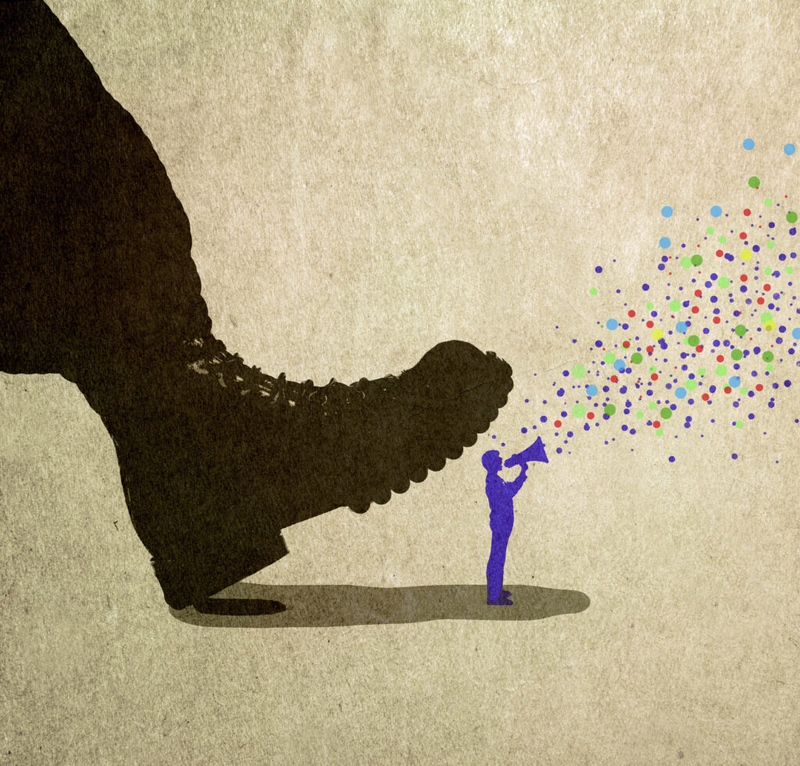
Photo illustration by Getty Images.
The Chamber of Commerce used to stand for local businesses — coffee shops, restaurants and hardware stores. The people who actually live and work here.
Until they didn’t.
The Montana Chamber, the Billings Chamber, and the Kalispell Chamber are fighting to keep dark money in Montana politics. Really. Not quietly. Not reluctantly. With gusto.
Because nothing promotes Montana like defending out-of-state corporations buying our elections.
It’s a bad look. And it’s earned.
Let’s be clear: Corporations using their financial muscle to influence elections isn’t new. Montana knows that story. It is a tale of corruption and plunder. Butte has a permanent reminder with the Berkeley Pit, one of the largest superfund sites in the nation.
Mining interests once ran this state like a company town.
Legislators. Judges. Governm
In 1912, Montana did something radical: people said “enough.” They passed the Corrupt Practices Act and banned corporate money from elections. It was a voter initiative.
Sadly, Washington ignored our history of corporate corruption, greed, and plunder.
In the Citizens United ruling, five genius Supreme Court justices held that corporations are “people” and money is “speech.” Really. How many lawyers did it take to make that up?
That’s not constitutional law. It’s legal fiction. In Republican speak, it’s “alternative facts.”
Corporations are not people. They’re not human. They don’t vote or lose sleep over Montana’s future. They don’t belong to the neighborhood PTA.
But, get this: They may be owned by foreigners. They have perpetual life. Their owners and managers get limited liability for corporate wrongs.
You can’t jail them. They aren’t citizens. They weren’t created by God. They are artificial and exist only because of provisions in our law. The first modern corporation was the Dutch East India Company, chartered in 1602.
But corporations’ money gives them a louder voice than you. And, probably the private cell numbers of a number of elected officials.
That’s the problem.
When corporations fund campaigns, they don’t just participate—they dominate. Influence doesn’t require a paper bag of cash under the table. It’s subtler than that. Donations flow and elected officials get the message.
Money talks. Voters get put on hold.
And with dark money, we don’t even know who’s talking. Think of the $300 million that funded campaigns for Tim Sheehy and Jon Tester. That money didn’t come from you or me. It was out-of-state dark money.
These “dark money” corporations have names that sound like a Norman Rockwell painting. Names like “American Partners,” or “The America the Beautiful Fund.” The names are a subterfuge for entities designed to distort, mislead and direct votes where their funders want them to go. Voters see the puppet, but the puppet master remains hidden.
It’s duplicitous. It conceals their real purposes. We know from our history. It’s corruption.
Behind the wholesome names are hidden donors, hidden agendas, and a very visible impact: Ugly, ubiquitous attack ads, distorted messaging and elections shaped by people who don’t live here.
“Dark Money.” It even sounds ominous. And it is. We all hate it.
And for too long, we’ve all shrugged at it.
We’ve been anesthetized to think this is normal, acceptable, and the way it is done.
Good people in Montana are trying to get dark money out of our elections. Past political leaders, for example, former Gov. Marc Racicot and Sen. Jon Tester, are supporting “The Montana Plan.” It’s a voter initiative (Ballot Initiative I-194) for the November ballot. Read up on it. It may save our democracy.
It’s a simple plan: Corporations aren’t people, and corporations can’t bankroll elections. That would become prohibited by law.
It’s radical, yet beautiful in its simplicity.
The plan defines corporations and similar entities as “artificial persons” with no inherent right to spend money in elections — as a matter of law.
It’s a gigantic “Not For Sale” sign — with love from Montana voters.
So what did our friends in the Chambers do? Did they embrace transparency? Did they remember Montana’s legacy of political corruption? No.
The Chambers went to the Montana Supreme Court — not to defend local businesses, but to defend dark money.
They tried to block voters from even having a say. The Chambers tried to stop this voter initiative from even being on the ballot.
Let that sink in: The Chambers went to Court to stop Montana voters from voting. Wow.
The Montana Supreme Court ruled against the Chambers and Attorney General Austin Knudsen. We should all clap.
So it’s a fair question: Who exactly are the Chambers working for?
Because it’s not Montana voters and it’s not small businesses.
Corporate money in politics is corruption.
It was corruption in 1912.
It’s corruption now.
Helena, MT