Unlocking Michigan’s talent: Why language support must replace labels
Mar 27, 2026 | 7:30 am ET
Description
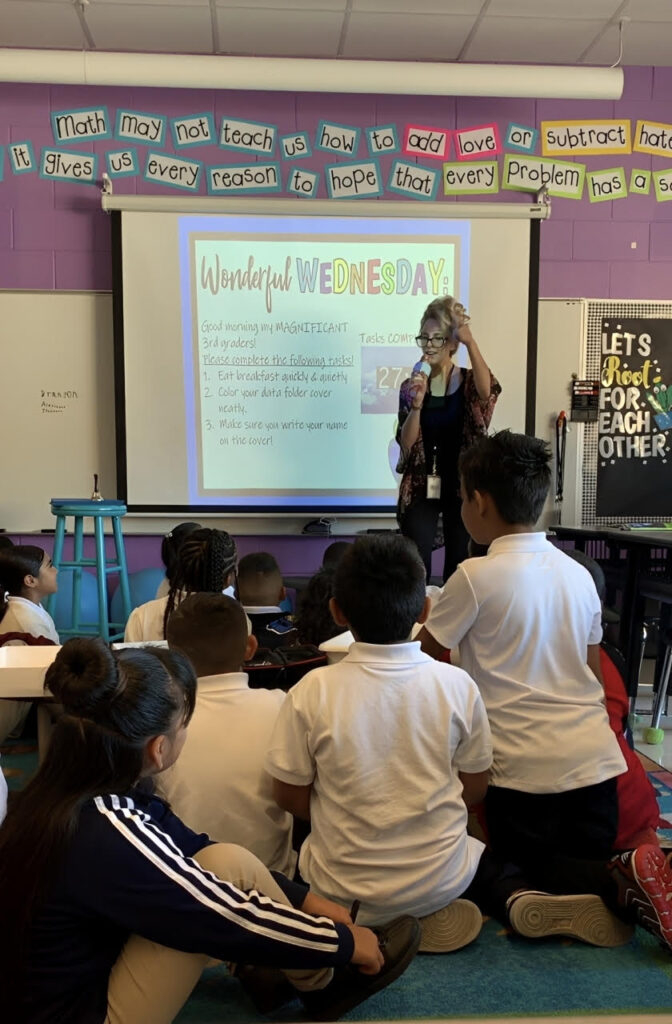
Megan Syed in classroom | Photo provided
As a child, Nora told me, she was immediately mislabeled as a special education student simply because she hadn’t yet learned English—a mistake her parents, trusting the system, didn’t feel comfortable questioning. Nora was classified as cognitively impaired, a label that followed her for years and placed her into separate classrooms, where she often felt embarrassed, isolated, and confused. These days, Nora makes sandwiches in a deli, but she often wonders how her life might have changed if her first language, Arabic, had been treated as an asset rather than a disability.
I met Nora when I worked with multilingual learners in Detroit and her story is never far from my mind every time I enter my classroom. I don’t want any of my students to be limited by a label.
Stories like this play out across Michigan all the time. Nearly 45% of English learners also are identified as having a learning disability, compared to 35% non-English learners. When multilingual learners are misidentified for special education, they are often subjected to lower academic expectations and stripped of rigorous, grade-level instruction.
Michigan must stop treating a student’s native language as a deficit to be managed and start seeing it as an intellectual strength to be cultivated.
Here are some ways to make that happen:
Let’s start by addressing the Great Lakes State’s shortage of educators certified to teach multilingual learners. Without these specially trained teachers who know the ins and outs of helping students new to English grasp the language, schools are often unable to tell the difference between a disability and language development, which ultimately puts more strain on an already underfunded special education program. Michigan should offer scholarships so more teachers are able to seek this certification, as well as provide annual stipends to show the value of these added skills. Although the number of teachers with English as a Second Language endorsements has grown in recent years, those endorsements still only account for a small fraction of all certified teachers statewide, increasing about 53% since the 2017-18 school year but remaining far below the fastest growing student group population in Michigan.
For me, becoming an English Language Learner coach was something that required years of coursework, classroom experience, and training on second language acquisition, assessment, and culturally responsive instruction. I learned how to determine whether a student needs language support rather than being referred for special education services. For example, when 3rd grader Arianna struggled to explain her ideas during a math discussion about solving multi-step word problems, I noticed she didn’t know words such as “total,” “add,” or “subtract,” and instead tried to explain herself using gestures and vague phrases. I provided her with fill-in-the-blank sentence frames and a key terminology word bank so she could bridge the gap between understanding the math and being able to say it out loud. Within weeks, she was confidently participating in discussions.
In addition to investing in more specially certified teachers to expand support of multilingual learners, Michigan must also provide ongoing training so that all teachers know the difference between a language gap and a true learning disability. Session topics could include how to analyze language samples, assessment data, and classroom performance.
In my classroom, training such as this enabled me to quickly recognize that Ty, a 3rd grader who struggled to sequence events during a science lesson on the water cycle, fully understood the concept but lacked the vocabulary and sentence structures to explain his thinking. By incorporating a graphic organizer, visuals and a labeled diagram to support Taseer’s explanations, his response significantly improved, confirming that language support was the needed intervention.
Nora’s story reminds us that when we mislabel a language gap as a disability, we risk limiting someone’s future before it even begins. We must move past seeing a child’s home language as a hurdle to overcome and instead embrace it as a foundation to build upon.
Lansing, MI