Data centers emerge as new flashpoint between Kotek, Drazan in Oregon governor’s race
Aug 28, 2026 | 9:00 am ET

Description
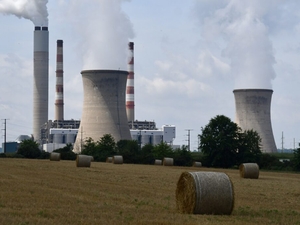
A view of data centers in Boardman, Oregon. (Photo by Jordan Gale/Oregon Capital Chronicle)
For months, Oregon’s incumbent Gov. Tina Kotek and her Republican challenger, State Sen. Christine Drazan, of Canby, have traded party-line barbs in their dueling campaigns to lead the state.
Kotek has accused Drazan of shying away from positions and statements on mail-in voting, immigration and abortion that Kotek says are in alignment with the Trump administration, painting Drazan as a willful executor of the president’s agenda. Drazan has fired back that Kotek is mischaracterizing those positions to obfuscate from what Drazan says are poor economic and student outcomes despite more state spending during Kotek’s first term as governor.
But a new fissure between the candidates is emerging over data centers, and the growing public backlash over the server farms in Oregon and nationwide. A late July poll by the Portland-based firm DHM Research found that 71% of Oregonians have a negative view of data centers, which have found a comfortable market in Oregon with the state’s lack of sales tax, generous property tax breaks for industrial development and relatively low electricity rates.
Responding to public angst over data centers and the tech industry has become an issue among candidates in both political parties. Among Democrats, data center backlash was key to the campaign of political newcomer Myrna Muñoz, who in a primary for a Washington County-area senate seat defeated incumbent state Sen. Janeen Sollman, of Hillsboro. Earlier this month, four state Democratic lawmakers announced they’d propose legislation in 2027 to pause the creation of new, large data centers in Oregon for the next three years.
The National Republican Senatorial Committee issued an Aug. 18 data center memo for one U.S. Senate race in Ohio, warning that support for data centers was becoming a problem for the Republican candidate and “campaigns or party committees cannot fix the toxic brand of an entire segment of the economy.” In Wisconsin, the GOP candidate for governor seized upon the Democratic candidate’s past statement in support of making the state a global hub for data centers and artificial intelligence.
“Oregonians right now do not want to have candidates who are enthusiastic about bringing more data centers into Oregon,” said John Horvick, senior vice president at DHM Research. “Painting your opponent as the one who did this, or one who wants to do more of this, is basic blocking and tackling.”
Drazan’s record
Drazan has yet to go as far on the offensive against data centers as Republicans from other states who are running for election in November, such as calling for moratoriums or terminating specialized tax incentive programs for the facilities.
She has said she supports local communities declining to host data centers, but opposes an “arbitrary moratorium.” She voted against the POWER Act, a 2025 state law which mandated the state’s largest electric utilities create a separate rate class for data centers, making the tech companies responsible for the rising costs of infrastructure and new energy generation the facilities require.
In a Thursday statement, Drazan said that “for more than a decade, Tina Kotek has supported tax giveaways that helped fuel Oregon’s massive growth in data centers while continuously raising taxes on everyday Oregonians.” She said that Oregon “has done more than its fair share, and we cannot continue to be the Wild West for data center development. No community should feel like a data center is being shoved down its throat.”
It’s a reference to a 2012 vote Kotek, then a state representative, made to pass a bill ensuring tech companies operating data centers in the state’s enterprise zones are only taxed on the value of their physical assets, not the value of the brand or network in Oregon, under five and 10-year property tax breaks for industrial development.
The state’s enterprise zone programs since the 1980s have offered local governments a way to avoid property taxes for five to 10 years depending on locations, in exchange for spurring industrial investments and jobs. In the years since, data centers in the state have received hundreds of millions of dollars in tax breaks, including more than $400 million this year.
At a Tuesday news conference in Portland, however, Drazan said if elected she would not retreat from the existing tax breaks spurring data center development in the state.
“I do support enterprise zones, but the requirements for enterprise zones have made it uniquely possible for data centers to take advantage of them,” she told reporters.
Drazan in the most recent Legislative session voted to allow data centers, and other businesses, a significant tax break by opposing a proposal to unwind Oregon’s tax code from the GOP’s 2025 federal tax and spending law bonus depreciation benefit. Data centers in Oregon would have been able to take advantage of the full and immediate deduction of equipment purchases such as cooling and electrical systems from their state income taxes.
Kotek’s record
Kotek has also taken to criticizing Drazan’s position on data centers. An Aug. 7 press release from Kotek’s campaign calls out Drazan’s vote against the POWER Act and her opposition to Oregon’s landmark emissions reduction policy, the Climate Protection Program, meant to combat climate change.
“Governor Kotek is committed to making sure Oregonians see lower utility costs and to protecting Oregon’s clean air and water,” Federico Araujo, communications director for the campaign, said in a statement. “Oregonians have made it clear that data centers need to pay their fair share, commit to clean energy, and monitor their energy and water usage. Governor Kotek stands with Oregonians on those shared values.”
Kotek, meanwhile, has her hands somewhat tied until a work group she convened earlier this year to study the costs and benefits of data centers in the state releases its draft findings next month. She told KOIN she would introduce legislation next session in 2027 that would address questions around data centers’ energy usage, water consumption and labor standards.
Luke Harkins, a spokesperson for the governor’s office, told the Capital Chronicle that Kotek’s comment “included only a few areas that future legislation will focus, but there will clearly be other components to come after her Data Center Advisory Committee finishes their work.”
Beyond convening her data center workgroup, which has gathered months of public input, the governor has called Oregon a “cheap date” for data centers and expressed support for local communities establishing moratoriums on data centers.
Kotek during the most recent Legislative session reversed course on an economic and tax package that would have expanded access to enterprise zones, further bolstering the data center industry. After backlash over the proposal, she instead threw her support behind an amended bill that created a one year moratorium on data centers taking advantage of one of the enterprise zone programs until summer 2027.
“If we’re going to have data center growth, and I think we should over time, it’s got to be right. How do they use their energy? How do they monitor and manage their water usage? What does it mean for the local communities? Do those jobs there pay good wages and support the community?” Kotek said in a recent television interview. “We can have those questions. It’s not an either or.”
Salem, OR