Indiana Legislature erred by not acting on license plate readers but can correct the mistake
Aug 28, 2026 | 5:00 am ET
Description
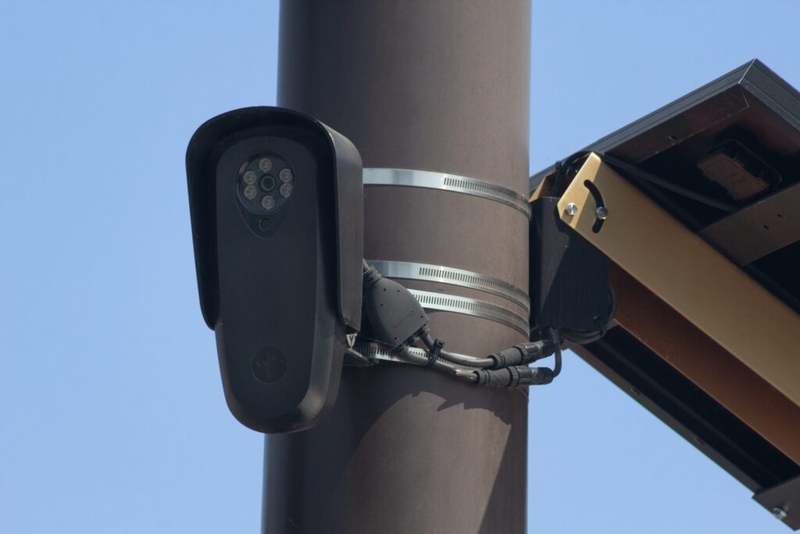
Flock Automated License Plate Reader as captured on Aug. 5, 2026. (Photo by Valentin Termite/Idaho Capital Sun)
Automated license plate readers are not new to Indiana, but the outrage is. Flock Safety cameras are the new f-word — even though they have been in use across the state for years with little to no reaction.
The high-speed cameras take pictures of license plates and turn them into searchable data. They don’t record video.
I see both sides of the debate but err on the side of giving police more tools. This is especially true in a climate where everyone is hyper-focused on crime and resistant to property taxes.
The good they do far outweighs the bad with one big caveat — proper guardrails.
The problem is Indiana lawmakers have failed to provide any.
Indiana lawmakers want to crack down on data privacy. What about license plate readers?
In 2023, senior reporter Casey Smith wrote a story about the use of the readers, including that the Indiana State Police have been using such technology for more than decade — scanning a million plates a month — to find habitual traffic violators, stolen vehicles, missing persons and people driving with suspended licenses.
That same article noted other law enforcement agencies around the state adopting the technology and the Indianapolis Metro Police Department installing dozens of Flock cameras around the city.
Lawmakers were focusing on data privacy in other areas and resisted efforts to use camera technology for highway speed violations or passing of school buses. But when a former senator cited privacy concerns and filed a bill to establish statewide standards, it died in committee.
That left local police agencies to craft their own policies.
Sen. Mike Crider, R-Greenfield, who chairs the Senate Homeland Security and Transportation committee, said in 2023 that the issue didn’t concern him. Crider is a former law enforcement officer.
Two years later, there is a public furor against Flock, and the Capital Chronicle reported last week that several lawmakers will be filing bills to set guardrails for use of the readers. And I wouldn’t be surprised to see a few legislators seek a full ban.
I think the latter would be a mistake.
When used properly by police, the readers save money and catch criminals faster than ever before.
A former police officer wrote a column for Capital Chronicle in which he explained the advantage. He gave an example that has stuck with me:
“It is 3 a.m. The radio crackles with a partial license plate number and a vague description of a sedan that just fled a violent robbery. Ten years ago that call would have launched a convoy of deputies, troopers, and city officers fanning out across Hamilton County, each one hoping to spot the suspect vehicle before daylight. We burned fuel, tied up manpower, and too often watched the trail go cold.
“Today the playbook is different. Before a patrol unit even rolls, investigators check the data from license plate readers. If the suspect car passes a fixed or mobile camera in our county, or slips under a reader in Lafayette, Indianapolis, or any partner agency, an alert arrives within seconds. Instead of scattering units in every direction, leaders can send two officers to the last alert, confirm the plate, and work outward from real-time information. What once took hours now takes minutes, and the odds of an arrest rise fast.”
Like anything, though, a few bad apples can give an innovative tool a bad name. That includes officers conducting searches for personal reasons. So, usage needs to be strictly controlled, and data needs to be routinely purged.
I personally don’t buy into the idea that these readers are some sort of privacy violation. People are driving on public roadways when they are recorded and have no expectation of privacy. Plus, if you aren’t doing anything wrong, you have little to be worried about.
Indianapolis, IN