Arizona Republicans stuff vetoed proposals into a must-pass agency extension bill
Mar 18, 2026 | 8:36 pm ET
Description
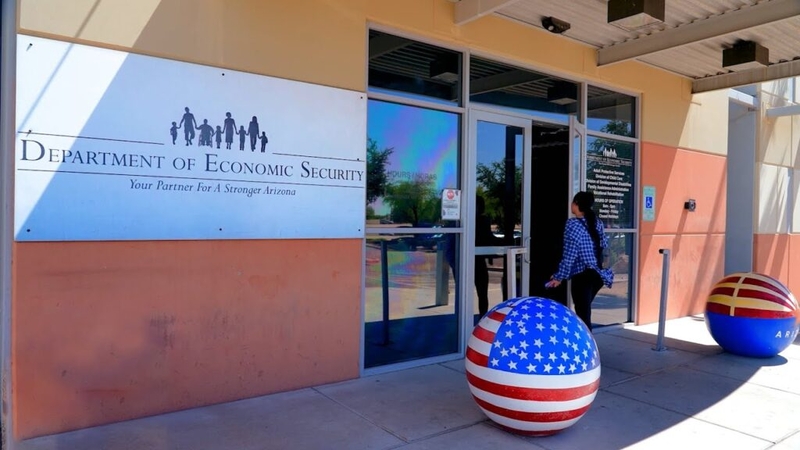
(Photo courtesy Arizona Department of Economic Security)
Republicans in the Arizona Legislature are trying to revive vetoed legislation that would place burdensome restrictions on food benefits and force hospitals to inquire about patient immigration status by inserting them into a vital agency continuation bill.
When Rep. Selena Bliss, R-Prescott, introduced House Bill 2728, it was a procedural piece of legislation that would allow the Arizona Department of Economic Security to continue operating for the next eight years.
But after Gov. Katie Hobbs vetoed several pieces of GOP-backed legislation that would place additional restrictions and requirements on the Supplemental Nutrition Assistance Program, Republicans in the House amended Bliss’s bill to add the language from a handful of those vetoed bills to it.
Now, in addition to continuing the operation of DES, it would require the state to bring the error rate for the Supplemental Nutrition Assistance Program under 3%, ban SNAP recipients from using benefits to purchase candy and soda, expand SNAP eligibility verifications and force hospitals to collect information about the immigration status of patients.
When she introduced the sweeping amendment on March 3, Bliss promised that it would make DES “a much stronger state agency to serve those who are vulnerable.”
The amendment passed on a party-line vote, with ample criticism from Democrats.
House Minority Leader Oscar De Los Santos said on March 3 that the amendment does a poor job of attempting to address issues within DES.
“This is effectively a hodgepodge of bills that have already been vetoed, that are poor policy, that will kick people off of SNAP, which is terrible policy in the midst of an affordability crisis,” he said.
A look at some of the vetoed bills added to HB2728:
- House Bill 2206, which would require SNAP to get its payment error rate below 3% by 2030 or face financial penalties. DES is already working to get the error rate below 6% before penalties in Trump’s One Big Beautiful Bill Act kick in. In 2024, Arizona’s payment error rate was 8.8%, below the national rate of 10.9%. The state would already lose millions of dollars in funding if it doesn’t get the rate below 6% in time to meet the federal requirements, and the proposed 3% requirement would increase penalties further. SNAP’s payment error rate includes over- and under-payments of benefits, which are mostly due to administrative errors and incorrect application of eligibility rules, not due to fraud.
- Senate Bill 1051 would have required hospitals that accept Medicaid — virtually every hospital in the state — to include a question about a patient’s citizenship status on intake paperwork. Similar laws in Texas and Florida have prompted people to delay critical care for fear of being detained, despite assurances from GOP lawmakers that answering is optional and no identifying information is shared with federal authorities. Republicans have long relied on unfounded assertions that immigrants are draining publicly funded assistance programs, like Medicaid, to justify both anti-immigrant policies and more restrictive eligibility requirements. Last year, the Trump administration defended its decision to gut Medicaid, in part, by claiming without evidence that it aimed to disenroll millions of immigrants.The truth is that undocumented people have almost no access to government-funded health care.
- Senate Bill 1036 would have required additional work requirements and eligibility determinations for people applying for unemployment benefits.
- Senate Bill 1334 would have banned DES from obtaining work requirement waivers for recipients who would normally be required to work to receive benefits. Many states use waivers like these in times of high unemployment when people have a hard time finding jobs.
- Senate Bill 1331 would have required certain unemployed adults who receive SNAP benefits to participate in a work training program that is currently voluntary. DES representatives have said that expanding the program in this way would be costly and create an administrative burden.
- House Bill 2396 would have required DES to obtain a waiver from the federal government to ban SNAP recipients from purchasing soda, energy drinks, candy and “snack foods of minimal nutritional value” with their benefits.
On Wednesday, the Arizona Senate Health and Human Services Committee passed HB2728 along party lines.
During the committee hearing, Pamela Cunningham, who has been struggling to obtain benefits through DES, spoke against the legislation.
“In the Arizona we deserve, when you lose your job, the system is there to catch you,” she said. “But that’s not what I experienced. I was recently laid off, and DES didn’t feel like a safety net. It felt like an obstacle. The website didn’t work to apply for unemployment benefits. The phone had long wait times, and when I spoke with individuals, they admitted the website is problematic and needs to be fixed.”
Instead of applying online, Cunningham said she had to print the paperwork online and mail it to the agency. She’s still waiting for the claim to be processed.
“This is by design,” she said. “That’s what happens when a system is underfunded, understaffed and treated like it doesn’t matter. And now Republicans want to destabilize it even more, while families are already struggling with rising rent, groceries and gas. They are choosing to make it harder for people to survive.”
Sen. Lauren Kuby, D-Tempe, voted against the bill in the committee, saying that a department continuation bill was not the place to include numerous controversial policy proposals.
“I feel like this bill is just itching for a veto,” she said. “We know it’s going to get vetoed, and then we’ll be back to Square One, looking at a clean bill to continue DES. We need to get over these political games and really start working for the people of Arizona and address the affordability crisis.”
Before voting for the amended HB2728 on March 3, Bliss said the changes would protect public benefits for vulnerable people.
“DES is one of our largest and most fiscally significant agencies in Arizona,” she said. “A simple continuation ignores known structural weaknesses and eligibility verification, error rates and reporting. If we are going to continue DES, we must ensure it operates with integrity, accountability, and compliance with federal law.”
Rep. Cesar Aguilar, D-Phoenix, criticized that explanation.
“By adding these barriers onto it, you’re only cutting funding and access and resources from the most vulnerable populations of Arizona, in a time where we are economically not doing well, and that is thanks to our President, who has made our economy very fragile,” he said.
HB2728 now heads to the full Senate for consideration, and if it passes there it is likely headed for a veto from Hobbs.
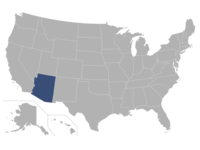
Phoenix, AZ