Mainers to vote on whether to end transgender inclusion in school sports
Mar 17, 2026 | 1:43 pm ET
Description
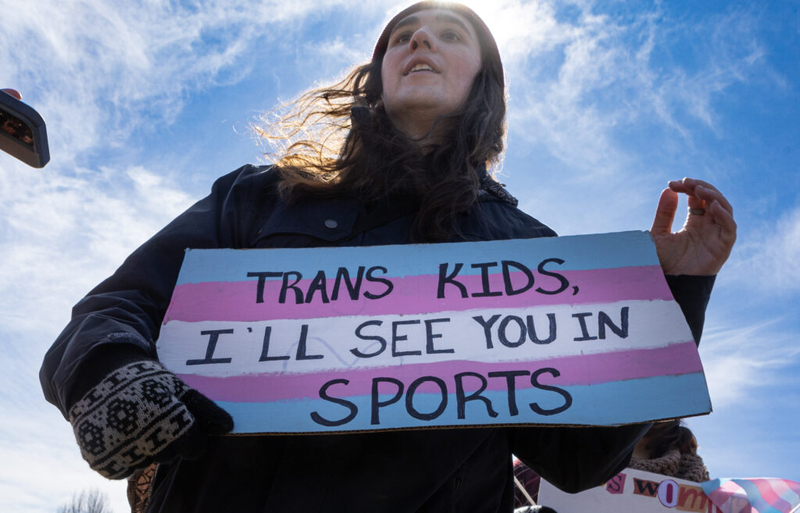
Alice Frost, who identifies as transgender, speaks to a reporter after a rally in Cumberland, Maine on Sunday, March 23, 2025, calling on Maine lawmakers, and local MSAD51 school officials, to support transgender student athletes. (Photo by Troy R. Bennett/ Maine Morning Star)
Mainers will vote on the rights of transgender student athletes to access sports teams, bathrooms and locker rooms aligning with their gender identity this November.
On Tuesday, the Secretary of State’s Office confirmed that more than valid 70,000 signatures were collected by proponents of the citizen-led ballot initiative, which means the question will be decided on by voters during the midterm elections.
Last year, after President Donald Trump and his administration launched several investigations into Maine’s inclusive policies, Republican state lawmakers attempted to pass a slate of bills to change those rights. Several proposals utilized similar language as the ballot measure, aiming to restrict what teams trans athletes can play on and what bathrooms and locker rooms they can access. Broader legislation attempted to ban the handful of trans student athletes in Maine from using affirming pronouns and changing the Maine Human Rights Act, which protects all these rights.
The proposals were all rejected by the Democratic-majority Maine Legislature.
But during last November’s election, supporters of the anti-trans initiative — led by Brunswick resident Leyland Streiff — started collecting signatures, appearing at polling stations across the state.
In February, the group held a press conference at the State House, announcing that it collected over 82,000 signatures. Of those, the Secretary of State’s Office deemed 71,033 valid, which cleared the minimum requirement of 67,682 signatures from registered Maine voters.
“This November, Mainers will get to do what the (Maine Principal’s Association) and State Legislature have failed to do,” Streiff said in a press release. “And they’ll get to do it through the most democratic process possible — a simple majority vote will designate competitive sports and private facilities in our schools by sex. This is inclusive, fair and safe — everyone gets to play sports; not one single person is banned.”
A coalition led by EqualityMaine, GLAD Law, and the Maine Women’s Lobby said it will review the decision by the Secretary of State and launch a statewide campaign opposing the referendum.
“Over and over, Mainers have said we will not allow bullying and discrimination in our schools,” said Gia Drew, executive director of EqualityMaine.
“If voters approve it, this measure would open the door to harassment, bullying and abuse of children. It would embolden adults and members of the public to harass and scrutinize student athletes who just want to be on the team,” Drew continued. “Enshrining the harassment of LGBTQ+ students into state law would hurt vulnerable kids and send the wrong message about who we are as Mainers.”
First to roll back protections
Though several states have similar initiatives aiming for the November ballot, advocates say that if passed, Maine’s could be among the first to succeed nationally.
Ballot measures can be easier to pass than legislation, said Angela Dallara, director of rapid response and campaigns at the national LGBTQ+ advocacy group GLAAD, because a lot of voters might not understand what’s at stake or might be more susceptible to myths or misconceptions.
For example, Maine Girl Dads and others have argued the proposal would help protect the safety of cisgender girls in bathrooms and locker rooms, although no data has shown that cis girls are at greater risk in bathrooms shared with trans girls.
“Forcing anti-trans ballot measures before voters who may be susceptible to lies and deceptions about transgender people is definitely an intentional tactic that opponents of LGBTQ equality try to leverage if they’re trying to subvert the failed legislative attempts,” Dallara said of citizen initiatives.
The ballot question committee behind the campaign has been bankrolled exclusively by midwestern billionaire mega-donor Richard Uihlein, who donated $800,000 in October. Uihlein and his wife have funded Republican causes across the country, including donating millions to anti-abortion efforts.
A coalition led by EqualityMaine, GLAD Law, and the Maine Women’s Lobby to oppose the ballot campaign said that the out-of-state influence is an indicator that the initiative is not about fairness in Maine sports or protecting cisgender girls, but rather to further a conservative political agenda that aims to restrict the rights of trans people nationally.
“This campaign is about a lot more than a handful of Maine kids who play sports,” said David Farmer, spokesperson for the coalition. “This initiative is funded by one of the richest people in the world who is spending enormous amounts of money to promote extreme candidates and extreme ideas.”
- 2:39 pmThis story was updated to include a quote from the ballot campaign.

Augusta, ME