Proposed ban on amplified music outside NC polling places draws criticism
Jun 29, 2026 | 5:21 pm ET
Description
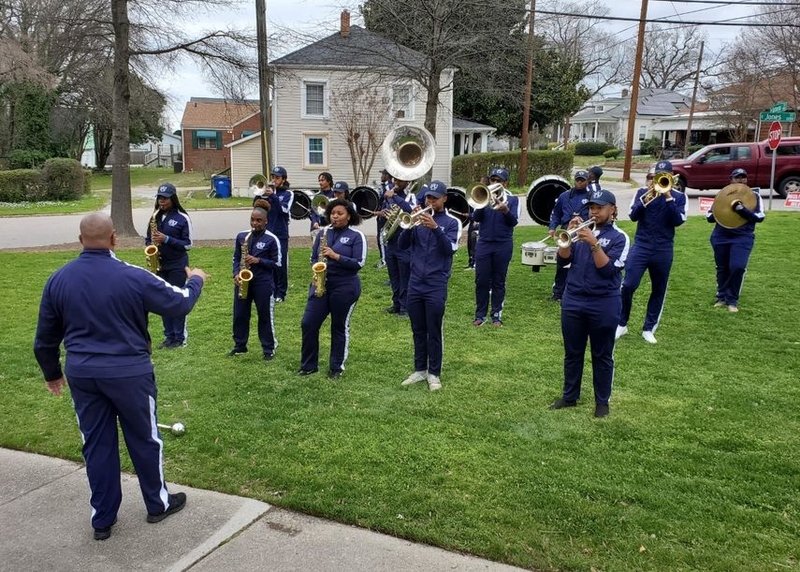
The St. Augustine’s University marching band played outside Raleigh's Tarboro Road Community Center polling site in 2020 while students voted. (Photo Joe Killian/NC Newsline)
A proposal by the N.C. Board of Elections to ban amplified sound outside polling places is aimed at discouraging voting by Black and young voters, critics said Monday.
When the state board debated the proposed rule in April, members did not mention any specific complaints about music or bullhorns outside polling places. No one spoke in favor of the rule Monday. Written comments on proposed rules will not be released until the comment period ends.
The idea was controversial before it reached the public comment stage. Democrats on the state board voted against putting the proposal before the public for comment,
Speakers at a public comment session on the proposed rule said it would stifle voter engagement activities such as Stroll to the Polls, Souls to the Polls, organized by Black churches, and DJs at the Polls.
Music outside polling places doesn’t disrupt elections, but is a celebration around voting that encourages participation, said Madison Belin of Raleigh, a rising junior at NC A&T State University in Greensboro.
Collective action and civic participation are deeply rooted in HBCU history, Belin said, and events that include music and bring people to the polls are a continuation of that legacy.
No one is asking to disrupt voting or compromise the integrity of elections, she said.
“We are simply asking to preserve the spaces and traditions that make people excited to participate in them. Removing elements that make voting engaging and fun just further inconveniences people and pushes young voters away,” Belin said. “I would hope and pray that is not the goal.”
Banning amplified sound is one in a collection of new rules the board is considering.
Monday’s in-person comment session is one of four on proposed election and ballot-counting rules. The board will hold a repeat session on July 9 on how county boards of elections should handle absentee ballots with deficiencies. Board members watch recordings of the sessions, but don’t attend them. A problem with the June 22 recording of the public’s comments on absentee ballot rules requires a new session, the state board said in an email Monday.
Public comment sessions were also held earlier this month on a rule that would make it easier for county boards to throw out ballots when people don’t have photo ID. People who come to vote without a photo ID have to cast provisional ballots, and those who don’t have an acceptable photo ID have to fill out forms explaining the reason. As it is now, a local board has to decide unanimously that a voter lied on their form to throw out their ballot. The proposed rule would change that so a majority vote would be enough to throw out ballots.
The board is also considering a rule on recounts following close races.
NC elections board considers new rules for photo ID, polling places
Andy Jackson, director of the Civitas Center for Public Integrity at the John Locke Foundation, has spoken at all the public comment sessions. He supported the proposed rule changes on photo ID, absentee ballots and recounts.
But on Monday, he recommended abandoning the rule banning amplified sound.
Jackson did not center his criticism on race or voter age, but said the proposed rule “does not narrowly serve the state’s compelling interest” in enforcing peace and order in and around polling places. “If the sound is not audible within the voting enclosure, it should be allowed,” he said.
Jackson also recommended rewriting a proposal on when a chief judge at a polling site can tell someone outside to turn down the volume so it can withstand charges of subjectivity.
Brian Kennedy, senior analyst with Democracy North Carolina, said the proposed ban on amplified sound is “in the same spirit’ as North Carolina’s previous voter suppression efforts.
The rule targets community-led voter mobilization efforts that bring Black, brown, and young voters to the polls, he said.
“Community mobilization events that use music, energy and joy” strengthen democracy, Kennedy said. “These events are not disruptions to the electoral process. They are an electoral process working as it should.”
After the state elections board reviews written and recorded comments, it will vote on proposals to send to the Rules Review Commission. Rules are not final until the commission approves them.
The state board is accepting written comments on the proposed rules through July 16.
Here’s how to comment:
Absentee Voting Rules (Read text of the proposed rules and an explanation and reason for proposing the rules)
Online: Public Comment Portal: 2026 Absentee Voting Rules
Photo ID Rules (Read text of the proposed rules and an explanation and reason for proposing the rules)
Online: Public Comment Portal: 2026 Photo ID Rules
Recount Rules (Read text of the proposed rules and an explanation and reason for proposing the rules)
Online: Public Comment Portal: Recount Rules
Voting Site Rules (Read text of the proposed rules and an explanation and reason for proposing the rules)
Online: Public Comment Portal: Voting Site Rules
To comment by email: Email: [email protected] (Note: Commenter should identify the specific rule being commented on.)
To comment by mail: Attn: Rulemaking Coordinator, P.O. Box 27255, Raleigh, NC 27611-7255 (Note: Commenter should identify the specific rule being commented on.)
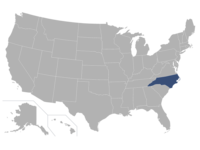
Raleigh, NC