If Idaho cuts Medicaid, ripple effects on the budget are likely. Will they drive up costs elsewhere?
Jan 26, 2026 | 6:30 am ET
Description
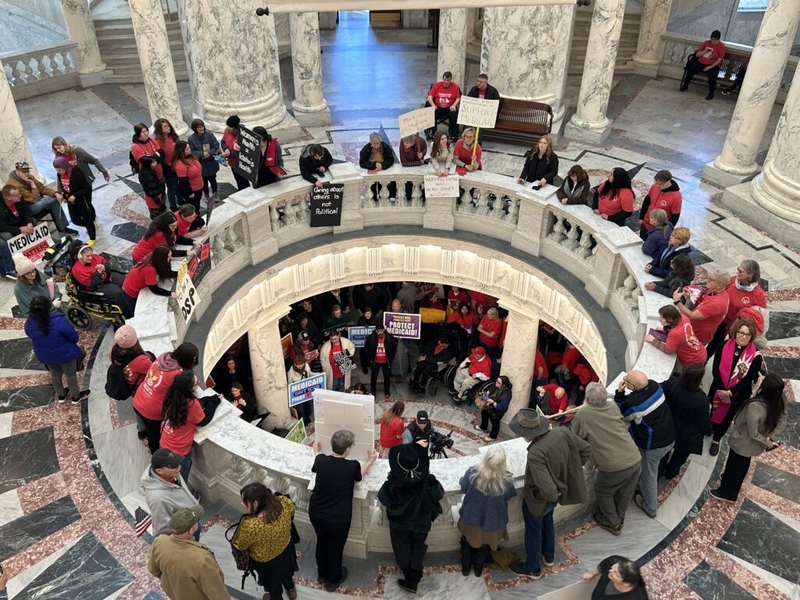
Hundreds of Idahoans gathered in the rotunda of the Idaho Capitol on Jan. 12, 2026, to protest cuts to the state's Medicaid program. The protest, organized by Idaho Voices for Children, took place before the governor's State of the State Address. (Photo by Christina Lords/Idaho Capital Sun)
Correction: This story was corrected at 4:20 p.m. Wednesday to state that home and community-based services were not exempted from Idaho’s 4% Medicaid provider reimbursement rate cuts. The only services in that area exempted were certified family homes and personal care services.
As Idaho lawmakers consider cutting Medicaid to balance the state’s budget, some lawmakers worry cuts could drive up costs elsewhere.
But just how much is difficult to know.
An internal budget document suggests that the Idaho Department of Health and Welfare doesn’t know if the governor’s proposed $22 million cuts would create “new potential costs.” And those cuts could also result in the state losing over $100 million dollars in federal matching funds that Idaho Medicaid would get.
But on Thursday, Idaho’s top Medicaid official made it clear: The state’s public assistance program doesn’t have capacity to project how much cuts could spur new costs — unless it is directed to.
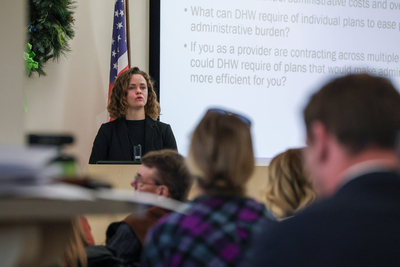
“But I also don’t want to imply that more staff would solve the problem,” Idaho Medicaid Deputy Director Sasha O’Connell told the Legislature’s Joint Finance-Appropriations Committee, or JFAC. “Because I think that it’s also just an issue of not being able to predict some of these changes.”
Forecasting with big changes always carries risk, she added. The state’s estimate for Medicaid’s future budget needs often turn out wrong, she said, in part because the state projects the program’s costs well over a year before the next given fiscal year actually concludes.
The admission comes while the Idaho Legislature grapples with which Medicaid services to possibly cut, as lawmakers brace for spending reductions after years of tax cuts.
But some ripple effects of Medicaid cuts are already baked into the governor’s budget proposal. That’s because for every dollar in general funds Idaho pays for Medicaid, the federal government chips in at least twice as much.
If Idaho cuts state Medicaid funding, it could lose federal funds
If Idaho cuts its spending on Medicaid, that means the state could forgo an even higher amount of federal matching dollars.
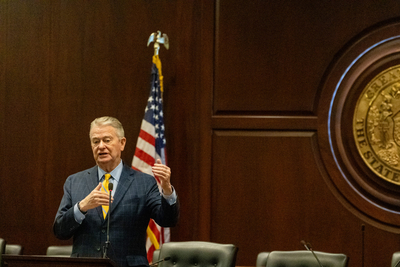
Next fiscal year, Idaho Gov. Brad Little’s proposed $45 million in Medicaid cuts would leave the state with nearly $106.8 million less federal funds, according to the Legislative Budget Book, which is produced by Legislative Services’ Office. His Medicaid plan for next year would extend cuts to doctor pay rates, and potentially cut other services like dental coverage and disability services.
This year, Little’s cuts to doctor pay rates – set to save the state $17.2 million — would leave the state with $44.2 less federal funding.
In 2023, the Department of Health and Welfare estimated repealing Medicaid expansion – a proposal some in GOP legislative leadership said they would consider this year – would cost the state $78 million more.
Before the legislative session, Little cautioned that repealing expansion would spark unintended consequences.
He also said the Department of Health and Welfare was working to figure out the true cost of repeal. It isn’t immediately clear when or if that analysis will be done.
But in JFAC, O’Connell, the Idaho Medicaid director, highlighted a few costs the state could face if it repealed Medicaid expansion:
- Losing $38 million in revenue from a tax on hospitals, because the rate hospitals pay is based on how many Medicaid enrollees they serve.
- Driving up costs by around $20 million for state hospitals, where some services would shift from being largely federally funded back to state funded. (The federal government pays 90% of costs of Medicaid expansion.)
Health and Welfare exempted several services from provider reimbursement rate cuts
According to the Legislative Budget Book, the Department of Health and Welfare, following a federally required review, exempted the following services from reimbursement rate cuts:
- Certified family homes and personal care services. (But other home and community-based services were subject to the cuts.)
- School-based services
- Tribal providers
- Federally Qualified Health Centers’ and Rural Health Centers’ final encounter rate payments
- Services funded by the Idaho Home Choice grant
- State-owned facilities
- Hospice
- And pharmacy ingredient cost
Patients, providers turn out to oppose cuts
As lawmakers mulled the Department of Health and Welfare’s budget Thursday, advocates visited the Capitol to try to protect Medicaid services.
Julie McConnel, a mom to 10-year old twin boys with Down syndrome, came from Nampa. She said her sons rely on a range of Medicaid services that have improved their lives – including home and community-based services, which is on Little’s list of Medicaid cut options.
Some specialists her sons see have a long wait list, and she worries that cutting their pay rates would make it even harder to get in.
“Where they are now in life is so much due to the early interventions they received for Medicaid — whether it’s general medical expenses or home and community based-services,” she said in an interview outside JFAC’s meeting room.
Records detail Idaho Medicaid services that could be cut, but not ‘potential new costs’
Sara Bergsma owns a speech therapy clinic in Meridian called We are Better Together. She said providers are still figuring out how to navigate the state’s recent cap of speech therapy at 20 visits a year, which requires prior authorization for any more visits.
But what worries her more is the prospect of the service being entirely cut — since it was on Little’s list for Medicaid cut options.
“I don’t know how these clinics will stay open,” Bergsma said in an interview. “They won’t be able to take Medicaid, or they will have to close their doors if that’s the only source of income or the majority of their source of income.”
Lawmakers mull where to cut Idaho Medicaid
In JFAC, Sen. Carl Bjerke, a Republican from Coeur d’Alene, said he’s received up to 1,000 emails from the public about Medicaid cuts. And he talked about how he was wrangling with how to cut more.
He said he wants money in Medicaid to go to “the people who are the most vulnerable.”
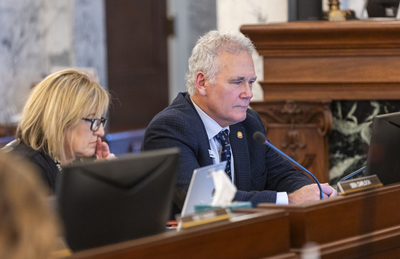
“I can give you many reasons why adult dental is good,” Bjerke said.
But, he said, “if I had to make a decision right here, as we’re making decisions on budgets, whether I’m going to support adult dental or taking care of a single mom taking care of a … severely autistic child, I’m going to weigh on the severely autistic child.”
Sen. Melissa Wintrow, a Boise Democrat, advocated for hearing public testimony from people affected by cuts.
And she said lawmakers shouldn’t even be in this position.
“We’ve cut revenue too hard. And I would rather look for ways we can put revenue back, so we don’t have to make decisions on these kinds of things – like who deserves it and who doesn’t,” she said. “We’re really picking winners and losers here. And it doesn’t feel good.”
Rep. Chris Bruce, a Republican from Kuna, told lawmakers that they may not be hearing from some taxpayers.
“I’d also like to remind everyone of folks who maybe are working multiple jobs, who do not have insurance for themselves, who are just paying their taxes,” he said. “We need to remember those people who are making these decisions, and not just focus on the calls that we get all the time.”
Boise, ID