Feds pull immigrants held in Cumberland County Jail after sheriff rebukes ICE
Jan 23, 2026 | 11:31 am ET
Description
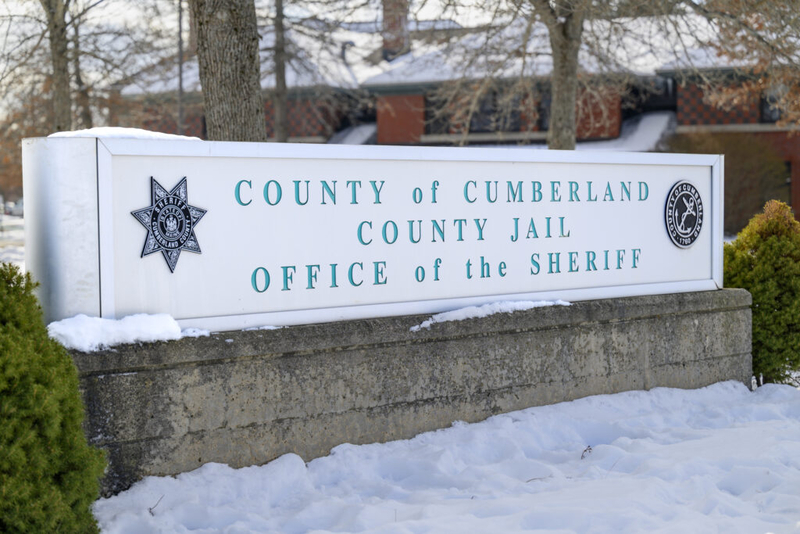
Sign outside the Cumberland County Jail in Portland. Jan. 23, 2026. (Photo by Jim Neuger/ Maine Morning Star)
The federal government moved detained immigrants out of Maine’s largest jail as retaliation following the Cumberland County sheriff’s public rebuke of the detention of one of its staffers who he said is lawfully allowed to work in the U.S.
The move is a marked shift after Cumberland County Jail had been a detention hub during President Donald Trump’s second term so far.
Cumberland County Sheriff Kevin Joyce on Thursday publicly questioned ICE’s priorities after the agency detained one of its corrections officer recruits Wednesday night. Joyce said the hire filled out documentation that showed he was legally allowed to work in the U.S. and underwent a background check. He had a “squeaky clean record,” as Joyce described it.
U.S. Department of Homeland Security Assistant Secretary Tricia McLaughlin said that the recruit’s employment took “sanctuary city to a whole new level” in a statement Friday night.
McLaughlin argued that because the jail hired him, the federal government would no longer house other people they deem to be in the country illegally at that facility. “We could not, in good conscience, continue to partner with a law enforcement organization that flagrantly violated our nation’s immigration laws,” she said.
The dispute comes amid heightened ICE activity in Maine. However, the people known to have been detained during the operation so far were not being held in local jails but instead sent out of state soon after apprehension. Unlike many other states, Maine doesn’t have a dedicated ICE facility, which means local jails have been relied on for detentions.
“Folks are having issues with being able to locate their loved ones,” said Ruben Torres, advocacy and policy manager for the Maine Immigrant Rights Coalition.
Detainees pulled out
On Thursday, the University of Maine’s School of Law’s Refugee and Human Rights Clinic, which has helped provide legal support to more than 300 people held in Cumberland County Jail during Trump’s second term, began receiving frantic calls from detainees telling their counsel they were being moved.
Anna Welch, the founding director of the clinic, heard from jail staff that there were no longer any immigration detainees in the facility as of Friday morning, though one person the clinic has helped is still showing up as in the facility, according to ICE’s detainee locator.
Based on that locator, people have since been sent to the Federal Correctional Institution in Berlin, New Hampshire; the Donald W. Wyatt Detention Facility in Rhode Island and the Plymouth County Correctional Facility in Massachusetts. But the locations for the majority of women removed from the jail are not yet clear, and Welch said they may be sent to Louisiana, based on conversations her co-counsel has had with detainees.
This is not the first time these people have been moved, as Welch and other attorneys said the majority of those that had been in the jail had not been apprehended in Maine and were instead moved from other facilities.
Cumberland County Jail did not respond to requests for comment about the removal of people from the jail. DHS and ICE did not respond to questions about where they are holding people detained during their Maine operation.
Unclear where new detainees are being held
Since the Trump administration launched its operation in Maine on Tuesday, local organizers and legal groups have tried to gather details about who has been taken and where they’re being sent, while Gov. Janet Mills and other Democratic officials are demanding transparency from the Trump administration, which has not been communicating with Maine leaders and shared few details of its plans.
With sparse information about who has been detained overall, and up to 48 hours for detainees to be entered into the tracking system, little is known about people’s whereabouts.
As of Wednesday, Cumberland County Jail hadn’t had any new bookings this week for federal immigration detainees. Before they were moved out, there had been 64 immigration detainees in the facility, with nine total new bookings in January.
Cumberland and Androscoggin County, which includes Lewiston, are the areas that have had the most ICE activity so far, based on reports verified by community organizers, though federal agents have also been seen elsewhere in recent days.
Androscoggin County Jail has only had one person with immigration related charges booked this week, but that person was brought in on Tuesday by the Lewiston Police Department on local charges. Police told the jail upon arrival that the person also had a federal detainer, meaning he’ll be held for ICE if he makes bail.
Two Bridges Regional Jail in Bath has held the second-most immigration detainees throughout Trump’s second term, but it’s also had no new immigration-related bookings since the heightened operations in Maine, intake supervisor Corporal Aaron Smith said.
The facility has five ICE detainees, but they’ve been there for an average of 301 days, with the shortest length of time being 272 days and the longest being 318 days, Smith said. They were all transferred to Two Bridges from other facilities, so it is unclear how long they’ve been in detention overall.
A pattern of moving immigrant detainees
The Immigrant Legal Advocacy Project, Maine’s only statewide immigration legal services organization, expects people already out of state could be moved again to more remote detention facilities. That’s the pattern that has emerged out of Minnesota. In that case often to a facility in Texas and more recently, in some cases, then to New Mexico.
Down South is where the largest detention facilities are. That was the case even before the Trump administration pumped more money into them through the spending bill passed in the summer.
It’s also more difficult to get attorneys to those sprawling, more remote areas, said Sarah Mehta, deputy director of policy and government affairs for immigration at the American Civil Liberties Union.
In Maine, someone was moved out of state this week hours before a federal judge had ordered ICE not to do so.
On Tuesday, ICE detained Yanick Joao Carneiro of Portland, an asylum seeker from Angola, at a routine immigration check-in without a warrant, according to the petition filed by his lawyer.
U.S. District Court Judge Stacey Neumann ordered ICE to explain why they arrested him. Instead, Assistant U.S. Attorney James Concannon argued in his filing that Neumann no longer had the authority to rule on Carneiro’s case because he’s in Massachusetts.
The majority of immigration detainees that had been held in Cumberland County Jail were not Maine residents and were not detained in Maine, according to attorneys providing legal assistance. Jail records don’t provide that insight, though, as records only indicate the overall agency that’s the arresting body.
But, according to attorneys, most appear to be transferred to the facility from out of state, and they are often quickly transferred out, too.
Federal authorities may move people for any number of reasons — space, staffing — but legal experts say regardless of intent, this movement creates chaos and makes it more difficult for legal counsel to advocate for their clients and for families to keep in touch.
The use of Cumberland County Jail to aid Trump’s mass deportation agenda became clear in the spring when public records requested revealed the facility had increased detentions for federal immigration authorities.
The jail has since faced mounting pressure from community members to end its contract that permits such detentions. The Cumberland County Sheriff’s Office doesn’t have a direct contract with ICE but has had a contract with the U.S. Marshal Service since July 2010. Under this contract, Cumberland County Jail is given a daily rate to house federal detainees, including people awaiting a hearing on their immigration status or deportation.
The Cumberland County Board of Commissioners pushed off their decision, and the state Legislature is now considering a bill to clear the path for the contract’s termination.
- 10:01 pmUpdate: This story has been updated to include a statement from the U.S. Department of Homeland Security provided after publication.
Augusta, ME