Under financial pressure, Heritage Commission looks to rejigger Virginia City contracts
Dec 11, 2025 | 6:58 pm ET
Description
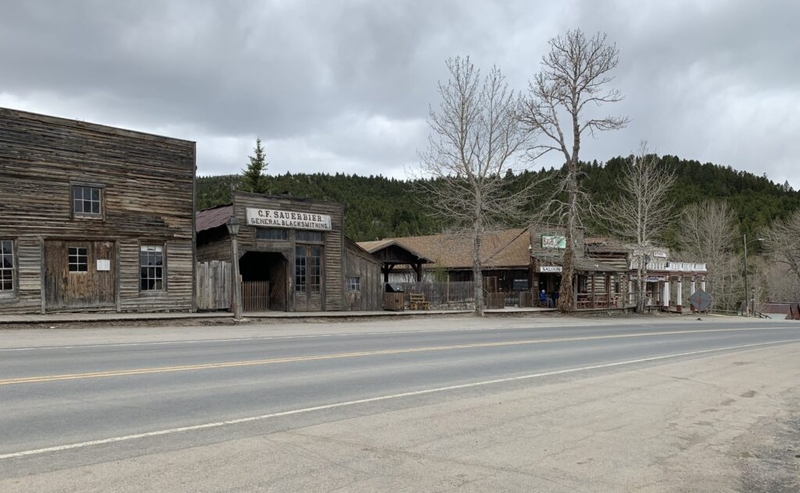
Wallace Street, Virginia City, Montana's main thoroughfare (Photo by Darrell Ehrlick of the Daily Montanan).
An embezzlement case and legislative efforts to remove its funding have complicated the financial picture for the Montana Heritage Commission and called its viability into question, its interim director said late last week, stating they were in “dark days.”
As a result, the commission is looking into lease contracts for private businesses operating at the site. The new lease terms have businesses giving 15% of their gross revenue to the state, a departure from previous contracts the commission says are inconsistent.
The Montana Heritage Commission was created to manage historic properties in the state, including Virginia City and Reeder’s Alley in Helena. Virginia City started off as gold camps, became the territorial capital, was a ghost town and was slowly revitalized by its previous, private, owners before the state took control of the site in the late 1990s.
About 500,000 visitors come through Virginia City each year, according to the state’s Department of Commerce.
Some businesses are also getting sweetheart deals, Mandy Rambo, the organization’s acting director said during a board meeting on Dec. 5. Rambo is also the deputy director of the Department of Commerce.
“As we have been reviewing contracts, we found several contracts where we were losing significant amounts of money or where we were maybe just barely breaking even,” Rambo said. “We’ve also found that there were contracts that were missing statutorily- or state-policy-required language or clauses.”
She added that similar businesses were getting different deals, saying they wanted to avoid the appearance of favoritism.
Rambo is the acting director because the organization’s former director, Michael Elijah Allen, has plead guilty to three different felony charges — two embezzlement counts and a money laundering charge. According to court documents, Allen stole $380,000 from the organization from 2020 to 2024. Allen and a second man involved, Casey Steinke, are being required to pay restitution, court documents said.
“A lot of the contracts in question were completed by the prior executive director, Mr. Elijah Allen, in his last days in (the) role, and provided, again, very preferential terms to lessees, leaving MHC really holding the purse strings for these contracts,” Rambo said during the meeting.
The complaint against Allen originated from the state’s Commerce Department. That department handles legal work for the Heritage Commission, including contract negotiations, Commerce spokesperson Mitch Staley wrote in an email.
Allen created invoices for businesses that were not doing legitimate business work for the Heritage Commission, court documents say. Steinke was allegedly involved in the kickback scheme and has been charged as well; he has pleaded guilty as well.
The payments from Heritage Commission funds to Steinke totaled about $350,000, court documents said. Additionally, there’s evidence Allen paid rent and sought educational classes with Heritage Commission funds. Steinke apparently also lived rent free in Reeder’s Alley, court documents say.
The Helena Police Department investigated the case.
“These actions have created a negative financial impact for MHC, reducing its ability to meet its statutory obligations to preserve Montana’s historical properties in Virginia City, Nevada City and in Reeder’s Alley in Helena, MT,” a victim statement from the Commission attached to the case says. “MHC will continue to dig out of the financial hole created by Mr. Allen’s actions for several years to come.”
The Department of Commerce said it had made some changes since the case.
“Since the issues were discovered, Montana Heritage Commission commissioners no longer sign contracts, pro-card logs/expense logs or any other state documents,” Commerce spokesperson Mitch Staley wrote in an email. “These are all reviewed and approved through Commerce leadership now. Commerce leadership, who found these criminal acts, did so within the first year of taking on leadership roles. Commerce cannot speculate as to why it was not found prior to current leadership’s oversight.”
Allen resigned from his position on May 2, 2024, and the Heritage Commission has been in flux since. Rambo said she stood up four different times during the past Legislative session to fight for the continued existence of the Heritage Commission.
Some property tax “fixes” involved redirecting lodging or bed taxes that Commerce uses to push forward many tourism efforts in the state. This includes HB 914 and HB 916, both of which Rambo testified against during their hearings in April, during the Legislative session. Those two bills failed.
The Heritage Commission is obligated to provide $1.1 million in revenue per year to the state. It costs about $1.9 million in operating and personnel costs to keep things running annually, Rambo said, and the organization was only slated to have $600,000 on hand this year for capital projects. That number, though, is tied to how much the commission brings in through its revenue sources.
“In the last two years, MHC has made an average of about $750,000 in revenue earned, versus the $1.1 million that it’s being asked to earn,” Rambo said to the commission. “That means that that $600,000 is reduced to only $250,000 that could be available to be used for capital improvements. That’s not even enough cash to complete one large scale improvement project.”
This has serious implications as to whether the Heritage Commission will continue to exist, Rambo said bluntly.
“If MHC isn’t able to quickly show their ability to earn revenue and to meet obligations, Commerce is concerned about the overall long-term viability, as seen by the Legislature,” Rambo said. “None of us want for MHC to shutter, but if we can’t show our ability to move forward past what I would call these dark days, and get in line with state law, policy and process, there’s a chance that MHC may cease to exist.”
There has been frustration from some members of the business community in Virginia City, many of whom operate on a seasonal basis.
“The impact on Virginia City will be detrimental,” Kirk Belding, the owner of Bob’s Place in Virginia City told the Madisonian.
The contracts allow for them to be opened up each December, which is why Commerce and the Heritage Commission are renegotiating leases now. Concessionaires were reportedly given 21 days to make a decision on whether to accept new lease terms.
Mike Verdon, who runs Brewery Follies in Virginia City, said he hasn’t yet seen a new contract, but is expecting some sort of movement on that soon, he said. He’s been around the area since before the Bovey family sold the property to the state.
He said he’s wary of misinformation around leases, hasn’t seen any other contracts and said he’s had a positive relationship with the state.
“I want to keep doing what I’m doing,” Verdon said. “I like what I do.”
Editor’s note: This story has been updated with a comment from Commerce on steps they’ve taken since the embezzlement case.

Helena, MT