Shield laws have held up so far, but a new anti-abortion Texas statute means to test them
Nov 19, 2025 | 2:33 pm ET
Description
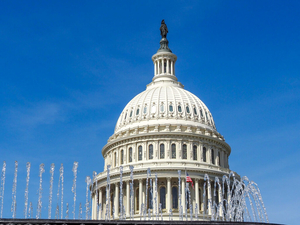
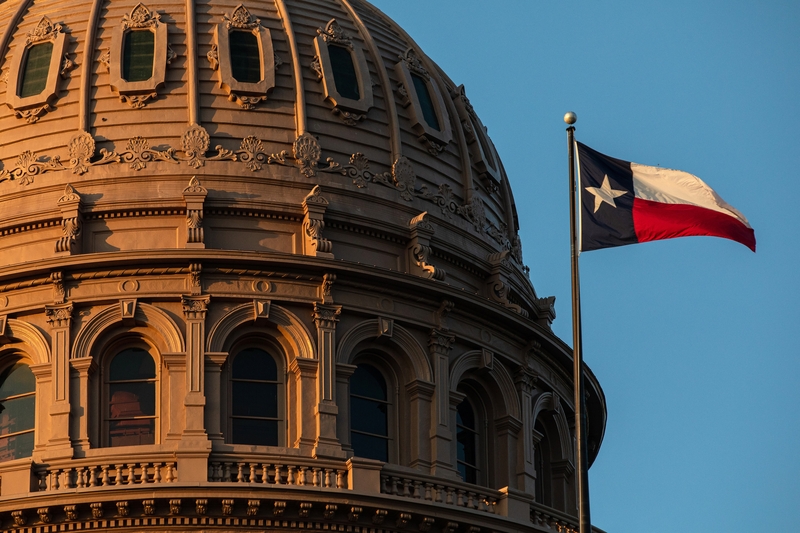
A law set to take effect on Dec. 4, 2025, would allow people in Texas to sue anyone involved in sending abortion medication into the state. The Texas statute is the latest attack on legal shields established by other states to protect reproductive health care providers and patients. (Photo by Tamir Kalifa/Getty Images)
A law set to take effect in early December gives Texans the power to sue anyone involved in mailing abortion pills to the state, from drug companies to doctors. Whether Texas’ statute can puncture other states’ shield laws remains to be seen.
Texas has several strict abortions bans in place, but Republican lawmakers sought to also crack down on the availability of abortion medication in the state this year. Called the “Woman and Child Protection Act,” the law empowers plaintiffs in Texas to seek at least $100,000 in damages if someone they’re related to or someone they impregnated received abortion pills in the mail from out of state.
Other people who aren’t relatives can sue, too, and receive $10,000 if their claim wins in court. They would have to donate the rest of the money to charity.
Those who order or use abortion pills to end their pregnancies cannot be sued under the law. Legislators also included exemptions for hospitals and physicians who provide medically necessary abortions.
Instead, the measure targets out-of-state abortion providers, abortion funds that help people pay for abortions, and manufacturers of mifepristone, a key abortion drug.
“It's the first bill in the country to explicitly target shield laws and shield providers,” said Rachel Rebouché, a reproductive rights expert and law professor at the University of Texas. “The effect is to try to create a legislative hook for punishing shield provision of medication abortion.”
Rebouché said the law has similarities to Texas’ six-week abortion ban, which took effect in September 2021 before the U.S. Supreme Court overturned Roe v. Wade and allowed private citizens to sue. She said the latest bounty-style statute could make Texans hesitant to order abortion pills and providers wary of prescribing them, even if they work under legal protection in their state.
The impending Texas law adds to several strategies anti-abortion Republicans have been employing to attack shield laws.
“They all come down to mail medication abortion and trying to stop it," Rebouché said. “Shield laws have been one really significant avenue for people getting pills in banned states, and so that's why shield laws will continue to be at the center of this conversation.”
Efforts to pursue shielded providers
When the law becomes enforceable on Dec. 4, it could also fuel the first federal test of shield laws.
Former Texas Solicitor General Jonathan Mitchell is representing a Galveston man who filed a federal lawsuit in July against a California doctor accused of sending abortion pills to his partner in Texas. The lawsuit alleges the provider violated the state’s abortion bans and a wrongful death statute.
Mitchell, also the architect of Texas’ six-week abortion ban, plans to amend the complaint to add a violation of the new law, according to a motion filed in September. Mitchell did not respond to requests for comment.
Jenna Hudson, a lawyer at the Center for Reproductive Rights who represents the doctor, said abortion opponents are attacking medication now because it’s safe, effective and widely used, even in places with restrictions.
“People who need care that cannot access it due to financial constraints, inability to travel, or otherwise — often just by virtue of where they happen to live — are able to access this necessary care,” Hudson said.
Abortion medication provided through telehealth accounted for 25% of all abortions in the U.S. last year, according to the Society of Family Planning’s #WeCount June report. Shield laws in eight states allow providers to prescribe abortion medication remotely to patients who live in states where it is banned.
The shields have played a role in maintaining abortion access across the country, even though 13 states ban nearly all abortions, and four states have six-week bans. Efforts by Texas and Louisiana prosecutors to sue a provider in New York — where there’s a shield law — have so far proven unsuccessful.
At the end of October, a New York judge dismissed a lawsuit from Texas Attorney General Ken Paxton against an Ulster County clerk who refused to file a judgment against Dr. Margaret Carpenter, citing New York’s shield law.
The decision came a month after New York Attorney General Letitia James intervened in the case. “Texas has no authority in New York, and no power to impose its cruel abortion ban here. Our shield law exists to protect New Yorkers from out-of-state extremists, and New York will always stand strong as a safe haven for health care and freedom of choice,” James said in a statement.
Democratic New Gov. Kathy Hochul took the same stance when she declined an extradition request from Louisiana officials for Carpenter in February.
Paxton also set his eyes on Dr. Rémy Coeytaux, the California provider being sued in federal court by a Texas man. He sent the doctor a cease-and-desist letter in August.
Hudson, Coeytaux’s lawyer, said providers in states with shield laws are committed to offering abortion care to patients in need, despite legal threats. “There is a history of violence against abortion providers in America, and Paxton is putting doctors in danger with these public witch hunts,” Hudson said.
Reinforcing protections
Laws that let doctors remove their names from abortion medication prescriptions have been adopted in California, Maine, Massachusetts, New York, Washington and Vermont. Advocates are hoping to continue the trend.
Reproductive Futures, a legal group seeking to expand shield laws, launched in October.
“We wanted to provide safety protections to the clinicians who didn't want their names out there floating publicly,” said Julie Kay, founder and CEO of the organization.
Kay said patients’ names should be private, too: “I think that’s something that we kind of owe to women who are seeking medication.”
The organization is also lobbying legislators in 10 states with laws that protect providers and patients from outside investigations, calling on them to pass laws explicitly allowing providers to offer telehealth abortion to patients living in states with abortion bans.
Conservatives have taken issue with shield laws that they say flout the legal tradition of states cooperating with each other during criminal investigations.
“In general, my big problem with them is that they are intended to undermine the ability of pro-life states to enforce their own laws,” said Thomas Jipping, a senior legal fellow at the Heritage Foundation.
His organization published Project 2025, a conservative policy agenda that called for stronger federal enforcement of abortion restrictions. Jipping said emergency rooms and doctors located where the patient lives “bear the brunt when the complications arise” from telehealth medication abortion.
A study published in JAMA last year compared telehealth medication abortion and medication abortion provided at clinics found that serious adverse events were low and the same regardless of whether the pills were mailed or provided at in-person appointments.
The researchers at Advancing New Standards in Reproductive Health at University of California, San Francisco examined medication abortions provided at clinics in six states that were provided through the mail and in-person with an ultrasound. The mail medication abortions were 94.4% effective, and the in-person medication abortions were 93.3% effective, according to the study. Serious adverse events — hospitalization, blood transfusion and emergency surgery — were reported by 1.1% of participants.
Three patients who had complications were in the medication abortion by mail group, and three patients with issues were in the in-person group, according to the findings.
The U.S. Food and Drug Administration is conducting a review of mifepristone’s safety, even though more than 100 scientific studies have concluded that the drug is safe and effective.
The Heritage Foundation supports adding previous restrictions to mifepristone again, Jipping said.
Jipping published a report in December 2024 suggesting that shield laws may conflict with the full faith and credit clause of the U.S. Constitution.
“The Constitution requires each state to honor the judicial decision of other states, and abortion shield laws are practically designed not to do so,” Jipping said.
But he is skeptical of the lawsuit Mitchell filed this summer. He said the plaintiff may lack standing to sue the doctor, because he’s a third-party.
Kay, the reproductive rights lawyer, said shield laws have stood up in court so far.
“We’re seeing that shield laws are up to the test,” Kay said. “They’re well-designed, and we have governors, attorneys general and others who really stand behind them. What the federal government is doing is quite literally anybody’s guess right now.”
Kay noted that abortion referendums have prevailed in Republican-led states like Missouri. “I would hope that the Trump administration is listening to that,” she said.
Scope legal shields for abortion medication providers and patients around the country.
Read more about the FDA’s high-stakes abortion-pill safety review.