Dear Virginia, here’s lots more of our trash. All the best, Maryland
Nov 17, 2025 | 5:20 am ET
Description
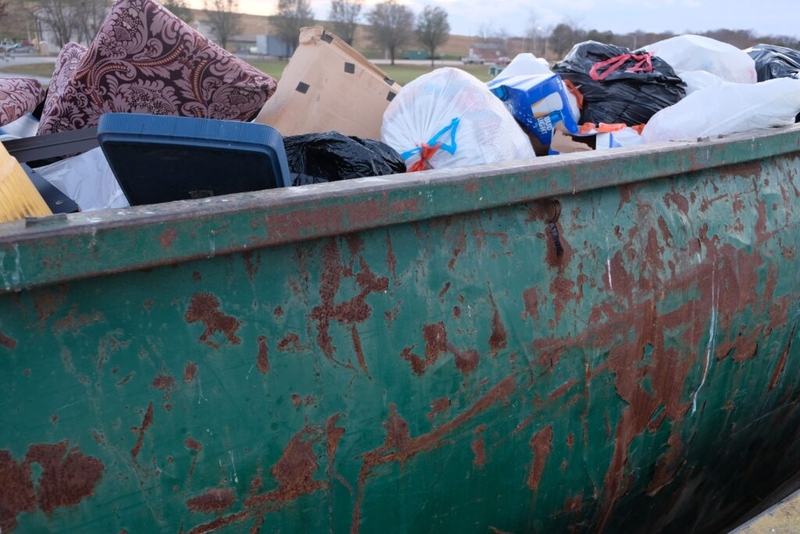
A trash collection container at the Maplewood (Amelia) Landfill in Jetersville. (Photo by Charlie Paullin/Virginia Mercury)
Montgomery County, Maryland, is considering exporting its large volume of trash — and the resulting pollution — to a landfill in Virginia. In September, the County issued a request for proposals to long-haul and landfill the county’s approximately 600,000 tons of annually generated waste. County Executive Marc Elrich has long pushed to close the county’s trash incinerator.
This crucial decision involves complicated environmental, public health, equity and cost tradeoffs, and Montgomery County lacks vital pieces of information. We have summarized what we know and what we don’t know in a report posted by Friends of Sligo Creek, an NGO based in Takoma Park, Maryland.
With respect to equity, a 1995 report from the Virginia General Assembly’s Joint Legislative Audit and Review Commission showed that many of Virginia’s landfills—especially private regional ones—are located in marginalized communities that are disproportionately African American. By contrast, the rural area near Montgomery County’s incinerator is well-off and disproportionately white (75% white alone, as compared with 40% for the whole county).
A recent, yearslong battle over siting a new mega-landfill in Cumberland County, which is 33% African American, underscores the vulnerability of Virginia’s Black Belt areas to the advances of landfill companies. A prime concern of Cumberland County’s residents was the landfill’s proximity to the historically Black Pine Grove School. Despite sustained citizen protests, this summer the Cumberland County Board of Supervisors approved a permit for a down-sized landfill footprint.
Cumberland County is among the Virginia localities that have agreed to site regional landfills because those jurisdictions are cash starved. Landfill companies pay them host fees and provide waste disposal.
Montgomery County, Maryland, is far from cash starved. But dueling estimates cloud the county’s waste management cost picture.
The county’s 2025 contractor report projects that, in the long term, even with needed upgrades, using the incinerator would be cheaper than landfilling. In 2024, the facility–also called a resource recovery facility, or RRF–generated $24 million in revenues from sales of electricity and recovered metals. Closing the incinerator would mean losing those revenues, generating that electricity from another source and burying metals that, when recycled, save energy and reduce greenhouse gas pollution relative to using virgin materials.
However, county staff maintain that, in the short term, the landfill-plus-incinerator-closure option would be cheaper than continuing to operate the incinerator. They argue that the incinerator’s expenses would divert resources from efforts to decrease the county’s waste stream and that paying for landfilling on a per ton basis would incentivize waste reduction. But the county has not estimated closure costs for the incinerator.
On the environmental and public health side of the equation, the incinerator’s air pollution controls appear to be working well. The county’s solid waste plan says, “Several health-risk assessment studies have concluded that there are no measurable influences on ambient air concentrations attributable to RRF source emissions.”
According to information provided by the Maryland Department of the Environment, the incinerator operates well within its permitted air pollution limits and, except for hydrogen chloride, within the Biden Administration’s proposed stricter standards for waste incinerators.
But the incinerator’s ash, a source of toxic metals, currently goes to a Richmond, Virginia, landfill whose surrounding community is 70% African American. County staff say the ash is stabilized so that it remains non-hazardous and that it is tested regularly.
Nearby jurisdictions have arrived at a different ash disposal option. Arlington County, Fairfax County, and the city of Alexandria use an ash monofill, a type of facility that’s designed to prevent the release of metals. That monofill is located in Lorton, Virginia.
In extending the life of their incinerator to 50 years, Arlington and Alexandria said, “it was found to be economically beneficial for both jurisdictions.” They also cited the “stellar” environmental record of the facility. Although incinerators can divert materials from recycling, Arlington and Alexandria report strong recycling rates (53% in 2023), as does Montgomery County (45% in 2022).
Incinerators kill pathogens, but they produce carbon dioxide, a greenhouse gas. Still, our analysis indicates that landfilling the county’s waste could produce much higher amounts of greenhouse gases than the county’s waste incinerator. That’s because landfills emit methane, an especially potent greenhouse gas.
Landfills harbor pathogens. They produce copious amounts of air and water pollution, for decades. Landfill gases contain carcinogens like benzene and vinyl chloride. Landfill leachate (garbage “juice”) is contaminated with many chemicals, and the United States Environmental Protection Agency has said that even the best protected landfills will eventually leak. The Shoosmith mega-landfill in Chester, which has been identified as a potential recipient of Montgomery County’s trash, generates almost 400,000 gallons of leachate per week, according to the Virginia Department of Environmental Quality. That landfill is in bankruptcy proceedings.
Here are some important unknowns for Montgomery County: The likely substantial costs for closing the county’s incinerator and remediating its site; what it would cost to send the incinerator’s ash to a different disposal site; and, what it would cost to extend the life of the incinerator, because no proposal request has been issued to that end. For the landfill option, we don’t know what the impacts on the county’s transfer station might be or whether the county might be liable for landfill contamination problems.
Montgomery County’s council members say we must keep all options open and express deep unease with — or outright opposition to — exporting our trash. The principles of proximity and self-sufficiency encourage the treatment of waste close to its point of origin. Maryland is already the leading out-of-state contributor to Virginia’s trash imports.
But the council has not scheduled a public hearing.
Council members and the public deserve to see the full cost, environmental and public health picture, and the council must invite input from affected citizens in both Maryland and Virginia.
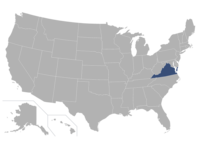
Richmond, VA