Tennessee, feds provide few details on cost, arrests three weeks into Memphis task force
Oct 21, 2025 | 6:02 am ET
Description
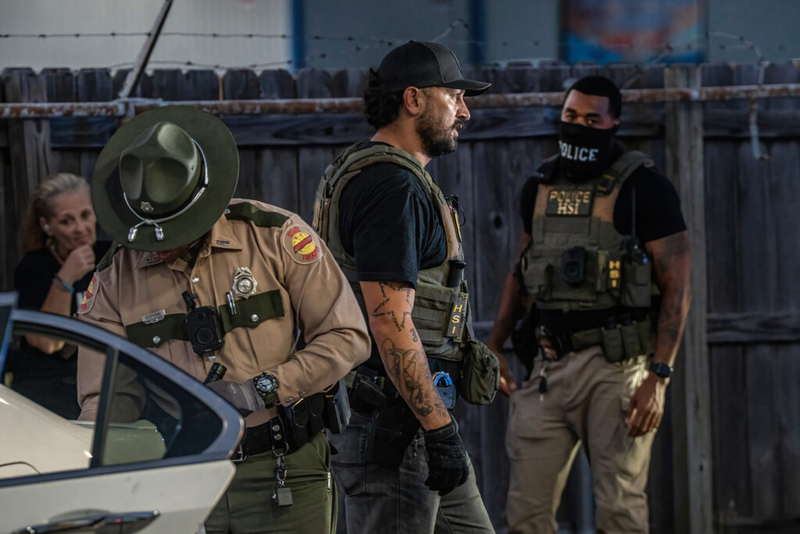
Federal, state and local law enforcement have arrested more than 1,000 people in Memphis as part of the Memphis Safe Task Force established by President Donald Trump. The identities and charges of those arrested have not been released. (Photo: John Partipilo/Tennessee Lookout)
The Memphis Safe Task Force won’t release the names of more than 1,000 individuals it has arrested or provide details about the charges they face.
Arrest details and charges are routinely made available to the media and public to provide information about crimes taking place in communities and ensure transparency in the work of taxpayer-funded law enforcement.
But multiple law enforcement agencies that comprise the task force have either declined to release detailed arrest information or ignored requests seeking it.
A Department of Justice spokesperson last week provided a count of task force arrests by categories that include homicides, sex offenses, narcotics, firearms, probation/parole violations, ICE administrative warrants, “other,” and “warrants.” Arrests for outstanding warrants can range from misdemeanors to felony charges. ICE administrative warrants are not criminal warrants, and indicate only that an ICE official determined a person is “removable from the United States.”
But the DOJ spokesperson cited “operational security” in declining to release the names and specific charges for each individual arrested.
Asked to clarify what operational security meant in the context of releasing arrestee information, the spokesperson declined to provide an on-the-record explanation.
Gov. Lee says task force arrest are of violent criminals, gang members; data show that’s not true
The Tennessee Highway Patrol did not respond to multiple requests for information about arrestee names and charges.
A spokesperson for the U.S. Marshals Service, the task force’s lead agency, likewise declined to provide the names of those arrested, instead providing arrest numbers under broad categories of crime.
As of Friday, task force members had made 1,044 arrests, spokesperson Brady McCarron said. But the numbers the Marshals Service listed, broken down into five categories – “homicides,” “narcotics,” “firearm,” “warrants,” and “sex offenses” – did not add up to 1,044.
“They do not add up as we are not releasing all numbers,” McCarron said Friday in response to a request to clarify arrest numbers.
McCarron subsequently provided numbers of additional arrests: 187 “administrative” and 155 “others.” He said the task force had also made an unspecified number of arrests on probation or parole offenses, noting that the agency has focused on releasing only the “numbers that are the most in demand – serious crimes.”
“I am not at liberty to answer the questions that were not answered above,” he said in closing his emailed response to questions from the Lookout.
In an email response received after publication of this story, the Department of Homeland Security provided the names and photographs of 11 “criminal illegal aliens” that it described as the “some of the worst of the worst arrested in Memphis.” The agency did not respond to questions about the number of immigrants without legal status arrested thus far or a full accounting of their identities and charges.
The Memphis Police Department, which has access to booking information, referred questions about task force arrests back to the Department of Justice.
The Lookout last week also sought this information via public records requests from the mayors of Shelby County and Memphis, and through a Freedom of Information Act request to the U.S. Marshals Service but has not yet heard back.
Yet, one or more members of the task force appear to be compiling and sharing the names of those who have been arrested internally.
MLK 50: Justice Through Journalism obtained a task force document that lists the names, dates of birth and charges for each individual placed under arrest on a single day in Memphis.
On Oct. 13, the task force arrested 51 people, including seven for immigration-related offenses, MLK50 reported.
Thirty of the 44 were arrested on warrants for misdemeanors such as failure to appear in court, trespassing and misdemeanor theft of property. Seven individuals were charged with the civil crime of being “unlawfully present in the United States,” not on criminal charges, the news organization, which did not publish individual names, reported.
‘No dependable mechanism to flag task force cases’
State Rep. John Gillespie, a Memphis Republican supportive of the task force’s presence to quell crime in the city, noted all arrest records continue to be public information and said journalists and others have “just got to dig them up.”
Court records in Shelby County are accessible online and in person listing the names of arrestees and crimes for which they have been charged.
But when asked how one would differentiate the task force arrests, Gillespie said, “I don’t think it matters. I think an arrest is an arrest. I don’t care who’s getting the credit, who’s doing what.
“I’m grateful … my family’s grateful, my neighbors are grateful,” he said. “The peace of mind and my stress level while driving has gone down astronomically. I don’t know why it matters if the FBI is arresting someone versus the state troopers.”
Traffic citations outnumber federal task force’s arrests in Memphis; sparse data leaves impact murky
Just City, a criminal justice reform advocacy group in Memphis, has been manually combing through court and jail records and observing criminal court proceedings to try to determine the names of individuals detained as part of task force activities, with little success.
“There’s no dependable mechanism to flag task force cases,” Josh Spickler, executive director, said.
Hundreds of cases filed on court dockets sometimes include affidavits mentioning the involvement of Homeland Security or other federal officials in charges, but many contain such sparse detail it’s impossible to know if federal law enforcement was involved in an arrest, he said.
“It’s being either intentionally, or incompetently, vague and difficult to parse and understand,” he said.
“We need help, according to President Trump, according to Gov. Lee, so 1,500 law enforcement agents have been sent to a community that has less than 3,000 police officers and to measure that impact we need to know what they’re involved in and if it’s having an impact on violent crime,” he said.
Absent public reporting of those arrested and detained, family members are also having a difficult time finding loved ones, one local advocate said.
A majority of phone calls coming into a community hotline set up to respond to the federal presence are asking for help finding individuals whom family members suspect have been detained by ICE, said Maria Oceja of Vecindarios 901 and Free the 901, community groups monitoring federal activity in Memphis.
‘Accounting and transparency’
The lack of arrest details follows a pattern in which task force officials have so far refused to answer questions submitted by Lookout reporters.
Gov. Bill Lee’s office and Tennessee Highway Patrol have not acknowledged questions about the daily costs of the operations or the number of THP officers and Tennessee National Guard members involved. Lookout reporters sent questions to Lee’s office on Oct. 14 and the highway patrol on Oct. 16.
“They need to be very transparent on what that money’s spent on and how it goes out,” said state Rep. Jesse Chism, a Memphis Democrat. “I think there needs to be… accounting and transparency.”
President Donald Trump and Lee launched the task force – made up of hundreds of officers with the Department of Homeland Security, Immigration and Customs Enforcement (ICE), the FBI, the ATF, U.S. Marshals Service and Tennessee Highway Patrol – at the end of September to “restore law and order” in Memphis.
The task force is part of a broader push by the Trump administration to move federal and military personnel into U.S. cities. Trump brought National Guard troops into Washington D.C. in August and has recently increased ICE raids in Chicago, drawing pushback from locals.
The Memphis task force began operations on Sept. 29 and Tennessee National Guard members were spotted in Memphis over a week later. Lee told reporters in a news conference that the operation has no end date and the number of task force members in the city would fluctuate.
Shelby County Mayor declares state of emergency in response to Memphis Safe Task Force arrests
U.S. Marshals Service Director Gadyaces Serralta commands the operation. The task force holds “regular meetings throughout the day, and week, that plans, organizes and executes the given operations of the day,” an agency spokesperson said. “These are joint meetings with all partners and participants.”
Last week, Shelby County Mayor Lee Harris declared a state of emergency due to the strain of arrests on the county’s detention centers by the task force. Memphis is the largest city in Shelby County. On Friday, Harris and other state and local elected officials filed a lawsuit seeking an immediate halt to the National Guard deployment in Memphis. The lawsuit alleges the deployment violates the Tennessee constitution and state law.
How much is this costing taxpayers?
Shortly before forming the task force, Lee said he was designating $100 million in Violent Crime Intervention and Downtown Public Safety Grants for it. The legislature approved these two programs as part of its budget earlier this year, before the task force was created.
State Rep. Antonio Parkinson, a Memphis Democrat, said at an initial meeting before the task force launched that Lee told him it would cost $1 million a day. But it was unclear whether this referred to costs to the state, federal or a combination of both. Parkinson, who wants the federal government to provide more funds for Memphis Police, said he had no idea how much the state is spending.
Lee’s office has not answered any questions submitted by the Lookout related to the budget of the task force operation.
The governor has some latitude to move Tennessee Highway Patrol troopers around the state at his discretion.
The Tennessee Highway Patrol has a budget of around $300 million, and roughly $72 million covers operations expenses, such as paying for troopers’ hotel lodging and other non-salary expenses incurred as part of the task force.
Sam Stockard contributed.
- 11:13 amThis story has been updated with a response from the Department of Homeland Security.
Nashville, TN