More Iowa detainees challenge immigration judges and Homeland Security
Oct 15, 2025 | 3:32 pm ET

Description
(Photo by simpson33 via iStock / Getty Images Plus)
Immigration judges are continuing to deny bond hearings for detainees in Iowa and throughout the country, despite being repeatedly overruled by federal district court judges.
Five weeks ago, immigration judges across the country formally adopted the U.S. Department of Justice’s new legal position that detainees suspected of entering the country illegally can be held in jail indefinitely without being afforded a hearing on whether they’re entitled to release on bond while their case is pending.
The immigration judges’ stance stems from a September 2025 ruling by the Board of Immigration Appeals agreeing with the Trump administration’s position that detainees are not entitled to such hearings.
The board’s decision endorsing that view has upended decades of past practice in which immigration judges — who are not part of the judicial branch, and are instead part of the executive branch and the DOJ — released individuals on bond in cases where the detainees were not considered a flight risk or a danger to the public.
In the past few months, hundreds of detainees have sought relief by seeking the intervention of U.S. District Court judges, arguing that being held under such circumstances is a violation of their right to due process.
In an overwhelming number of such cases, the federal judges have sided with the detainees, ordering the immigration judges to hold bond hearings at which the detainees can argue that their history, employment, family obligations or other circumstances warrant their temporary release on bond.
Despite those rulings in U.S. District Court, immigration judges continue to deny bond hearings, leading to even more federal court cases seeking injunctions.
More Iowa detainees seek court intervention
Among the most recent Iowa cases is that of Filemon Brito Barrajas, a citizen of Mexico who says he has lived in the United States for 20 years without legal status. Court records indicate Barrajas had no criminal record until July of this year, when he was jailed on a charge of contempt of court. Immigration and Customs Enforcement then issued a detainer for him, keeping him in jail after he’d served his sentence for contempt.
On Aug. 18, 2025, Barrajas requested a bond hearing, but was denied by an immigration judge who concluded he lacked jurisdiction, echoing the DOJ’s position on the issue.
Barrajas then took the matter to U.S. District Court, challenging the U.S. Department of Homeland Security and its director, Kristi Noem, as well as U.S. Attorney General Pam Bondi, the DOJ and the Omaha Immigration Court.
Attorneys for Barrajas argued he was entitled to a hearing on the question of bond and that, in the alternative, he should be released from custody.
On Sept. 23, U.S. District Judge Stephen Locher of the Southern District of Iowa ordered that such a hearing be scheduled by the immigration court within seven days.
“District courts across the country have addressed arguments similar to – and often identical to – the ones raised here,” Locher wrote in his decision. “The overwhelming majority of these courts have concluded that aliens in the petitioners’ situation are … entitled to bond hearings.”
Locher’s decision was similar to that of many other judges in that while he found that Barrajas was entitled to argue for his release on bond, the issue of whether bond should be granted was for the immigration court, not a U.S. District Court judge, to decide.
“It is not the court’s prerogative to assume the role of the immigration judge by deciding bond or detention,” Locher wrote.
Another recent Iowa case involves Marua Enriquez Reyes, who entered the United States, according to her lawyers, to escape some form of persecution. Shortly after coming to the United States, Reyes was given notice to appear in immigration court and was released on her own recognizance.
But on Sept. 2, 2025, while attending her regularly scheduled check-in appointment at the ICE office in Cedar Rapids, ICE officials allegedly canceled her notice to appear in immigration court, entered an order calling for her expedited removal from the country, and had her detained in the Muscatine County Jail.
On Oct. 1, an immigration judge denied Reyes’ request for a bond hearing. A week later, on Oct. 7, 2025, attorneys for Reyes sought an emergency hearing on the matter in U.S. District Court, arguing the immigration court had violated her due process rights by denying her a hearing.
On Tuesday of this week, the Department of Justice sought and obtained a continuance in the case. Judge Locher has given the DOJ until Oct. 21 to file a response in the case.
The Barrajas and Reyes cases are among at least 20 such bond-hearing cases filed recently in U.S. District Court for the Southern District of Iowa. Because the final decisions on bond are still made within the immigration court system, the current status or outcome of the cases is difficult — and in some cases impossible — to track.
Federal judges rule against the DOJ
Last week, federal judges in the San Francisco area ordered the release of dozens of immigrants held in California detention facilities without a bond hearing. In each case, a U.S. District Court judge had already issued a temporary restraining order or an injunction granting the temporary release of the detainees until the bond-hearing issue could be resolved.
One federal judge in San Francisco, James Donato, recently expressed frustration when a DOJ lawyer argued in court that detainees have no right to a hearing in front of an immigration judge.
“This argument has failed in every court that it’s ever been argued,” Donato told the assistant U.S. attorney. “Just give them a hearing … What’s the master plan for making sure we don’t have the same cases coming up again, and again, and again, in front of every judge in this district?”
Two weeks ago, a U.S. District Court judge in the state of Washington ruled that the Tacoma Immigration Court’s practice of denying bond hearings to detainees was unlawful. That Sept. 30 ruling was made in a class-action lawsuit filed by the Northwest Immigrant Rights Project in March 2025, challenging the then-new practice of denying bond hearings even to people who have lived in the United States for decades.
Other class-action lawsuits over the same issue, as well as the hundreds of individually filed cases, are still pending in courts throughout the United States.
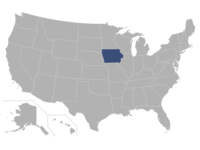
Des Moines, IA