GOP bill would drop Michigan income tax to lowest level since 2007
Jan 23, 2024 | 2:37 pm ET
Description
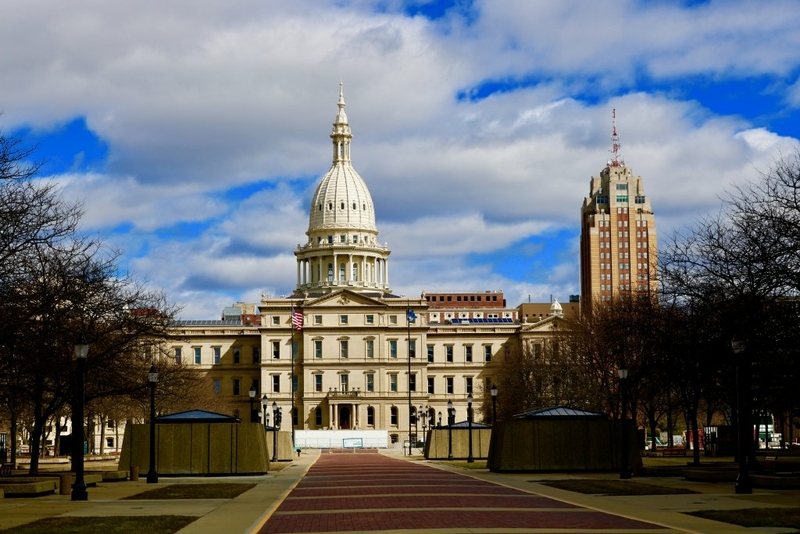
The Frank J. Kelley Walkway between the Michigan Capitol and Hall of Justice, March 22, 2019 | Susan J. Demas
A proposal seeking to lower Michigan’s income tax rate has been put forward in the Michigan House, although it stands little chance of moving forward.
House Bill 5399 was introduced Wednesday by state Rep. David Martin (R-Davison) and would lower the current state income tax rate of 4.25% down to 3.9%, more than a full percentage point lower than the 4.05% rate that applied in 2023. Michigan Republicans remain upset that a legal opinion issued by Michigan Attorney General Dana Nessel last March determined that the lower rate, triggered by the state’s record budget surplus, was only temporary. That was later confirmed by a Court of Claims decision.
Martin, who refers to the return to the 4.25% rate as a tax increase by “Lansing Democrats,” says his plan would provide needed assistance to Michigan families.
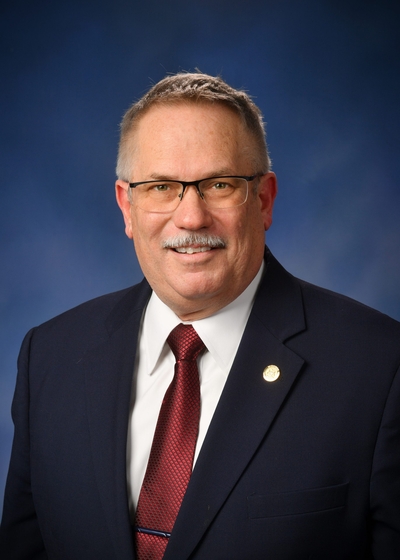
“Lowering Michigan’s income tax to 3.9% is a step toward a brighter future for our state,” said Martin. “It’s about giving families a break while boosting our state economy. Jobs are flourishing where taxes are under 4%, and that’s where we should aim to be. My plan will give struggling families some breathing room and fuel Michigan’s growth.”
Martin’s plan was introduced less than a week after the first Consensus Revenue Estimating Conference (CREC) of 2024, which predicted a more than $1.3 billion surplus by the end of the year. Martin says that indicates the state can afford a tax cut, a message boosted by state Rep. Sarah Lightner (R-Calhoun), the ranking Republican on the House Appropriations Committee, and state Rep. Ann Bolin (R-Brighton), also a member of the Appropriations Committee.
The forecasts made during the CREC are expected to be the basis for Gov. Gretchen Whitmer’s proposal for the FY 2025 state budget, the key priorities of which will be announced during her State of the State address, scheduled for Wednesday evening.
While the state income tax rate returned to its previous rate for 2024, Democrats have provided comprehensive tax relief for seniors and families after Whitmer signed a big boost for the Earned Income Tax Credit (EITC) for working-class families and a phaseout of the so-called pension tax.
Meanwhile, fiscal experts say a cut to the state’s flat income tax rate as proposed by Republicans will largely benefit those at the upper end of the earnings scale. Among them is Rachel Richards, fiscal policy director at the Michigan League for Public Policy.
“Flat rate taxes do tend to benefit high income earners in the long run,” she previously told the Advance. “In previous legislative cycles, we’ve seen bills that have moved through the legislature that have posed rate cuts to our income tax rates, going from 4.25% to 4%. When we’ve modeled those changes, we see how higher income Michiganders get kind of outsized benefits from those tax rate cuts. So, it provides very little, if any, benefit to cut a flat income tax rate for low to moderate income families, but provides these outsized benefits for high-income earners.”
Martin, however, says his proposal to lower the income tax to 3.9% would actually follow through on a 2007 promise by the administration of then-Gov. Jennifer Granholm, a Democrat, to return it to that level by 2015 as part of a legislative deal that raised it to 4.35% to avoid a government shutdown.
That same position is also advocated for by the free-market, Mackinac Center for Public Policy, although it noted that Republican former Gov. Rick Snyder ultimately froze the income tax rate in exchange for his elimination of the Michigan Business Tax as part of a $2 billion annual business tax cut..
Martin’s bill was originally referred to the House Government Operations Committee, but the following day it was referred by House Speaker Joe Tate (D-Detroit) to the House Health Policy Committee.
Lansing, MI