Why strippers in Washington are fighting for stronger workplace protections
Jan 11, 2024 | 3:00 pm ET
Description
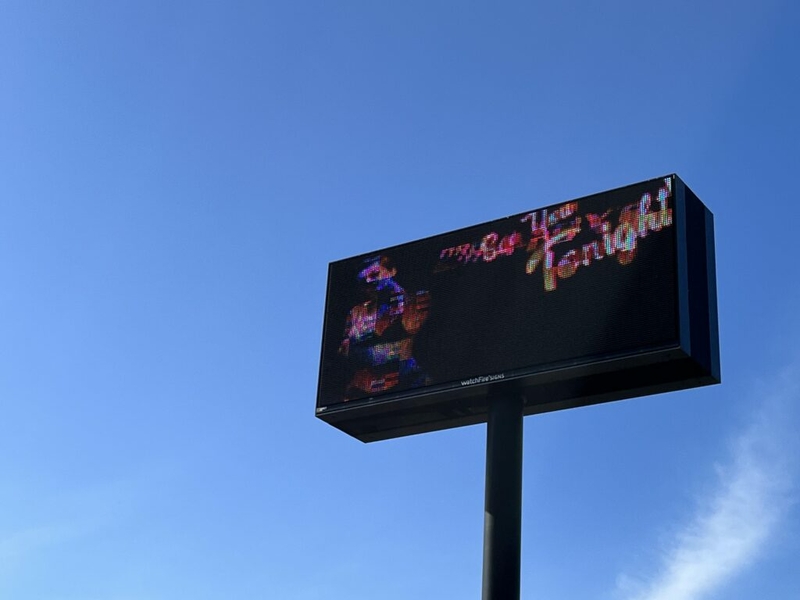
An electronic sign, appearing distorted when photographed, in the parking lot outside the adult entertainment venue Dream Girls at Fox's, in Lakewood, Wash. (Washington State Standard)
Here in Washington, well-intentioned but flawed state laws have given rise to a predatory business model for strip clubs.
When I started dancing seven years ago, I quickly learned what these restrictive laws, and our lack of worker protections, mean on the ground. To keep overhead down, clubs often ran on a skeleton crew, without security to kick out bad customers. Even if we had security, many club managers refused to throw out a paying customer – instead, managers told me I should have controlled the situation better. On slow nights or when I refused sketchy patrons, managers criticized me for not hustling hard enough. After nights like those, I found myself acquiring a debt to the club that I would have to pay on my next shifts.
I depended on my job as an 18-year-old high school dropout barely making ends meet. Dancing allowed me to work only a handful of nights a month while going back to school. The pandemic exacerbated existing problems in our industry — dancers face discrimination and harassment, and struggle to get through the night without run-ins with management.
But when I told people around me about the tougher aspects of my work, they inevitably encouraged me to leave the industry. It seems “get a better job” is the only solution that’s ever offered to workers in industries like ours.
No one has deemed the labor of stripping as deserving of rights and protections. But dancers are trying to change that. We’re now fighting to pass legislation to make our state’s strip clubs safer workplaces. We are mostly women, people of color, LGBTQ+, single moms, and coming up from poverty. Holding a “nontraditional” job like this has always been about making sure our work can work for us. And our labor organizing is accomplishing just that.
Our grassroots campaign began as murmurs in strip club locker rooms and late-night meetings after clubs closed. We named it exactly what we want the public and lawmakers to know about us: Strippers Are Workers. In 2019, we successfully backed the statewide Dancer Safety & Security bill. That meant not only getting panic buttons and customer blacklists in clubs but also a dancer-led advisory committee within the Department of Labor and Industries.
The department has since released a report about changes that could improve the industry — and now, we’re moving ahead with a policy to overhaul club practices that strip dancers of our rights. To understand what we’re pushing for, first you need to know a few basics about how the clubs operate and how dancers are paid.
Clubs classify dancers as independent contractors. They don’t pay us any wages. In fact, we pay club owners a “house fee” for the privilege of working. In Washington, our house fees are higher than anywhere else in the U.S. and as high as $200 a shift.
This is largely because clubs here can’t sell alcohol. That means we can work an entire eight-hour shift and go home owing money to our club.
We’ve developed a new policy proposal that would shift club models to be more like other states, while also creating first-of-their-kind labor rights for dancers. Our bill will cap high fees, prohibit clubs from charging debts to dancers, mandate security staffing, make dancer contracts equitable, and train dancers and staff on skills like de-escalation and anti-trafficking. Dancers will gain new rights, clubs can start adopting new standards.
We recognize that alcohol in strip clubs is a sensitive subject and that few labor protection movements call for the introduction of it to make workplaces safer.
But granting clubs liquor licenses, like every other state, means management can stop relying on overcharging dancers to make a profit. Plus, legalizing alcohol in clubs means less unregulated drinking and more agency oversight to keep clubs in check. People often end up drinking before they come to clubs anyway.
House Bill 2036 and its companion legislation Senate Bill 6105 would take key steps toward addressing our concerns, giving dancers more safety, autonomy, and basic worker rights. While those of us in the industry know that alcohol is also an important piece of the puzzle, the primary focus of the pending bills is on workers’ rights. For now, we hope to gain better workplace protections and that clubs can become eligible for liquor sales in the future.
In last year’s legislative session, we fought hard to pass a policy like this but didn’t quite get there. This year, we’ll be back in Olympia to make the case for it.
Dancers depend on the flexibility and independence our jobs provide. But we need the industry to change. We who have worked outside of Washington know something better is possible. We can have safe working conditions, clubs with good managers, good customers, and good security. In those conditions, we can find greater respect and empowerment as workers.
Olympia, WA