On this day in 1954: Ralph Bunche is named to key UN post
Oct 17, 2021 | 8:38 pm ET
Description
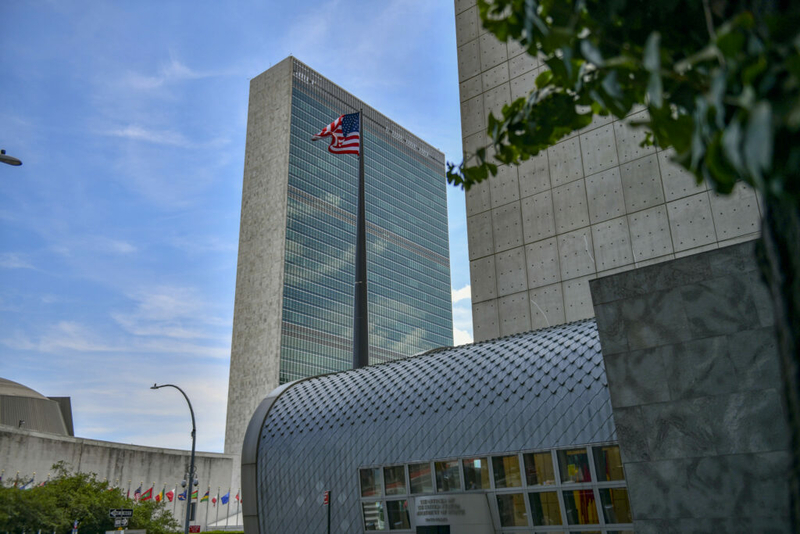
The American flag flies outside the United Nations Headquarters in New York, New York on July 20, 2018. | State Department photo/ Public Domain via Flickr Public Domain
On Aug. 19, 1954, Detroit-born Ralph Bunche was named United Nations undersecretary.
Founded in 1945 after World War II to replace the League of Nations, the U.N. was designed to prevent war between countries, and to provide a platform for dialogue. Bunche, who played a key role in the creation of the organization, was the first African American to serve in the post.
Born Aug. 7, 1904, Bunche was the grandson of slaves and baptized at Second Baptist Church. The legendary home of worship is considered Michigan’s first Black congregation, having been founded on March 5, 1836. Bunche’s family moved to Albuquerque, N.M., and Los Angeles, Calif., when he was 10 years old. He later attended University of California at Los Angeles and Harvard University.
At the U.N., Bunche helped to negotiate a peace agreement between Arabs and Jews in 1949 and earned the 1950 Nobel Peace Prize for his mediation effort. He was first African American to receive the prestigious award.
“Peace is no mere matter of men fighting or not fighting. Peace, to have meaning for many who have known only suffering in both peace and war, must be translated into bread or rice, shelter, health, and education, as well as freedom and human dignity — a steadily better life,” he said after receiving the award on Dec. 11, 1950. “If peace is to be secure, long-suffering and long-starved, forgotten peoples of the world, the underprivileged and the undernourished, must begin to realize without delay the promise of a new day and a new life.”
Later in life, Bunche participated in the seminal 1963 March on Washington and the historic 1965 Selma-to-Montgomery walk, civil rights efforts including the Rev. Martin Luther King Jr. In 1963, U.S. President John F. Kennedy presented to Bunche the nation’s Medal of Freedom.
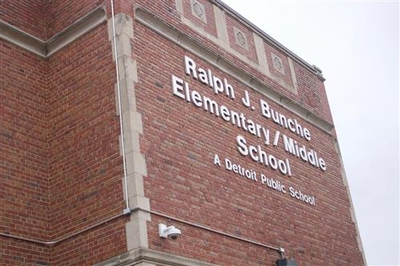
Bunche died on Dec. 9, 1971. A school in Detroit is named in his honor. So is a residential development located on the city’s lower east side.
Lansing, MI