Youth climate lawsuit seeks full Ninth Circuit hearing
Jul 28, 2026 | 4:34 pm ET

Description
Eva Lighthiser, left, and other plaintiffs wait to enter Missoula's federal courthouse on Sept. 16, 2025. (Micah Drew/Daily Montanan)
A group of young plaintiffs, who sued the federal government alleging a series of executive orders threaten their constitutional right to life by exacerbating climate change, are still fighting their battle in court.
After a three-judge panel on the U.S. Ninth Circuit Court of Appeals rejected the lawsuit’s arguments in June over a lack of plausible link between their alleged injuries and the federal actions, the plaintiffs are asking the full Circuit Court of Appeals to rehear their case and “correct the three-judge panel’s abdication of law and duty,” according to a press release by law firm Our Children’s Trust.
“The panel’s decision is the first in American history to deny courts the power to review an unconstitutional executive order. That is not a small mistake. That is constitutional corruption,” said Julia Olson, Chief Legal Counsel and Co-Executive Director of Our Children’s Trust. “No president should be able to direct a sweeping fossil fuel agenda that endangers children’s lives and face zero judicial review. The full Ninth Circuit has the opportunity and the obligation to correct that.”
Lighthiser v. Trump is one of a series of youth-led climate change lawsuits brought by Our Children’s Trust, an Oregon-based advocacy law firm, which also successfully litigated Held v. Montana in 2023. The plaintiffs include young people from Montana, Oregon, Hawaii, California, and Florida.
Lighthiser, first argued before a federal judge in Missoula, alleged three executive orders Trump signed early in his second term will accelerate human-caused climate change and cause further harm throughout their lives.
The challenged orders included Trump Executive Orders 14154, “Unleashing American Energy,” 14156, “Declaring a National Energy Emergency,” and 14261, “Reinvigorating America’s Beautiful Clean Coal Industry.”
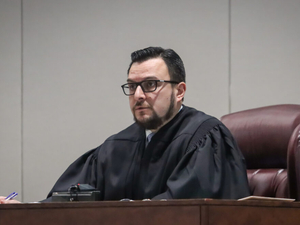
Federal District Court Judge Dana Christensen said he had dismissed the case “reluctantly,” but the scope of the request from the 22 young people was “an unworkable request.”
The circuit court agreed, saying granting an injunction rolling back three Executive Orders would require “extensive judicial supervision of executive branch actions related to energy policy.”
In their petition submitted earlier this month, the plaintiffs argue that the panel disregarded Christensen’s finding that there was “overwhelming evidence” that the youth were harmed by climate change, and that the executive orders are worsening those harms. Instead, they argue, the panel ruled not on the harms themselves, but that the plaintiffs could not challenge a president’s “sweeping executive orders and their coordinated implementation in a single lawsuit.”
In its ruling, the circuit court said that granting an injunction to roll back the Executive Orders would require “extensive judicial supervision of executive branch actions related to energy policy.”
“Plaintiffs explicitly seek to undo everything from staffing reductions, to the revocation of research grants, to anticipated rule changes, to the type of language the current administration has used on government websites,” the memorandum states. “…The district court correctly recognized that disputes over such questions would inevitably result in the court ‘spending a lot of time together’ with the parties and holding hearings ‘until the expiration of [their] collective lifetimes.’”
The petition for full review identifies three potential errors in the panel’s decision — that it ignored the factual findings of the district court related to greenhouse gas emissions; that the U.S. Supreme Court has rejected similar circuit court reasoning over broad executive orders; and that other circuit courts have upheld the right to challenge executive orders on constitutional grounds.
The Constitution gave us the tools to hold our government to its promise,” lead plaintiffs Eva Lighthiser said. “We are 22 young people using exactly those tools, and we are asking the full Ninth Circuit to do its part. Two hundred and fifty years later, the promise still has to mean something.”
Helena, MT