Within the halls of U of M’s Hatcher Library, a wealth of transgender history
Jun 27, 2025 | 9:00 am ET
Description
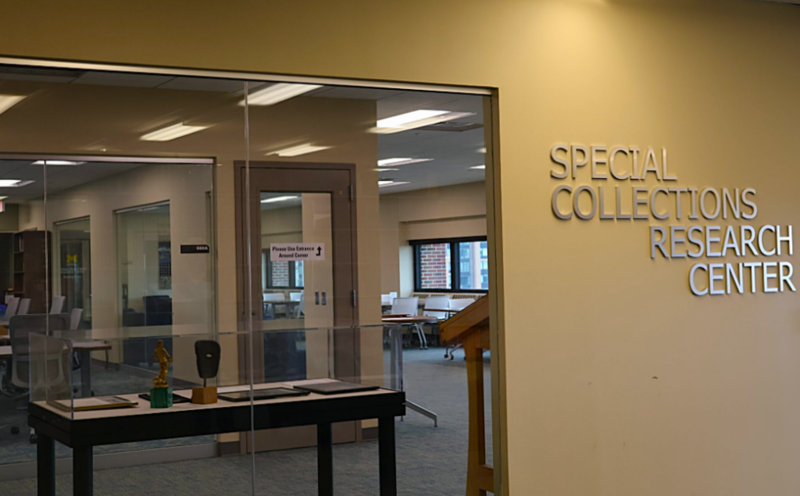
The Special Collections Research Center at the University of Michigan. June 20, 2025. | Photo by Kyle Davidson/Michigan Advance
For more than a century the Joseph A. Labadie Collection at the University of Michigan has been home to a wide collection of materials documenting social unrest, protest, and various movements that were at a time considered radical.
Referred to in the 1930s as “probably the most complete record of the social unrest of our times that has ever been assembled,” the collection holds books, periodicals, pamphlets, recordings of speeches and protest songs and other artifacts from movements including anarchism, feminism, labor, civil rights and anti-colonialism.
Housed in the university’s Special Collections Research Center, the Labadie Collection is also home to one of the largest and most heavily-used stores of transgender history in the country.
While the university already boasted a strong collection of materials on trans history in 2000, that collection would be bolstered considerably through a donation from the National Transgender Library and Archives, which began as the collection of Dallas Denny.
A search for identity and information
“I knew I was transsexual by the time I was 12 or 13 and I remember the summer before I started the ninth grade. My father had retired from the Army, and we moved to Murfreesboro, Tennessee, and I pedaled my bicycle to the library there and looked up every word I knew, which was very little,” Denny said.

She found two books.
“One of them was in reserve, which meant I’d have to ask the librarian for it because I was just 13, and I was unwilling to do that because I felt like she would probably get in touch with my parents and my life would be over,” Denny said.
The other was in circulation, but Denny was unable to find it on the shelves. Last she checked, after graduating from high school, it still was not available.
“I was looking for information all through college and just not finding anything, you know, [an] occasional article in a magazine or something, but nowhere to go for help, nowhere to go for information, nowhere to go for support,” Denny said.
After completing graduate school in 1979, Denny discovered there was a gender clinic at Vanderbilt Hospital in Nashville, where she lived at the time.
“I went there, and they turned me down, they turned down most people, but on the grounds that, essentially, I was not dysfunctional enough to be transsexual because I had two college degrees, because I worked as a child protective services worker for the state of Tennessee, because I was sexually attracted to women, because I had been married,” Denny said.
Upon visiting the medical library, their material backed up the hospital’s findings, because those materials were generated by the clinics, Denny said.
Denny later found a group for heterosexual crossdressers. While they did not allow trans members, Denny joined, holding her breath in hopes that they would be in touch with someone with information about her identity.
After about five months, a member came in with a magazine called Transgender Tapestry, which held a support group in Atlanta.
“They gave me information I’ve been looking for my whole life,” Denny said.
After she was recruited to help run the support group in 1988, which she did for a year, Denny went on to found the American Educational Gender Information Service, or AEGIS in 1990, publishing pamphlets, medical bulletins and a magazine, while providing services including a 24-hour trans help line.
“My reasoning was, you know, if I am well educated and I am smart and I am literate and I couldn’t find information, how many other people are out there in a similar situation?” Denny said.
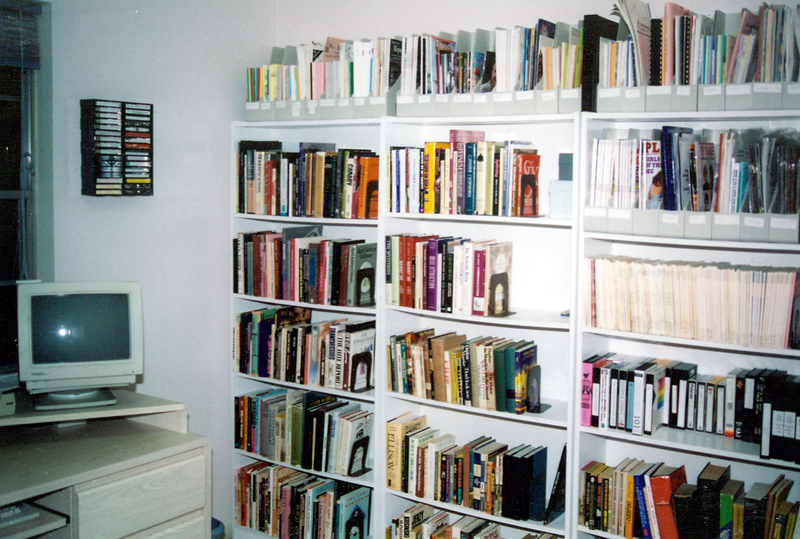
The ‘90s was largely a print culture, Denny said, and she was exchanging newsletters with more than 100 other organizations around the world. Publishers would send her books, and whenever she’d attend a trans conference, Denny said she’d buy everything that was for sale.
While she’d started with zero information about her identity, Denny’s collection would go on to fill two big rooms in the house she was renting.
“I started realizing that, you know, the history of people like me was pretty much scattered through history and mostly lost, and there seemed to be little interest in rediscovering that history,” Denny said, noting that she founded another group, the Transgender Historical Society.
Denny donated her collection of materials to AEGIS in 1993, marking the start of the National Transgender Library and Archives, however, the advent of the internet would mark the decline of brick and mortar nonprofits like Denny’s.
While people would previously write in requesting information, receiving a response a week or two later, the internet had rendered that model obsolete, Denny said. Now individuals could share information with a wide audience for almost no cost.
AEGIS transitioned away from a paper and stamp organization into one based on the internet, rebranding as Gender Education and Advocacy in 1998. However, that left the question of what to do with the organization’s considerable print collection.
Finding a new home for the archive
Ultimately, the organization put out a request for proposals to house the materials on January 13, 2000 and received a number proposals, which Denny said came down to two finalists: The University of Minnesota and the University of Michigan.
As part of the criteria for applicants, Denny said the materials had to be stored in a physically and intellectually safe location, which had secured funding for the foreseeable future.
While the University of Minnesota had a long history of working with trans people, Denny said the University of Michigan was selected due to the Labadie Collection’s focus on social movements that were often unpopular.
“I felt like it would be intellectually secure there, and it wouldn’t be reinterpreted as a gay and lesbian history instead of a trans history,” Denny said.
It also helped that the University of Michigan had a building to house the materials, while Minnesota did not.
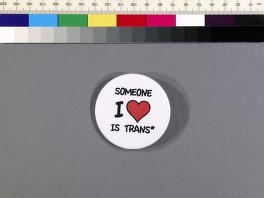



Prior to acquiring the National Transgender Library and Archives, the Joseph A. Labadie collection already held a multitude of materials on transgender movements due to its strong LGBT collection, Curator Julie Herrada told the Michigan Advance.
When the call for proposals went out, Gender Education and Advocacy board member Sandra Cole, a professor who founded the University of Michigan’s Comprehensive Gender Services Program, recommended the university apply.
On taking a deeper look at the materials, Herrada realized the collection spanned a number of topics from medical materials on surgery and psychology to items on public health, law and cultural materials tied to LGBTQ movements. While the collection was too large to take into the Labadie Collection, Herrada said she’d gathered other units and staff within the library system and asked about working together to collect the materials and house them within their relevant departments.
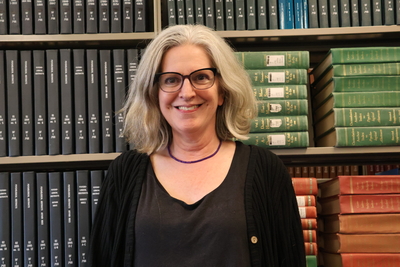
“Surprisingly, everybody was really on board with it and said that they would also make it a priority for access so it wouldn’t sit uncatalogued for however many years,” Herrada said.
Upon collecting letters from the community to submit alongside her proposal to Gender Education Advocacy, Herrada found an outpouring of support.
“That was real eye opening for me that there was this whole community of people out there that were advocating not only for the trans community, but for us to have this, create the space for this collection, and to maybe make it grow,” Herrada said.
After making her case to the head of the library on the logistical matters needed to process, catalog in addition to transporting the materials from Atlanta, Georgia to Michigan, Herrada said the obvious support from the community made their case much stronger.
Herrada oversaw the packing and shipping of the materials from their home in Atlanta to their new location in Ann Arbor, in September 2000, and on March 25, 2004 the university held a dedication of the National Transgender Library and Archives with Denny as the guest of honor.
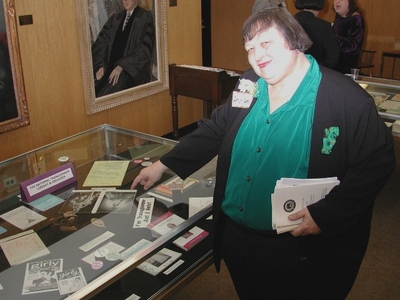
While the original collection has long since been fully cataloged, Herrada says Denny still regularly sends them materials to add to their holdings.
With the acquisition of the National Transgender Library and Archives in 2000 and the university’s previous holdings, Herrada said the collection has seen individuals traveling from across the world to utilize its holdings. While other universities have collected materials on transgender people, U of M was one of the first, she said.
Having these materials available to individuals from across the globe fulfills both Denny’s personal mission of providing people with information to make sane decisions about their lives, while preserving a rich history Denny said she would hate to see lost.
Additionally, the University of Michigan was the first institution to partner with the Digital Transgender Archive, Herrada said, with Denny sending materials to the archive first for scanning, before the materials are passed on to the Labadie Collection.
While most libraries require individuals to put in a request to view archived materials, Denny, who serves on the archive’s board, said the Digital Transgender Archive serves as a way for people to have easy access to information on trans life and history.
Holding the line amid national backlash
Over the years, many of the movements documented within the Labadie collection have become more mainstream, Herrada noted, pointing to the growing acceptance of lesbian, gay and bisexual individuals since they began collecting materials on those communities.
“I don’t know if I could say that we’re sort of at the forefront for making these movements more mainstream and more accepted and more accessible, but that’s part of the plan, I think,” Herrada said. “We need to have access to this material, because a lot of it is inaccessible otherwise.”
As the federal government takes aim at several marginalized groups throughout the nation under the guise of opposing diversity, equity and inclusion efforts, Herrada said it’s more important than ever to dig in their heels and to not only maintain, but strengthen the commitment to having these materials available.
While the Labadie Collection has not faced any threats to its holdings on transgender individuals, Herrada said there have been some discussions around being more aware and tightening security on materials given the national climate.
Denny shared her own concerns about holdings at other institutions, noting that the previously-independent Kinsey Institute, which holds a vast collection of materials on human sexuality, had merged with Indiana University. With Indiana state law barring the university from using state funds for the institute and the university board facing a conservative takeover, Denny expects further attacks on the institute’s funding, raising concern that institute’s materials may be less accessible in the future.
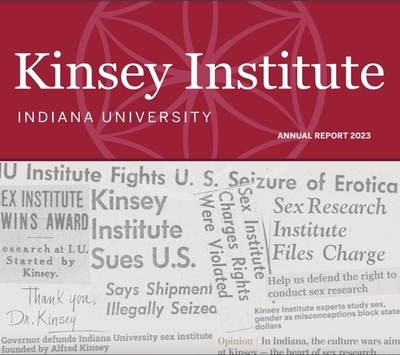
While she’s a bit concerned about the University of Michigan, due to the University’s decision to eliminate its diversity equity and inclusion office and halt work on its DEI 2.0 strategic plan, Denny held greater concern for the Kinsey Institute.
In addition to threats at the university level, local libraries have become a battleground as conservative groups seek to ban or sequester materials with LGBTQ+ themes.
Alongside the University of Michigan, Denny has supplied materials to the University of Victoria in British Columbia’s transgender archives and other collections documenting trans history.
Denny noted she didn’t want all transgender materials centralized in one location due to the possibility of war or natural disaster and that she was glad there were a number of places to access these materials alongside those that had been digitized and were available online.
“Transgender people are, and probably were, and probably still are, famous for purging. They’re like, ‘I can’t be like this.’ And they’ll get rid of everything and often they just throw it in the trash or burn it,” Denny said, noting that a lot of times materials people were looking to get rid of would appear at conferences.
Now, unlike when she was 13, there is a wealth of material for trans individuals, Denny said.
“All it was really about in all of my work was for people to have information, to make competent decisions about their lives, because if you know nothing you can’t do that” she said.
Lansing, MI