Wisconsin’s clean energy future is about affordability, jobs and independence
Jun 30, 2026 | 4:15 am ET
Description
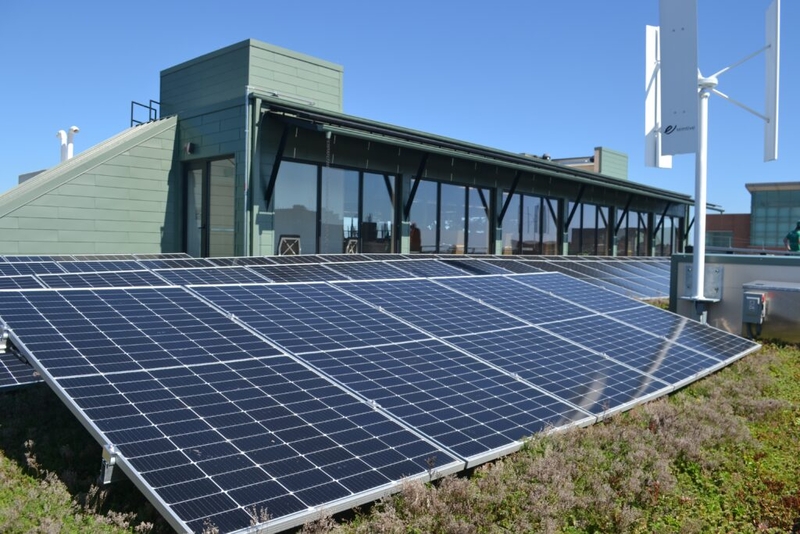
The roof of the Hotel Verdant in Downtown Racine is topped with a green roof planted with sedum and covered with solar panels. (Wisconsin Examiner photo)
As America prepares to celebrate its 250th birthday, my son and I recently spent a week driving across the country, visiting Rocky Mountain, Arches, Great Basin, and Yellowstone National Parks. The trip reminded me that despite our differences, Americans share a common responsibility: to leave our country stronger and more prosperous than we found it.
Wherever we traveled, people wanted many of the same things: good-paying jobs, thriving communities, affordable energy and opportunities for future generations.
Those hopes are shaped by many decisions, but few are more important than how we produce, deliver and pay for energy.
Most families are not thinking about climate policy. They are thinking about utility bills, housing costs, job opportunities and whether their communities can compete in a changing economy.
A recent Wisconsin Conservation Voters poll found that 84% of Wisconsin voters are concerned about rising electricity costs — ranking utility bills alongside groceries as a financial stress.
Wisconsin families want affordable energy, reliable electricity, good-paying jobs and a stronger future for their children. Clean energy helps deliver all four.
More than 75,000 Wisconsinites already work in clean energy. Wisconsin manufacturers supply components used across the country. Electricians, engineers, construction workers, and skilled tradespeople are modernizing our energy system while helping businesses and homeowners lower energy costs.
This is not tomorrow’s economy. It is today’s.
Clean energy is an economic development strategy, a manufacturing strategy, a workforce strategy and an affordability strategy. Communities embracing innovation are attracting investment, creating jobs, and becoming more competitive.
Unfortunately, federal policy is moving in the opposite direction.
The Trump administration recently announced a $700 million taxpayer-funded effort to keep aging coal plants operating, including one in Wisconsin. At the same time, it has proposed spending approximately $2.5 billion to buy out offshore wind leases representing roughly 13 gigawatts of generating capacity while redirecting support toward fossil fuel development.
These decisions matter because they directly affect affordability, health and our future.
Americans are increasingly being asked to support aging coal plants through both their electric bills and their tax dollars. Extending the life of outdated infrastructure delays investment in newer technologies that are often less expensive and more reliable.
We are already doing this with coal plants in Oak Creek, Sheboygan and Beloit. We cannot keep repeating that mistake.
Wisconsin also faces another challenge.
Artificial intelligence is creating unprecedented demand for electricity. Two proposed data centers alone could require nearly four gigawatts of power, more electricity than every Wisconsin household combined.
Data centers can create jobs and economic opportunity. But they also require new power plants, transmission lines and grid upgrades.
The question is simple: Who pays?
Wisconsin families, farmers and small businesses should not shoulder those costs.
Large energy users should pay the full cost of the infrastructure they require. Utilities should be transparent, regulators should protect ratepayers and communities deserve a meaningful voice before billions of dollars are committed.
This is not a choice between economic growth and environmental responsibility.
The strongest energy policies lower costs, strengthen energy independence, improve reliability, create jobs and protect the resources that make Wisconsin such a great place to live.
Wisconsin has everything it takes to lead: innovative businesses, talented workers, world-class manufacturers and practical problem-solvers.
As America approaches its 250th birthday, we should remember that every generation is called upon to build something lasting.
For ours, that means building an energy system that is affordable, reliable, resilient and capable of powering Wisconsin’s economy for decades to come.
The clean energy transition is not happening because it is partisan. It is happening because it works.
The question is whether Wisconsin will build it, power it and prosper from it.
Madison, WI