Keeping our republic starts here in Maine
Jun 30, 2026 | 4:18 am ET
Description
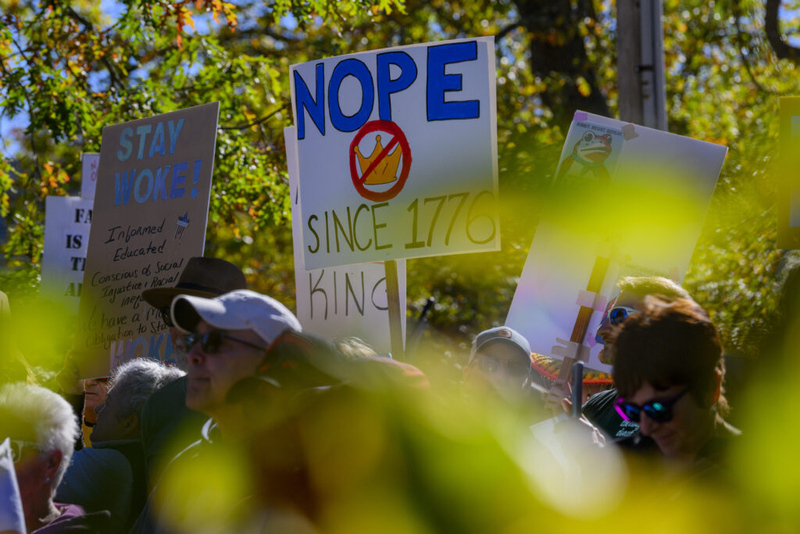
No Kings rally in Portland, Maine on Oct. 18, 2025. (Photo by Jim Neuger/ Maine Morning Star)
Every Fourth of July, Americans gather under fireworks, raise flags, attend parades, and share meals with family and neighbors. These traditions matter. They bring us together across generations.
Independence Day is more than a celebration, it is a way to remember what was declared in Philadelphia in 1776: that our government should not rest on the will of a king, a faction, or a distant power, but on the consent of the governed.
That idea was revolutionary then. It remains our responsibility now.
As we approach the 250th anniversary of the Declaration of Independence, it is worth reflecting not only on what the Founders rejected, but on what they tried to build. They objected to arbitrary power, to laws imposed without meaningful representation, and to courts dependent on political authority rather than justice. In the Declaration, they accused King George III of undermining colonial legislatures and making judges dependent on his will alone.
Those grievances were not historical footnotes. They were warnings. The Founders understood that liberty requires more than inspiring words. It requires institutions, laws, checks and balances, and citizens willing to defend them.
Our system has never been perfect. The promise of equality and self-government announced in 1776 was denied to many Americans for far too long. But the genius of the American experiment is that each generation has been called to make the country more faithful to its founding principles.
That work continues today.
Here in Maine, the institutions of self-government are not abstractions. They are made up of people in our own communities: local officials who administer elections, judges who apply the law, clerks who maintain public records, lawyers who help resolve disputes, jurors who weigh evidence, and citizens who participate in civic life. These institutions may not always make headlines, but they are the backbone of our republic.
Our republic depends on trust — not blind trust, but earned trust. Citizens have every right to ask questions, demand transparency, challenge decisions through lawful means, and expect accountability from those who serve the public. But our republic cannot endure if every institution is presumed illegitimate simply because it produces an outcome we dislike.
As a former chief justice of the Maine Supreme Court, I have seen this work up close. During nearly twenty five years on the bench and thirty four years in private practice, I saw firsthand how much our constitutional system depends on the steady, often quiet work of people who serve their communities. Our republic is sustained not only by founding ideals or public speeches, but by citizens and public servants who take their responsibilities seriously: following the law, respecting established procedures, weighing evidence, correcting mistakes when they occur, and accepting lawful outcomes even when they are disappointing or politically inconvenient.
The rule of law is what separates self-government from raw power. Courts do not exist to favor one party, one candidate, or one public official. Judges do not serve a political cause. Election administrators do not serve a political cause. Public servants, judges, and local officials swear oaths not to personalities, but to constitutions, laws, and the people they serve.
This principle is especially important in moments of political tension. When our preferred candidate wins, it is easy to praise the system. The real test comes when our side loses. Peaceful transitions of power, respect for lawful outcomes, and reliance on evidence rather than rumor are not partisan values. They are American values.
This is also why civic education matters and why I am a member of Keep Our Republic’s Alliance of Former Chief Justices. The Alliance brings together former chief justices who have spent their careers helping resolve disputes through law rather than politics or force. Its purpose is to strengthen public understanding of the rule of law, judicial independence, and the constitutional processes that allow a free people to govern themselves. Through this work, Keep Our Republic helps citizens understand how elections are administered, how disputes are resolved, how courts review evidence, and how lawful processes preserve peaceful transitions of power.
It is our civic duty to help citizens understand how the process works, who runs it, and where lawful remedies exist when disputes arise. In a healthy republic, disagreement is expected. But disagreement must be channeled through evidence, law, courts, elections, and constitutional order — not threats, rumors, or contempt for every institution that stands in the way of our preferred result.
On our nation’s 250th Independence Day, let us recommit ourselves to that work — here in Maine, in our communities, and across the republic we have inherited and must keep.
Augusta, ME