Oklahoma to consider special education textbooks for the 1st time
Nov 20, 2026 | 4:50 pm ET
Description
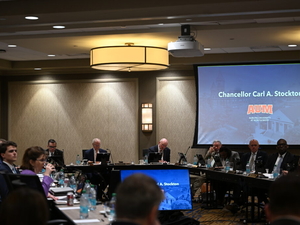
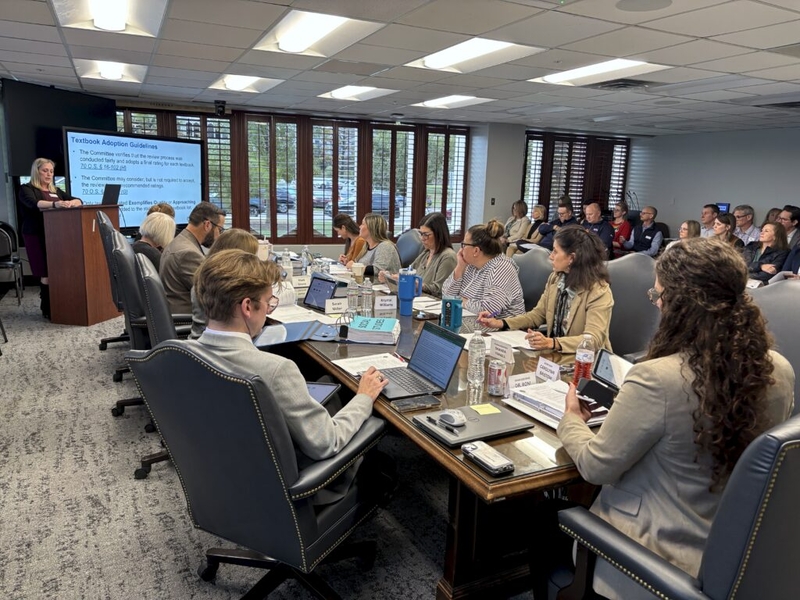
The Oklahoma State Textbook Committee listens to a presentation from Carolynn Bristow, project manager of educational materials for the Oklahoma State Department of Education, during a meeting Friday in Oklahoma City. (Photo by Nuria Martinez-Keel/Oklahoma Voice)
OKLAHOMA CITY — Oklahoma for the first time will review and potentially approve textbooks for children with severe and profound disabilities, a decision state officials say could improve instruction of vulnerable learners.
The Oklahoma State Department of Education was unable to find any other state that separately evaluates and approves learning materials designed for this student population, said Sherri Coats, the agency’s program director of special education.
Without an approved list of special education textbooks, most school districts lack a curriculum and high-quality classroom materials designated for students with significant cognitive disabilities, she said. Special education teachers often have to put together instructional materials on their own.
The State Textbook Committee on Friday took its first step toward changing that.
The committee, which approves textbooks for all school subjects, voted to include “special education alternate” as a new subject area in its 2027-28 adoption cycle.
That means Oklahoma next year will begin reviewing instructional materials designed for students with the most significant cognitive disabilities and could consider adding these textbooks to a state-approved list, which would permit public schools to use textbook funds to purchase them.
“The fact that we don’t have high quality instructional materials for our most vulnerable students — I don’t understand the why,” Coats told the committee. “Why haven’t we done this? And I don’t know why other states haven’t done it either.”
Oklahoma designed alternate assessments and achievement standards for these students.
State records show just under 2,000 students in fourth, eighth and 11th grade took the alternate assessments in the 2024-25 school year, the most recent data available. An average of 25% made a proficient score in reading and 28.67% did so in math, state data shows.
This spring, between 12% and 38% made a proficient score, Coats said. Those levels are unacceptable and “indicate that instruction for this population is inadequate,” she said.
“Across the state, we’ve identified that most districts lack curriculum for this group of students, and we believe that is a contributing factor to the poor performance and the poor outcomes,” Coats said during the committee meeting. “It’s reported that districts do not have funding to purchase these materials, so teachers often construct fragmented curricula that lack standards alignment, and they lack rigor.”
Special education teachers use the same textbooks available to students without disabilities, said Cecilia Robinson-Woods, superintendent of Millwood Public Schools in Oklahoma City.
That’s because special education students are legally entitled to have access to the same learning materials as other children, she said. Which specific textbook a teacher uses, though, corresponds to the learning level of an individual student.
A high school student with severe cognitive delays, for example, still must be taught civics like all students of that age, but the student might need a first-grade textbook for the lesson, she said.
A classroom of students with severe and profound disabilities often contains a wide variety of learning levels, so a special education textbook would have to account for that range, Robinson-Woods said.
Still, she said having these books available could be a positive step.
“Anytime you can have prepared materials for teachers to use and they don’t have to figure out how to find it or compile it themselves, I think that is a good thing,” she said.
Oklahoma City, OK