Who’s serving felony murder sentences in Pennsylvania prisons?
Aug 06, 2026 | 6:25 pm ET

Description
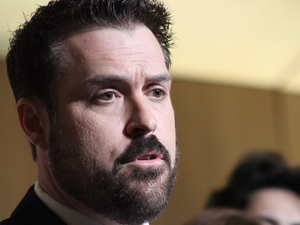
(Photos from the Pennsylvania Department of Corrections. Illustration by Whitney Downard/Pennsylvania Capital-Star)
A landmark state Supreme Court ruling earlier this year has thrust more than 1,100 incarcerated Pennsylvanians into the political spotlight: men and women convicted of playing various roles in the death of another, whether they were the getaway driver for a robbery gone wrong or the person who fired the gun.
Much of the public discussion has devolved into partisan mudslinging and “soft-on-crime” accusations, but many of the people in state correctional institutions for second-degree murder with life sentences might have their first real hope for freedom.
What happens when the clock runs out on felony murder legislation?
The March decision found that mandatory life sentences for the charge, also known as felony murder, were unconstitutional, giving lawmakers 120 days to act. But the divided legislature hasn’t yet come to a consensus, and isn’t due to return to Harrisburg until the fall.
The Capital-Star analyzed state Department of Corrections data on the prison population currently incarcerated for second-degree murder to get a better sense of who may be affected by the recent court ruling or any decision the legislature may still make.
The data is not comprehensive.
According to Maria Bivens, a DOC spokesperson, some inmates’ records did not specify the degree of murder they were serving for, and a manual review of those cases was required. A change in state law in the 1970s also meant some older detainees were convicted for both first- and second-degree murder, meaning charges need to be realigned with modern law.
It also included dozens of inmates sentenced to life as juveniles, which the U.S. Supreme Court deemed unconstitutional in 2012. Many have already been resentenced.
There is also no information about the specifics of each person’s crimes.
But the data, which includes information about 1,166 detainees currently serving life sentences on second-degree murder charges, paints a broad picture of the population currently behind bars.
“Part of what the (Pennsylvania) Supreme Court held (as) the constitutional problem … is that there was no individualized assessment of culpability,” said Temple University law professor Rachel López. “That (culpability) distinction is going to be very determinative in terms of how these sentences get revisited.”
What do we know about felony murder prisoners?
Quinn Cozzens, who conducted his own analysis of DOC data, said one of the statistics that jumped out to him was the “aging nature of the population.” Quinn works with the Abolitionist Law Center, a nonprofit law firm that represented Derek Lee, the man at the center of the Supreme Court decision on mandatory sentences.
“So many of these people are over the age of 30, 35, 40, 45,” he said. “That’s really approaching or well over the age where criminologists and most studies agree people don’t pose much of a public safety risk anymore.”
It’s a widely studied phenomenon referred to as “aging out” of crime. Generally speaking, most people who commit violent crimes are in their teens and early twenties. Once people reach their mid-twenties, their likelihood of committing a violent crime begins to drop. And by middle age, most people “age out” of criminal behavior.
More than half of the people serving life sentences for felony murder are over 50 years old, an age at which imprisonment costs double, but rates of recidivism and criminal behavior plummet.
Nearly 10% are over 70.
Cozzen found that roughly three-quarters of the people serving felony murder sentences were around 25 years old — the age when the prefrontal cortex reaches maturation — or younger when they committed their crime. That analysis aligns with a 2021 report from the Philadelphia Lawyers for Social Equity (PLSE) commissioned by then-Lt. Gov. John Fetterman.
What makes Philadelphia stand out?
Just under half of all cases documented by the Department of Corrections originate in Philadelphia, the densest and most urban area of the commonwealth. The city has 34 cases for every 100,000 residents — more than double the per capita rate of the next-highest county, rural Forest County.
Black Pennsylvanians are overrepresented in jails and prisons across the commonwealth. Despite being just over 12% of the population, roughly 45% of all DOC inmates are Black, according to December population reports.
DOC data shows that 71% percent of those convicted of second-degree murder across the state are Black, while 28% are white. In Philadelphia,which has the highest concentration of Black Pennsylvanians, just over 87% of offenders are Black.
Another 2021 PLSE report focused on race found that white Pennsylvanians convicted of felony murder were more likely to have an underlying arson, burglary, kidnapping or sexual offense charge.
Of the 765 cases where PLSE could determine the context of a second-degree murder conviction, 86% were associated with a robbery. Kidnapping and arson played a role in a little more than 5% of cases, while just 2% of underlying felonies involved sexual assault.
“(The PLSE report) notes the racial dynamics of both life without parole more generally, but even more markedly when it comes to second-degree murder,” Temple law professor Rachel López said. “That racial disparity in those sentences is quite notable.”
Prosecutorial discretion also plays “a huge role,” she continued, and Philadelphia stands out for its low number of plea bargains compared to the rest of the state.
Felony murder cases peaked in the early 1990s, across both the commonwealth and Philadelphia, with an average just under 37 statewide cases between 1991 and 1995. Averages have dropped in the last five years to just under 11 cases between 2021 and 2025.
One of the biggest criticisms of the law in practice is that someone convicted of second-degree murder might be serving life in prison for a relatively small role while other the crime’s “principal” participant got a lighter sentence under charges like voluntary manslaughter or third-degree murder.
The 2021 PLSE audit of people serving sentences for second-degree murder analyzed hundreds of cases where the organization could identify a co-defendant. One-third “received a sentence of confinement less than life without parole or death,” ranging from just over eight years to 19 years.
What do the next steps look like?
The state Supreme Court’s decision left retroactive resentencing efforts — the question of what should happen to people already serving life without parole — up to the General Assembly. But lawmakers haven’t decided on a course of action. They could either allow inmates to petition a judge for resentencing, or some portion of the population to appeal directly to the parole board
The proposal that passed the GOP-controlled Senate, which has the backing of state Attorney General Dave Sunday and the Fraternal Order of Police, would allow inmates who served at least 35 years of their life sentence to seek parole, or if they were 70 years old and had served at least 20.
According to DOC data, roughly 28% of second-degree murder inmates have served at least 35 years of their life sentences, but some people may have consecutive sentences.
The Democratic-backed proposal would allow people to seek parole after 30 years, regardless of consecutive sentences. While the data does not track time served before DOC custody, nearly 45% have been in prison at least 30 years.
Democrats chided the Senate bill as overly punitive. But Republicans called their countermeasure overly lenient — especially language allowing for medical release when inmates are critically ill.
Republicans, through press conferences and social media posts, equated the language to a “get out of jail free card.”
“House Democrats delivered a soft-on-crime, criminal-friendly bill that will give violent second-degree murder convicts an immediate opportunity for release,” wrote Senate Pro Tem Kim Ward (R-Westmoreland). “The outright refusal by House Democrats to work with the Senate on the two bipartisan bills we passed … not only demonstrates a ‘criminal first, victim last’ mentality, but also sends a loud and clear message to victims and survivors.”
House Republicans posted about cases like Kristopher Gartrell, who pleaded guilty in 2020 to charges for second-degree murder, arson, rape and burglary. Not only are those underlying crimes unusual, but Gartrell is the rare example of a middle-aged offender.
Erica Clayton Wright, a spokesperson for Ward, said the leader’s posts were not intended to portray the typical person charged with second degree murder, but to illuminate who may be eligible for medical release under the bill proposed by House Democrats.
The House version “added unrelated language on medical parole for ALL prisoners, not just second-degree murder convicts,” Wright continued, saying that the term “life-threatening illness” was so broad that it included diabetes and asthma.
“This language effectively opens the door for release based on conditions that prisons already treat safely and consistently,” she added.
Beth Rementer, a spokesperson for House Democrats, said the medical release program closely mirrors a similar federal program, and would also require a judge’s approval in each case.
Without legislative action, the most likely outcome would require everyone to go before a judge for resentencing, a process that could take years, she continued.
“Decisions as significant as these should never be politicized, yet the Republican caucuses and Attorney General’s office have chosen to approach this serious issue with only dangerous rhetoric,” she said. “The reality is, they know their claims are not true.”
Compared to other states, the proposals for 30 and 35 years “are really a lot higher than what many other states are sentencing people to for the same conduct,” Cozzens continued.
“If you look at just the states surrounding Pennsylvania, Ohio allows for a 15 year minimum sentence. West Virginia allows for a 15 year minimum sentence. New York (is) 15 years. Maryland has a 20 year minimum and in some older cases it was 15 years.”
For Cozzens, the kind of rhetoric being used by lawmakers can cover up an important truth about the majority of people convicted of second-degree murder, more than half of whom have already spent 25 years in prison.
He added that even the new sentencing measures proposed by lawmakers would make judges in Pennsylvania uniquely unable to take the whole of people’s circumstances into account when deciding a sentence.
“Legally speaking, at a minimum, even if somebody did cause a death, it was not an intentional homicide,” he said. “I think that’s an important thing to keep in mind that just kind of gets lost.”

Harrisburg, PA