Whitmer temporarily suspends penalties for farmers and loggers using dyed diesel on the highway
Oct 12, 2026 | 2:49 pm ET
Description
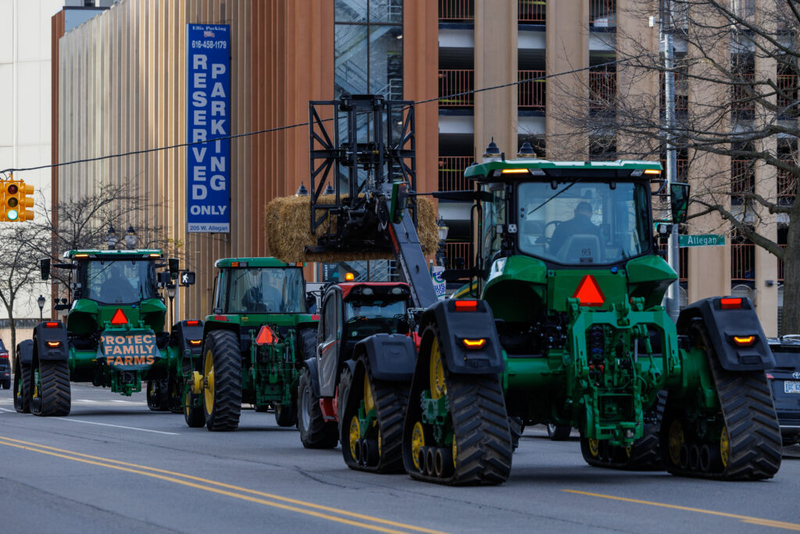
Tractors circle the Michigan Capitol in Lansing, Mich., on March 18, 2025. (Photo by Andrew Roth/Michigan Advance)
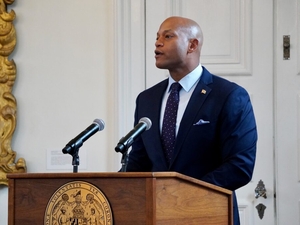
As the average diesel price in Michigan sits at nearly $6.50, Michigan Gov. Gretchen Whitmer on Monday signed an executive order declaring a state of energy emergency intended to loosen the strain farmers and loggers face when fueling their vehicles.
As part of her executive order, Whitmer is temporarily suspending restrictions preventing vehicles with farm or wood harvester plates from using public roads and highways if they are running on dyed diesel. Only vehicles with those plates are impacted by the order.
Whitmer’s declaration follows similar moves taken by other states, and an Oct. 5 federal executive order, in which President Donald Trump temporarily suspended penalties for using dyed diesel on highways. Both Whitmer and Trump’s order lift those restrictions through Dec. 31.
Dyed diesel is functionally the same as regular diesel fuel, but is designated for off-road uses, like operating agricultural machinery. It is not taxed, and is dyed to differentiate it from the diesel fuel vehicles use on the road.
In a statement, Whitmer slammed Republicans in Washington D.C. over their support for the war in Iran, noting its impact on everyday costs across the board.
According to AAA, the average price of diesel in Michigan on Monday was $6.49 per gallon. One year prior, the average cost for diesel in the state was $3.66 per gallon.
“While I can’t control what’s happening at the federal level, I can try to protect Michigan’s economy,” Whitmer, a Democrat, said. “This order will allow farm and logging vehicles to use dyed diesel on our highways without risk of penalty. We need to keep work moving and reduce pressure on the people who keep our state’s ag economy running.”
In her executive order Whitmer said the state’s farmers and loggers are facing “unprecedented financial strain from record-high diesel prices, tight margins, and significant market volatility,” noting that these increased costs are sometimes passed along to consumers.
“These industries already purchase and maintain substantial supplies of dyed diesel for off-road equipment,” the executive order reads. “Therefore, granting eligible highway-licensed vehicles temporary access to this fuel would provide immediate relief.”
On Sept. 30, multiple organizations representing Michigan’s timber industry and its various agricultural sectors sent letters to the governor calling for 90-days of temporary relief from the restrictions and penalties on using dyed diesel on Michigan roadways.
While state officials have floated suspending the state’s gas tax, Justin Knepper, the executive director of the Michigan Association of Timbermen acknowledged that a gas tax holiday could be politically challenging due to its cost.
Alongside the Michigan Farm Bureau and several other agriculture and forestry associations, the Association of Timbermen pushed hard for the suspension of the dyed diesel penalties, Knepper told Michigan Advance, noting that they viewed their ask as a smaller financial hurdle.
While Knepper said they were incredibly grateful to the governor’s office, he noted that the executive order does not help the farmers and loggers who do not have trucks on the road.
“We’re still working hard to figure out how to support those folks,” Knepper said.
Using untaxed dyed diesel will save farmers and loggers upwards of 50 cents per gallon over the next three months, Knepper said, but noted that prices would need to come down further for businesses to survive.
“It’s relief, but it’s not the long-lasting relief that we need in terms of prices getting back down,” Knepper said.
Michigan Farm Bureau President Ben LaCross told Michigan Farm News “Every bit of savings helps as Michigan farmers work to bring in the harvest and keep food moving from the farm to our communities.”
Lansing, MI